
In 2023, Martin Scorcese released the praised Killers of the Flower Moon, inspired by a frightening true story of crimes that occurred in the 1930s, in Oklahoma, against the Osage Indians, since the natives received legal rights over the profits obtained from the oil deposits found on their lands. Motivated by the fortune generated locally, and the loophole that the law allowed, white people practically annihilated an entire family, exposing to the world the absurdity that greed could cause.
On the same reservation was the family of Alexander Joseph Tall Chief, a six-foot, full-blooded Osage Indian who overnight became a millionaire. As his daughters recall, he “was the owner of the city”, with several properties, a mansion, and a lot – a lot of money – in the bank. A widower, Alexander married Scottish Ruth Porter, the sister of his cook and housekeeper. The couple’s two daughters would become famous classical dancers, one of them, Maria, is considered one of the best of the 20th century. A story that surprises me has not yet been rescued by cinema and is one that is worth remembering.

In Los Angeles, he took the first steps in an unparalleled career
Born in 1925, in theory, Elizabeth Marie Tall Chief would not be the most obvious choice to be a classical ballerina, especially in those times when racism was not treated as a crime, but not only she, like her sister Marjorie Tallchief, came to be an of the five who overcame prejudice, the others being Rosella Hightower, Moscelyne Larkin, and Yvonne Chouteau. Rosella and Maria stood out even more.
Maria took dance and piano lessons from an early age and initially contemplated becoming a concert artist, but ballet soon took her heart. Something that was in line with her mother’s dream, who, with her eye on Hollywood musicals, took the family to Los Angeles, where she would have greater opportunities for girls. In her biography, Maria recounts that it was by luck that her mother received the recommendation of who would be the best teacher in the city, but it must not have been like that. She soon realized that she would have to practically start over from scratch, as her training in Oklahoma had been potentially disastrous for members, but her dedication paid off.
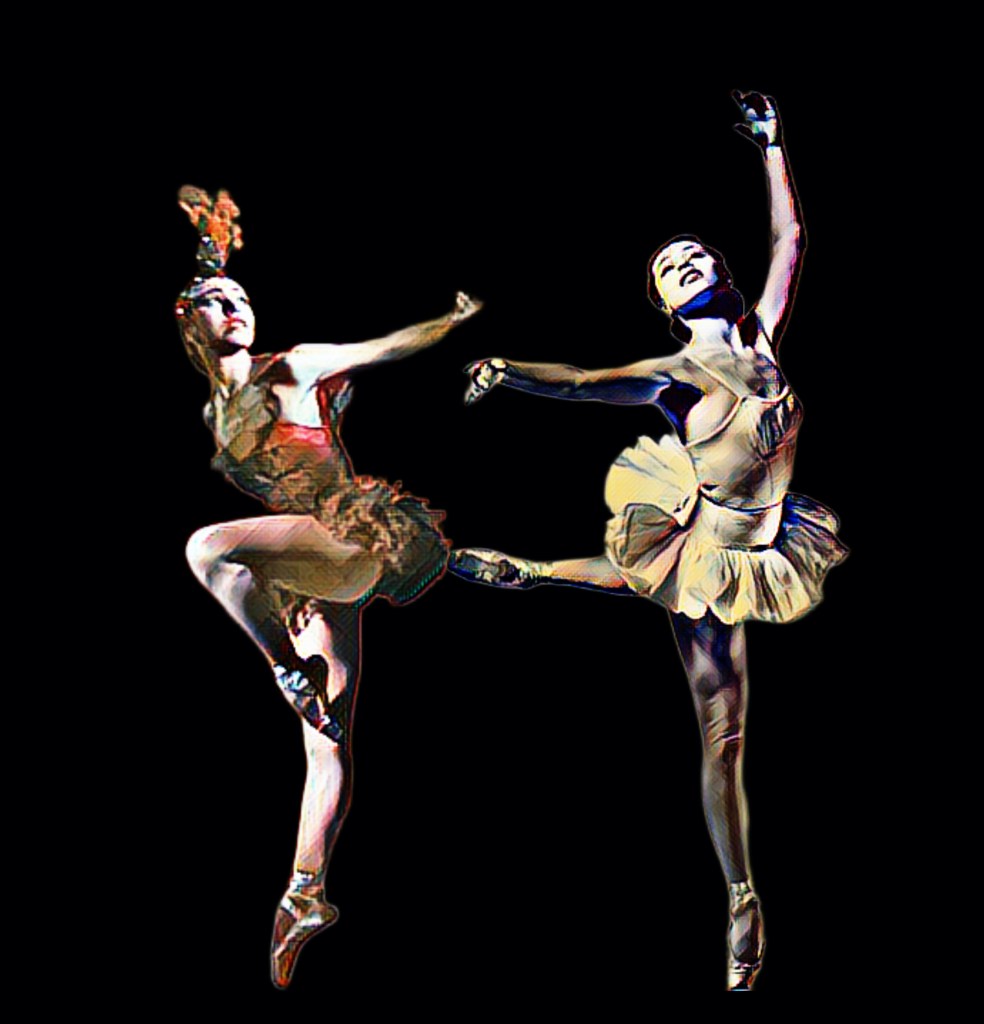
Soon she began studying with Bronislava Nijinska, former choreographer of Diaghilev’s Ballets Russes, who had settled in California. With all her experience, the teacher soon realized Maria’s potential and encouraged her to become a professional. In times of war, the Ballet Russe de Montecarlo company was temporarily based in New York, and, in 1942, young Maria auditioned and joined the corps de ballet.
It was at that moment that Elizabeth Marie was encouraged to adopt a stage name and, as was common in those years, they suggested something more French or Russian, but she wanted to maintain her Osage heritage and became Maria Tallchief (combining the two names – Tall Chief – as a single word). Even though her skin tone was lighter, she insisted on maintaining her personal identity and made choices based on her origins.
Balanchine’s muse and wife too
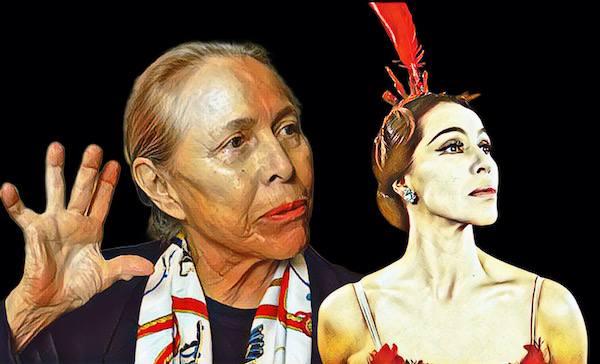
George Balanchine was already a legend when he met Maria, just two years after she arrived in New York. The meeting took place backstage at a Broadway musical, where the Ballet Russe de Monte Carlo participated in a painting created by him. From that opportunity onwards, he became the company’s permanent choreographer and started casting Maria in his creations, such as Danses Concertantes, Le Bourgeois Gentilhomme, Ballet Imperial, and Le Baiser de la Fee, a partner that brought the two together, even though she was surprised when he asked her to marry him.
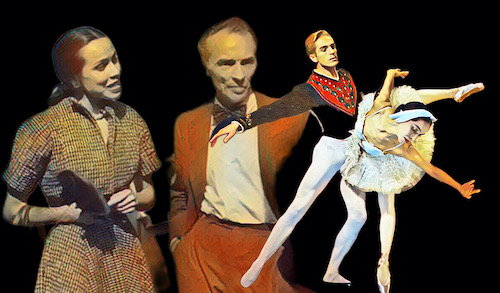
Maria thought long and hard before accepting and becoming Mrs. Balanchine on August 16, 1946, and later said that “we save our emotions for the classroom,” she wrote in her biography. She was 21 years old and he was 42. It was as ‘first lady’ that the soloist accompanied her husband on the adventure of creating his own company and she was the first big star of the Ballet Society, the basis of what is today the New York City Ballet. The list of works he created for his wife, whose speed and energy on stage quickly became his signature, is jaw-dropping as they are still in the NYCB’s repertoire today, such as The Nutcracker, Swan Lake, The Bird de Fogo, Allegro Brillante, Pas de Dix, and Scotch Symphony, among others.
Worldwide Stardom and Retirement from the Stage
Having been the first in almost everything: the first American to dance at the Paris Opera, as well as in Russia, and compared to Galina Ulanova, Maria Tallchief was as big as her name and would not be limited to being just another at NYCB.
The marriage was amicable, but Balanchine was known for ignoring the boundaries between personal and professional, falling in love with his “muses”, Maria – wife number 3 – was exchanged for Tanaquil LeClercq. The marriage to the choreographer was annulled in 1952 (on the basis that he did not want to have children), but Maria stayed at NYCB until she retired in 1965.
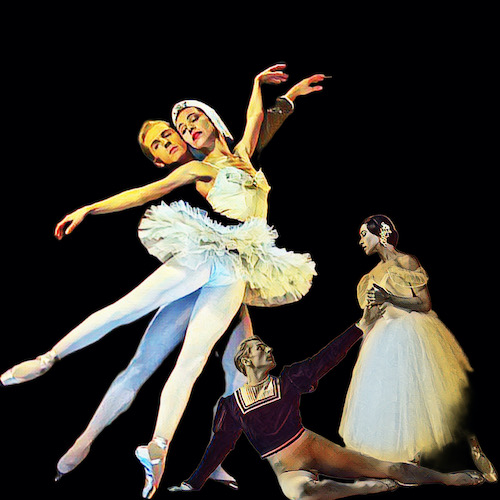
Like the big star that she was, she didn’t just stay in New York. She appeared on television shows, and in the cinema (playing Anna Pavlova in Esther Williams‘ classic, Million Dollar Mermaid) and also did stints with the American Ballet Theater dancing Miss Julie and the lead role in Jardin aux Lilas, by Anthony Tudor. She traveled the world performing with the legendary Rudolf Nureyev and Erik Bruhn, with several clips immortalizing these moments. An American legend.
Children and a Company to call your own
In 1965, at just 40 years old, Maria Tallchief retired from the stage and began training the next generation of dancers. With her sister, she founded the Chicago City Ballet, a ballet school and dance company.
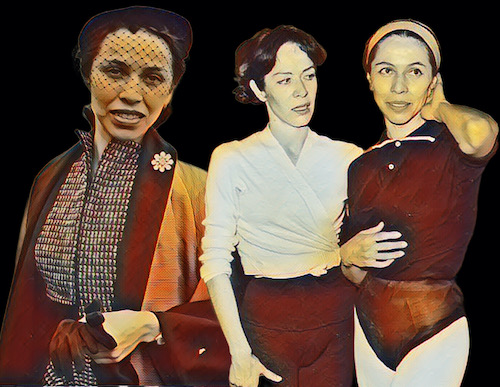
She married twice more: once to Elmourza Natirboff, a pilot for a private aircraft charter company, whom she divorced within two years until, in 1956, she married Henry D. Paschen Jr., an executive at a construction company. Chicago, with whom he had his only daughter, the poet Elise Paschen.
Until the end of her life, on April 11, 2013, she remained active in indigenous causes in her country. Her legend is inspiring and I really hope that new generations discover it soon. Her pioneering spirit must always be remembered.
Descubra mais sobre
Assine para receber nossas notícias mais recentes por e-mail.
 miscelana.com
1 comentário Adicione o seu