
Writer Suzanne Collins found inspiration to write The Hunger Games from a variety of sources and personal experiences, chief among them when she was flipping channels between a reality competition show and coverage of the war in Iraq, noticing that The juxtaposition of these two images – young people competing for fame and fortune and young people fighting in a war – fit perfectly in a dystopian future.
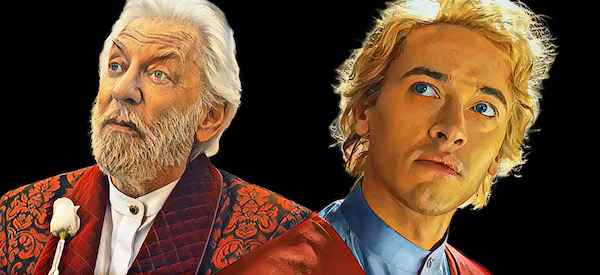
The books became bestsellers, then films, and turned Jennifer Lawrence into a global star. Belatedly I comment here about the prequel, The Hunger Games: A Song of Birds and Snakes. With all the fever in the franchise, it was a bold move by Lionsgate to bet on rescuing the origin story of the antagonist, Coriolanus Snow, played first by Donald Sutherland and now by Tom Blyth, who was in The Gilded Age and is in Billy The Kid, with a painful mission to keep the franchise with appeal. If he can’t do it, it’s not for lack of talent.
Understanding the Hunger Games
The Hunger Games achieved success through the perfect combination of several factors, whether mythical or current, exploring current and global themes. Questions such as how absolute power can corrupt even the most honest. It also discusses how the media can be used to manipulate and control public perception, how some exemplify resistance against tyranny, and of course, how Katniss’ (Lawrence) courage and determination inspire others to stand up against oppression. Furthermore, the story portrays the disparity between the rich and the poor. After all, the Capitol lives in luxury and extravagance, while the districts suffer from poverty and hunger. This inequality is a central driver of conflict in the franchise.
The “Hunger Games” is a central event in the story that takes place in the nation of Panem, which is made up of 12 districts and the Capital. The Hunger Games are an annual competition organized by the Capital as a form of control and oppression over the districts. They work like this:
- Choice of Taxes:
Each of the 12 districts must send one male tribute and one female tribute, totaling 24 participants. The taxes are chosen through a draw known as “reaping”.
Tributes are generally between 12 and 18 years of age. - Preparation and Training:
After the harvest, the tributes are taken to the Capital, where they receive training in various survival and combat skills.
They also participate in interviews and public events to gain sponsors, who can send supplies during the games. - Arena:
The Games take place in a specially constructed arena, which can contain different types of environments, such as forests, deserts, or mountains.
The arena is full of natural dangers and traps created by “game makers”. - Game Rules:
The goal is to be the last living tribute. The tributes must fight each other until only one survives.
Gamemakers can introduce additional challenges, such as dangerous creatures or natural disasters, to speed up the process and keep the audience entertained. - Sponsors and Supplies:
During games, tributes can receive help from sponsors in the form of supplies such as food, water, medicine, or weapons. These supplies are sent by parachute. - The victory:
The last surviving tribute is declared the winner and given a life of comfort and wealth. The winner’s district also receives extra supplies during the following year. - Katniss antagonizes President Snow
In the initial trilogy, Katniss Everdeen of District 12 volunteers to take the place of her younger sister, Prim, who was selected for the Hunger Games. Along with Peeta Mellark, she faces numerous challenges in the arena, using her archery skills and intelligence to survive.
Katniss’ charisma and prominence are identified by the president of Panem, Coriolanus Snow (Sutherland) as a threat to the system and they soon become direct opponents. She becomes the symbol of rebellion against Snow’s oppressive regime, as he does everything in his power to maintain his control over Panem and suppress any form of insurrection.
Snow is a cruel yet subtle man. He tries to manipulate Katniss in various ways, using threats and violence to control her actions through those close to her, such as Peeta and her family. All are used as leverage to ensure she behaves in a way that benefits the Capitol.
Their relationship is marked by psychological games, with Snow constantly trying to break Katniss’ spirit, while she, despite facing fear and doubt, continues to resist and challenge his authority. The tension between Katniss and Snow culminates in a final battle for the future of Panem. Their confrontation is not only physical but also ideological, representing the struggle between freedom and tyranny.

The villain’s story
With the popularity of the story, curiosity arose about how Panem was organized and, in particular, how Snow came to Power. This was all described in the 2020 book, The Ballad of Songbirds & Snakes, which was turned into a film in 2024, with Tom Blyth playing young Snow, the young man who will grow up to be the evil ballbuster played by Donald Sutherland.
60 years ago, Coriolanus was not yet a villain, but rather a principled boy who hoped to follow in the footsteps of his esteemed father, who died during the long war that followed the revolt of the oppressed districts against the arrogant Capitol. Today Snow is a student at the Academy and lives off the now impoverished Snow family.

Experiencing difficulties with his family, he anxiously follows the tenth annual edition of the Hunger Games. because he needs the money that will be awarded to the winner. This is because as the audience has fallen, the stakes are higher than normal to reverse the public’s lack of interest. Snow is assigned to mentor a proud singer, a sort of “pre-Katniss,” Lucy Gray Baird (Rachel Zegler), who is indomitable.
Lucy Gray Baird is District 12’s tribute and is known for her musical ability and captivating personality. She conquers everyone with her musical performances, but she is an intelligent and daring young woman. Her relationship with Snow is complex, and, of course, vital to what Snow will be like in the future.
As the plot unfolds, Coriolanus develops a complex relationship with Lucy Gray and begins to question the nature of the Hunger Games and the role he is destined to play in the society of Panem, navigating personal and political challenges. Understanding your youth and motivations brings a new perspective on your future actions. Here, Blyth’s talent is essential.
If Snow isn’t already the villain, there are others. The cruel Dr. Volumnia Gaul (Viola Davis) and the irritating, duplicitous, and equally cruel Dean Highbottom (Peter Dinklage) confront and shape Snow into who we know he will be in the future.
The story is confusing for those who haven’t read the books or seen the previous films, with Easter eggs distributed throughout the story. What makes it work is precisely Blyth’s performance, an actor who has all the potential to grow even further. As a young man who has ambitions, who has experienced difficulties, and who in some way wants compensation, he is more vulnerable to everything. As we know his future, it is a matter of time before he will stop being supportive or faithful to his friends. The turn, thanks to the actor, is perfect.
However, the franchise’s new journey is still shadowed by the lack of Jennifer Lawrence’s engaging personality. Still, if you enjoy the theme, the highlight is Tom Blyth.
Descubra mais sobre
Assine para receber nossas notícias mais recentes por e-mail.
 miscelana.com