
The Targaryen civil war was sparked by greed, manipulation, and chauvinism, leading to devastating consequences. The real orchestrator: Otto Hightower (Rhys Iphans).
To make matters worse, it was the mutual hatred between Otto and Daemon Targaryen (Matt Smith) that accelerated a crisis that could have been avoided, after all, Daemon was in the line of succession and was passed over by his niece, Rhaenyra (Emma D’Arcy), for his time, usurped from his title by his half-brother, Aegon II (Tom Glynn-Carvey). But… what if Daemon had been king?


The origin of the problem: machismo and succession
Technically, the conflict began immediately after the death of King Viserys I Targaryen (Paddy Considine). Viserys had named his daughter Rhaenyra as his heir, and she had been recognized as such by many lords of Westeros. However, after Viserys’ death, his second son, Aegon II, was crowned king by a group of nobles who supported male supremacy in the line of succession, among them the widow Alicent Hightower (Olivia Cooke), and her father, Otto, Hand of the King.
In truth, trouble broke out after Viserys’ death, but the seed was planted and watered many years earlier, with the drama of the succession of King Jaehaerys I Targaryen, aka the Great Council of 101 BC, shown in the prologue of House of the Dragon.
Although Jaehaerys had several sons, they all died before him. The eldest and heir, Aemon, died in battle. Therefore, the second son, Baelon, became the heir, but he also died prematurely, so Jaehaerys reached old age, without a clear successor, creating a constitutional crisis.
The main problem was a kind of Salic law, in which women could not inherit the Crown. That’s why Aemon’s only daughter, Rhaenys (Eve Best), was passed over by her male uncle. When this uncle died, Rhaenys was already married and the mother of a young son, Laenor Velaryon, and understood that he would then be the legitimate successor.

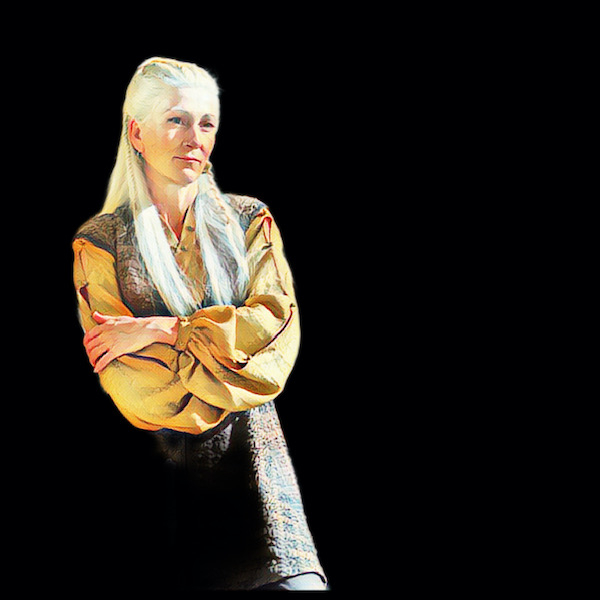
However, many considered that – once removed from the succession – there would be no return for Rhaenys, and the heir would be Baelon’s eldest son, Viserys I. He was married, his wife Aemma was alive, and in addition, there was his brother, Daemon. The tradition of male Kings would be maintained.
As he went down in history as the Conciliator, Jaehaerys called a Great Council at Harrenhal in 101 AC to resolve the dispute. Lords from across the kingdom were invited to vote for the next heir and after much discussion, they chose Viserys.
This decision had major future implications, even though it avoided an immediate war. Rhaenys “accepted” defeat and became “The Queen Who Never Was”.
Behind the scenes, political warfare incited civil war
At the end of his reign, Jaehaerys elected Otto Hightower as his Hand and his daughter, Alicent, was his constant reader and companion. Upon inheriting the crown from his grandfather, Viserys kept Otto in the position and today we can say that it was an irreparable strategic error.
Viserys mirrored his grandfather’s prudence and balance to rule lightly and avoid conflicts, but his brother Daemon, with a warlike and more arrogant personality, saw this choice as a sign of weakness. To make matters worse, Otto was influencing the King directly.
Otto Hightower is known for his prudence, political intelligence, and desire for stability in the kingdom. In contrast, Daemon Targaryen is an impulsive, charismatic, and often reckless prince known for his quest for adventure and power. These fundamental differences in personality and values create a natural tension between the two. For Daemon, Otto only wanted to raise the Hightowers in place of the Targaryens, simple as that. He wasn’t exactly wrong, right?
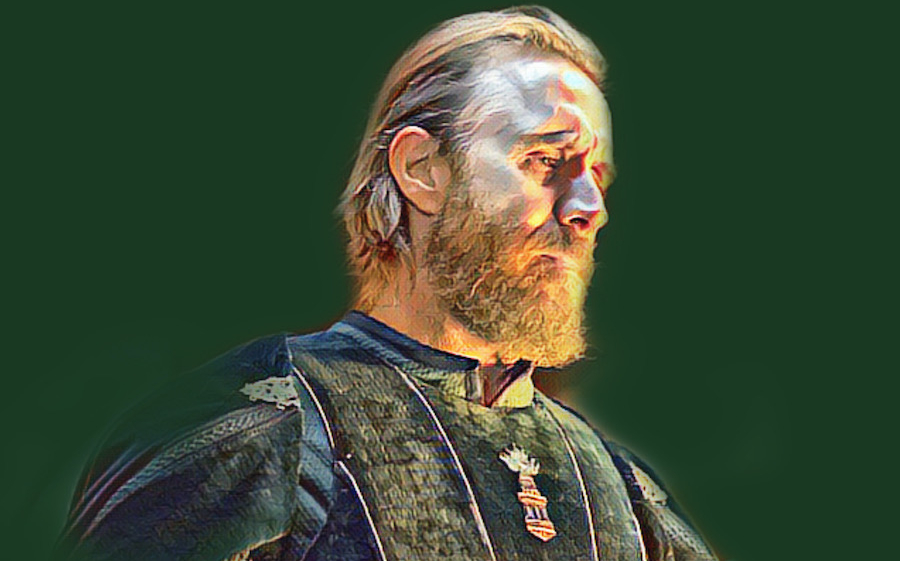

Over the years, Daemon has been one of the potential heirs to the Iron Throne, and his ambition is well known. Consequently, both because he feared his volatile and dangerous personality and because he knew that if Daemon were king the Hightowers would be excluded, Otto came to see, or at least to claim, that the prince a threat to the stability of the kingdom and the reign of Viserys I.
Taking advantage of the fact that he had great influence over Viserys I, Otto used this influence without any shame, undermining the brothers’ once-close relationship, frequently highlighting Daemon’s mistakes and imprudence, and making this competition for the king’s favor even worse. Daemon was often driven mad by what he saw as an intrusion into matters he considered familiar.

Viserys’s susceptibility to Otto’s “advice” is one of the worst flaws of his reign, because as bad as Daemon was, whose actions often caused trouble and scandal, he was always loyal to House Targaryen and never acted to depose Viserys. Still, with the poison planted by the Hand of the King, it seemed difficult for Viserys to trust your brother completely. On the other hand, because Otto Hightower was more calculating and political, Viserys valued his advice.
Although everyone said that Daemon wanted the Crown, the truth was that he wanted Viserys’s preference and the prestige of being his advisor, not necessarily ruling. What Viserys had trouble seeing, until it was too late, was that Otto’s ambitions included planting his daughter Alicent in the family and, after she became a mother, pushing for her son to be his successor. For a long time, Otto was able to present the project more subtly and strategically, but although Viserys caught on, he already had three sons with Alicent (as well as a daughter).
“Everything but Daemon!”
It is uncertain when Otto planned to merge the Hightowers with the Targaryens as at first Viserys was married, had a daughter, Rhaenyra, and was still old enough to produce male heirs with his wife, Aemma. Alicent was strategically placed to become the princess’s confidant, but without a son, the person in direct succession was none other than Daemon Targaryen, forcing Otto to have to improvise.
Secretly using sources close to Daemon, including his lover, Mysaria (Sonoya Mizuno), Otto knew everything his rival did and said, anticipating the narrative to make Viserys aware and biased. This is how he separated the brothers by warning that Daemon would have toasted his nephew’s death because that way he would remain his brother’s direct successor. It was THIS information that caused Viserys to listen to Otto and break tradition by announcing Rhaenyra as his successor. We never learned whether he did toast or not.


Although Daemon adored Rhaenyra, he was hurt by Viserys’ decision and did not respect her because he knew (Viserys warned him) that the only reason his brother decided on his daughter as his successor was that he did not want Daemon as the future king. Here lies the seed of ANOTHER problem. Just like he later did with Rhaenyra, Otto managed to usurp Daemon’s Rights as well.
Otto won this battle against Daemon, with the prince breaking with Westeros for years and only returning years later for a quick reconciliation. That’s when Daemon risked Rhaenyra’s position. By taking her to see the brothels and Flea Botton, Daemon put the heiress’s reputation at risk, creating the perfect argument for Otto Hightower to readjust his plan and now try to place his grandson, Aegon II, in succession. Once again, Daemon’s recklessness helped his enemy.
Beyond blood, hatred for the Hightowers uniting Daemon and Rhaenyra
Since she was made her father’s successor, Rhaenyra has found herself more isolated and ignored by him. Partly because Viserys was guilty of having married his daughter’s friend, but also because of Otto’s constant venom, now committed to proving that the princess was not up to the challenge.
What Otto failed to calculate was both Viserys’ love for his firstborn and his guilt at having lost Aemma, her mother, in the endless search for a male heir. Little by little, like Daemon, Rhaenyra began to see the evil that the counselor was doing, without being able to cancel it at first, but finally opening her father’s eyes.


The princess’s political marriage, both to secure the alliance with the Velaryons (and correct Jaehaerys’ mistake), was rushed because Otto attempted to ruin her. He knew she had spent the night with a man (Rhaenyra seduced Ser Criston Cole (Fabien Frankel)) and told Viserys. The princess tried to deny it, and as part of her wedding deal, she demanded Otto’s dismissal from the position. This upset deeply Alicent, who considered that her father had only spoken the truth and that Rhaenyra was being reckless. They never got along again.
Alicent and Ser Criston teamed up against the princess, who clearly had three children with her lover and insisted on keeping them legitimate. The mutual hypocrisy was escalating to the point that Rhaenyra was actually threatened, and it was then that, to Otto’s surprise, destiny acted in his enemies’ favor.
Widowed at the same time, Daemon and Rhaenyra teamed up and got married, uniting the two legitimate and pure Targaryens in succession to the throne. Rhaenyra never considered Otto’s boldness to still go against her and her husband. And that was a mistake.


Daemon, like Rhaenys, should have been King
Once Viserys I dies, Otto and Alicent move to crown Aegon II before his half-sister. Although Otto does so by blatantly ignoring the late King’s wishes, Alicent is convinced that she heard him name Aegon his successor. Either way, Rhaenyra would not be Queen and Daemon would be far from the Throne.
To Daemon’s further disappointment and frustration, instead of acting, Rhaenyra opted for caution, a decision that in no way delayed the fact that Aegon became King and thus cost the life of her son, Lucerys. Rhaenyra tries to emulate her father’s conciliatory strategy, repeating (in Daemon’s view) his main flaw. It is too much to see History repeating itself.


If Daemon could have killed Otto at every opportunity he tried, we saw at least two of them, Rhaenyra would have never been challenged. But the princess stopped him, thus plotting inadvertently their tragic fate. To make matters worse, she is now insecure about her husband, just like her father before her, and only she will suffer without his support. A Targaryen alone is a dangerous thing.
The truth is that Otto Hightower’s clumsy plan will cost everyone their lives. Just as Rhaenys should have been Queen, when it didn’t happen, the crown should have gone to Daemon Targaryen. He would be a legitimate Targaryen with a pulse, writing a significantly different history in Westeros.
Yes, regrettably Daemon’s reign would be marked by violence, and internal and external conflicts, but also by a sense of personal honor and loyalty to his family, with some points to consider:
1- Internal Politics: Daemon could have faced significant resistance from other noble houses due to his volatile nature. His tendency to resolve disputes with violence could have led to continued instability within the kingdom.
2- Foreign Policy: Daemon was a skilled warrior and may have sought to expand the territory of Westeros through conquest. This could have led to protracted wars with neighboring kingdoms.
3- Family Relations: Daemon had affection for Rhaenyra and wanted her as his wife. He would hardly be faithful to her, but the family dynamic would be closer to the Targaryen tradition.

4- Dragons: As a member of House Targaryen, Daemon had access to dragons. His use of these powerful beings could have significantly influenced the balance of power in Westeros.
5- Legacy: Daemon’s legacy as king would depend on his actions and decisions. He could be remembered as a warrior king who expanded the kingdom, or as a tyrant whose impulsiveness led to years of conflict and instability.
A specific example of how Daemon could have acted as king is precisely his leadership in the fight for Rhaenyra. As a prominent military leader, without hesitation in making drastic decisions to achieve his goals, he would leave a legacy marked by conflict and an aggressive policy, both internally and externally. But they wouldn’t have exterminated the dragons, they wouldn’t have lost Rhaenyra, and the Hightowers would never have come so close to creating a line of kings.
Sincerely? I preferred King Daemon I! And you?
Descubra mais sobre
Assine para receber nossas notícias mais recentes por e-mail.
 miscelana.com