
Rewriting history to alleviate problems or help new generations navigate History has practically become a new segment, taking “purists” to Hell and bringing some good news, like Bridgerton. In fact, the bridgertization of works has already been the target of my criticism, because although it works in some adaptations, the risk of slipping is always greater. Unfortunately, the highly anticipated series My Lady Jane falls into this gap.
As it’s warned in the opening, the “real” Jane Grey, who was Queen for 9 days and was beheaded for treason, is considered “boring”, so the Lady Jane of authors Cynthia Hand, Brodi Ashton, and Jodi Meadows shamelessly embarks on the fantasy and even absurd, maintaining an almost blurred line with the true facts. And the problem is: it’s not even fun.
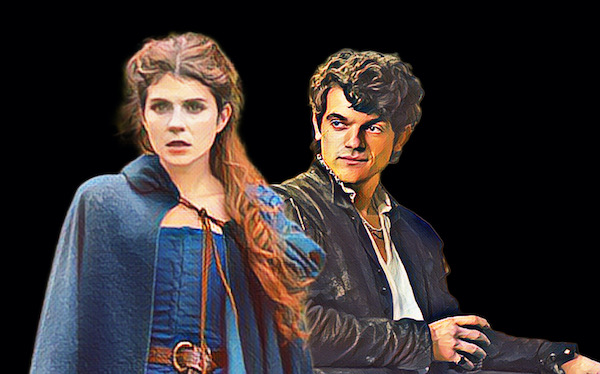
How does My Lady Jane differ from the “real” Jane?
My Lady Jane offers a heavily “reimagined” and humorous version of the story of Lady Jane Grey, who in real life was queen of England for just nine days in 1553. Jane, who was the great-granddaughter of King Henry VII, was proclaimed queen after the death of his cousin, King Edward VI, 470 years ago. But soon after she took the throne, support for Edward’s half-sister Mary (the future Queen Mary I) grew, and Jane was thrown into the Tower of London, convicted of treason, and executed in February 1954. Even without having had the slightest fault of having been crowned or ascended to the throne.
The short life of the English noblewoman has always been told “as it should”: a sad story of a young victim of her time, of the Patriarchy and her Faith. However, the trio of authors decided to give her a magical and different world and to leave no doubt that she doesn’t want to be like the others, incorporating fantastic elements, such as the existence of people who can transform into animals, known as “Eðians”, and even more so, gives her a significantly different and much more optimistic destiny than in the real life, full of humor and twists.
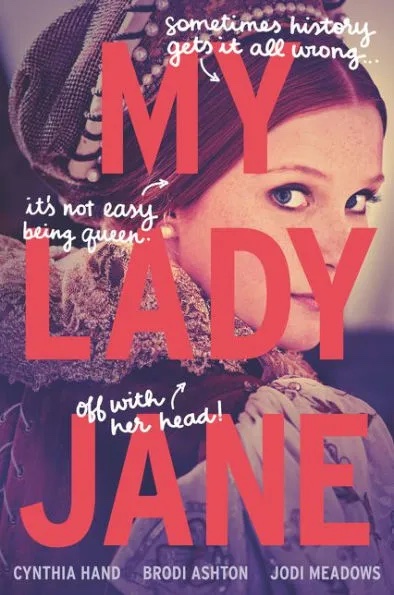

Some things remain as history tells, she was placed in succession at the idea of her father-in-law and was forced to marry Guilford Dudley, also executed in real life, for whom apparently despite everything, she learned to love in the short time they had to life and marriage. The authors take creative liberties with the characters, giving them personalities and roles that serve the fictional and humorous narrative. For example, Guildford Dudley is portrayed in a much more sympathetic and romantic way, something the series has maintained.
Cousins Elizabeth I and Mary I are antagonists and the complex political and religious motivations that led Jane to the throne – which were a reflection of the tensions of the time – are here simplified and modified to suit the fantastic and fun plot of the book, maintaining the humorous tone. , filled with witty dialogue and comical situations, which contrasts sharply with the tragic nature of Jane’s true story.
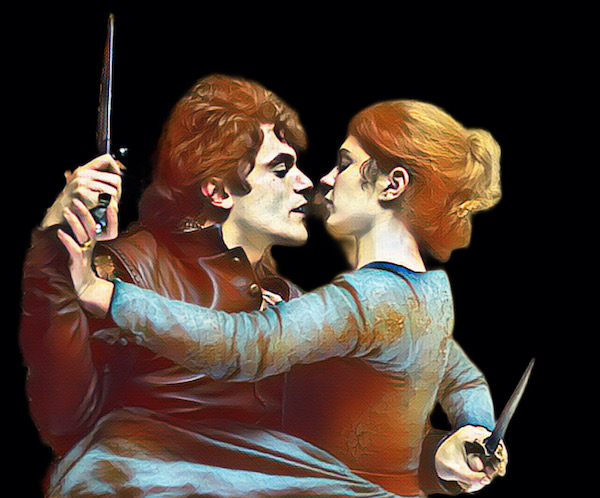
The series: frustrated expectations
Yes, My Lady Jane is practically the opposite of the real Jane Grey. After all, for the authors, the goal was to pay homage to Robin Hood: Prince of Thieves, also with Buffy the Vampire Slayer and above all, the cult film The Princess Bride. But even in literature this was innovative, on TV? Even less. We saw Zombie Pride and Prejudice years ago, My Lady Jane feels like an opportunistic rip-off.
Newcomer Emily Bader is the lead as Lady Jane Grey and, although pretty agile, she doesn’t have the charisma to hold up a confusing production like this. I can’t even say it’s a shame, it’s just a mistake. On the other hand, I am clearly outside the age range for which the content was created. If the effect is the opposite, ignore me. But if you like History, even when modernized, listen to me.

It is appreciable that the authors were compelled to try to imagine a different fate for the tragic Jane (and have fun with it) because she is one of History’s symbols of cruelty and injustice, but as everyone has been comparing, The Serpent Queen did the same with superior intelligence and greater innovation.
Some of the positive side of retelling the stories of English or French or Spanish Queens from an updated female perspective is undeniable, much of what we know about these royal figures came from a male perspective that had to be rewritten multiple times. The difference is knowing how to make the turn. Samantha Morton as Catherine de Medici is priceless, cruel, and manipulative, breaking the fourth wall and giving us a first-person account full of irony. Julianne Moore as Mary Villiers in Mary and George was also “modern” and at the same time within her time. I’ll go further, The Great did a great job of playing with Catherine the Great’s youth, with great three seasons and performances from Elle Fanning and Nicholas Hoult. And don’t need to bring magic (literally) to this.
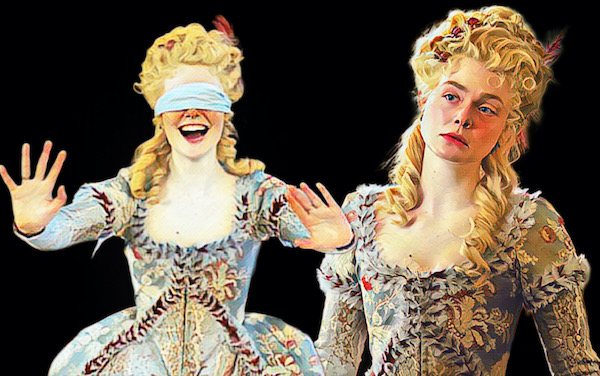
Of course, having people transformed into animals and other beings helps distance any commitment to the truth, but in the same way, if that’s the story, why be Lady Jane Grey? The justification was to try to recount the religious conflict playfully, but even that was not enough. For Amazon Prime, which sells books and series, it was certainly worth the investment. I personally suggest waiting for the MGM Plus series, which is about to return in a few weeks for its second season. Her magic is much more interesting.
Descubra mais sobre
Assine para receber nossas notícias mais recentes por e-mail.
 miscelana.com