
You reap what you sow, the saying goes. The bastard children of the Targaryens, known as “dragon seeds”, are spread throughout Westeros and Essos, but, in particular, Dragonstone and King’s Landing and will be crucial to the turn of History in House of the Dragon.
Their importance is immense: Rhaenyra (Emma D’Arcy) has more dragons to attack the Greens, who have three to defend themselves (Vhagar, Sunfyre, and Dreanfyre), but she doesn’t have to assemble them. As we will see, the attack strategy will work, but only to a certain extent.
We’ve already talked about some of these future dragon riders in MiscelAna, in particular about Nettles – who as far as we know was cut from the series or will only appear in the 3rd season -, and the brothers Alyn and Addam from Hull (Abubakar Salim and Clinton Liberty, respectively), but I am indebted to answer who Ulf the White (Tom Bennett) and Hugh Hammer (Kieran Bew) are and their impact on House of the Dragon. Now that they are on the scene, it is even more important.

The seeds: the origin of the illegitimate Valyrians
First, a recap. In the social rules of Westeros, a system of surnames for illegitimate children was created, which is a way of identifying and, in a certain way, stigmatizing those who were born outside of a union recognized in the Seven Kingdoms and reflects the complex social and political dynamics within the universe. of Kingdom.
As a rule, illegitimacy defines the surname and each region has its own “tip” to help identify them. Like this:
North: Snow
Western Lands: Hill
Vale of Arryn: Stone
Riverlands: Rivers
Stormlands: Storm
Dorne: Sand
Crown Lands: Waters
Reach (Campina): Flowers
Iron Islands: Pyke
Although the Targaryens practically marry each other, if not, they elect Noble Houses, but obviously not all of them are “faithful”, so even they have bastards in Westeros. However, the difference is always in the blood. If the Velaryons and Targaryens reproduce with the “little people”, or the servants and fishermen, they “spread” the Valyrian blood that so differentiates them and makes them “superior” and not everyone is easily identified.
On paper, what prevails to define the surname in Westeros is geography, therefore, where there is a greater concentration of Targaryen (or Velaryon) bastards is what they call “Lands of the Crown”, which is why they traditionally bear the surname “Waters”. So, yes Jon Snow (Kit Harington), Ramsay Snow (Iwan Rheon) – who was later legitimized as Bolton – and Alys Rivers (Gayle Rankin) signal that their fathers were noble, but their mothers were not.
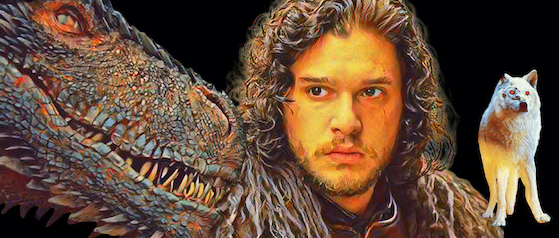
Despite this rule, bastard dragon riders, usually Targaryen or Velaryon because of Valyrian blood, are also known as “Dragon Seeds”, a “nickname” given by King Jaehaerys. The difference between them is that as dragons only submit to those of Valyrian origin, they have greater relevance, especially in times of war.
The truth is that not all children of Valyrian heritage develop the skills of riding dragons, but in the Dance of Dragons, Rhaenyra will make whoever can, a Noble and then generates a delicate race for the title, which will be a double-edged weapon.
Why don’t Hugh Hammer or Ulf the White have illegitimate surnames?
A natural confusion in remembering that the two knights are Targaryen bastards is the absence of traditional surnames that would identify them as illegitimate. In Fire and Blood, more than in House of the Dragon, this narrative choice emphasizes their identities as warriors and influential figures during the Civil War rather than their family origins. On the other hand, we have already heard Ulf (Tom Bennett) announce that he is the half-brother of Daemon (Matt Smith) and Viserys I (Paddy Considine). Will he really be?
Others who create a certain amount of confusion by breaking the rule are the brothers Addam and Alyn from Hull. In the book, we still don’t know in the series, they are presented as illegitimate children of Laenor Velaryon (John McMillan), but as we know even though she tried very hard Laenor did not produce heirs even with Rhaenyra, as it says in a scene from the 1st season, the thesis suggested in the book and that should be made explicit in House of the Dragon is that they are the children of Corlys Velaryon (Steve Toussaint). Their mother, an unknown woman, is from the port city of Hull on the island of Driftmark, and instead of being given a typical bastard surname, they are known by the name of their place of origin, Hull. Eventually, they will be legitimized as Velaryons.

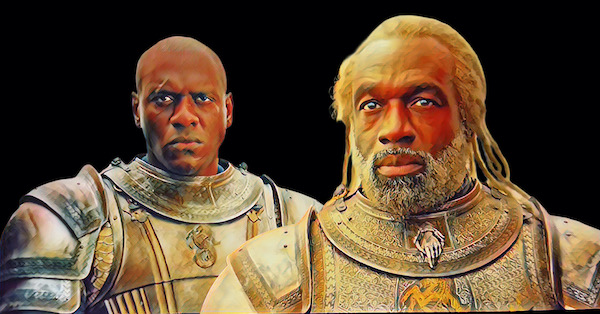
In the case of Ulf the White and Hugh Hammer, we still don’t know why they don’t have the hint of illegitimacy, which is why they adopt names that reflect their achievements and abilities. Hugh Hammer, for example, is known for his use of a warhammer, while Ulf White – Ulf the White – may be related to his appearance or some distinctive feature.
Although the question of legitimacy is a recurring theme in the series, it is not always marked by the use of specific surnames. In the case of the two, their origin is less relevant compared to their actions and loyalties during the war. They gain recognition and status not through their family names, but through their contributions on the battlefield. And eventually, they will be known as the two traitors.
Who is Hugh Hammer?
MAX describes Hugh as a King’s Landing blacksmith trying to make ends meet for his sick daughter. A simple summary that does not reveal anything about its prominence in the plot. We meet him when he addresses Aegon II (Tom Glynn-Carney), demanding better wages for the category of blacksmiths in King’s Landing, who are in demand to prepare weapons for War. Hugh has the King’s attention, but the contempt of Otto Hightower (Rhys Iphans), with an empty promise from Aegon that he will help him.
Placing both Hugh and Ulf in the capital differs from the original Fire & Blood book since they reside in Dragonstone. On the other hand, being initially closer (physically) to the Greens also signals that their loyalty is not so firm. In Hugh’s case, we meet his wife, Kat, and his sick, starving daughter. Bringing this dimension of personal pain to Hugh will contribute to another vision of him when ambition makes him change sides. Obviously, the daughter who is already in a bad way and without food has her days numbered, I don’t know if we can expect anything better for Kat. Given that he and Aegon have already interacted, all of this will influence his future choices in the plot.
When Prince Jacaerys (Harry Collett) summons the dragon seeds to fight for his mother, Rhaenyra, Hugh will be one of those who respond. He manages to tame none other than the ultra-feared Vermithor, the dragon of the late King Jaehaerys I Targaryen.

Hugh will have even more sympathy from the Queen because he will fight bravely for black people in the Battle of Goela, where he will earn the nickname Hugh Hammer. However, things will go wrong in the third season, when the blacksmith’s political ambitions get the best of him.
After Rhaenyra takes the Iron Throne, it is time to fulfill her word and make the Dragon Knights rich and noble men. According to the book, Daemon suggests that Hugh marry the daughter of the late Lord Rosby, one of the nobles who ended up swearing loyalty to the Greens after being arrested. The girl was only 12 years old and Rhaenyra refused, allowing Rosby’s inheritance to pass to a younger son. In place of that title, castle, and fortune, the queen gives Hugh land in Driftmark, something infinitely smaller. Furthermore, the queen also does not follow her husband’s other suggestion, which is to destroy Houses Baratheon and Lannister and thereby grant Casterly Rock to Hugh. The person who influences Rhaenyra to refuse is Ser Corlys Velaryon.
With two ‘balls out’, Hugh starts to question whether he chose the right side, as he does not see himself recognized for his value. Therefore, when he and Ulf are sent to help the blacks defend the city of Tumbleton from the approaching army of Lord Ormund Hightower, they change sides.
At this point, “Lord Hammer” wants more than castles and land: he wants to be king. With the support of the soldiers, who also believed in the prophecy that spoke of a new king emerging as soon as “a hammer fell on a dragon” (in fact it was about Robert Baratheon), he becomes a threat to Greens and Blacks.

When Daeron Targaryen enters the story we will have the scene where Aegon II’s brother throws wine in Hugh’s face when he makes his claim known. The blacksmith starts to wear a black iron crown and indulges in violence and drinking, raping the widow of a knight he killed during the battle and murdering several innocent people.
As Hugh and Ulf prepare for a second Battle at Tumbleton, Hugh is murdered by Ser Jon Roxton. A tragic and bloody ending like his trajectory in House of the Dragon.
Who is Ulf the White?
The loudmouth Ulf the White, according to MAX, is an inhabitant of Kings Landing known as an idiot and storyteller among commoners. One of them we have already heard: he says that he is Rhaenyra’s uncle and that he supports her, but as soon as he sees Aegon in the brothel he declares his loyalty to the Green King. Believing in Ulf will always be problematic.

His love of drinking is one of his most famous characteristics, something that will determine his destiny. A shameless opportunist, he will tame the dragon Silverwing, formerly owned by Queen Alysanne Targaryen.
Just like Hugh Hammer, Ulf will fight in the tragic Battle of the Goela (which will cost Jacaerys his life) and thus stand out among the blacks. As he did with Hugh, Daemon suggests to his wife that as compensation for her efforts, the Queen give Ulf the daughter of the late Lord Stokeworth, but Rhaenyra refuses, instead granting her a knighthood and lands in Driftmark.

Equally, as with Hugh, Rhaenyra also refuses Daemon’s suggestion to give Ulf the Baratheons’ estate and Stormsend Castle, something that Corlys influences her daughter-in-law to deny. In other words, by ignoring her husband, Rhaenyra digs her own grave, leaving two dragon riders disappointed and angry with her.
They change sides, but even the Greens’ offer is not enough. Daeron is named Lord of Bitterbridge, but he wants the rich land of the Tyrrels, Highgarden, which he does not get. Always drunk, legend has it that he raped three women a night and fed Silverwing the ones he didn’t like.
It’s no surprise that the pair have been useful for the Greens, but extremely problematic and dubious as well. The plot to kill them is quickly organized, with the approval of Prince Daeron.

Hugh is killed before the Second Battle of Tumbleton, but because he was blacked out and drunk, Ulf survives. Upon discovering that his partner died “during the battle”, Ulf tells him that he is his successor and that he will claim the Iron Throne. Literally, the last straw that was missing to seal his fate.
The next day, Ser Hobert Hightower brings two barrels of wine to Ulf, who notices that one of them is poisoned. However, being a loudmouth is problematic, his killers anticipate his steps. He believes he chose the clean wine after seeing Ser Hobert drink it, but after three drinks, he “falls asleep” never to wake up again.
The impact of traitors on history
Ulf and Hugh are examples of how the Targaryen Civil War was not just a fight between nobles but also involved characters from humbler backgrounds who managed to gain power through dragons. They symbolize the instability and unpredictability of war, where alliances could change quickly and loyalty was often bought or forced.
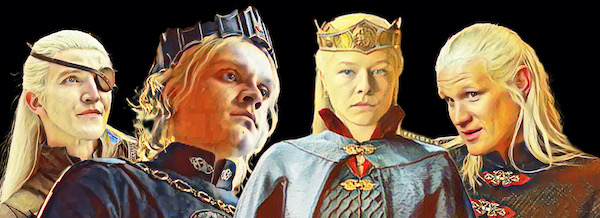
By changing allegiance, they contribute to the prolongation and intensity of the conflict, resulting in further destruction and loss of life. Eventually, his inordinate ambition led to his downfall, exemplifying the dangers of engaging in power games without a clear sense of loyalty or purpose. These are characters who add a layer of complexity and realism to the narrative, showing that the pursuit of power can corrupt and destroy, no matter a person’s origin or initial position.
Ulf and Hugh’s betrayal deals a significant blow to Rhaenyra, as she loses not only two important allies but also the dragons they ride. And she becomes more exposed at the Kingdom’s worst moment, accelerating its tragic end.
Descubra mais sobre
Assine para receber nossas notícias mais recentes por e-mail.
 miscelana.com
1 comentário Adicione o seu