
In the world of classical ballets, a work that has solo roles for two main dancers has always been considered “ideal”. For the public? Further! After all, seeing double talent on stage is always incredible.
These two roles don’t always mean “antagonism”, but it’s nice when there is. In the original Swan Lake, there were Odette and Odile for two dancers, but for more than a century it has been danced by just one. In Giselle, there is a rivalry between Myrtha and Giselle, but the most lethal and famous opposition is between Nikyia and Gamzatti from the ballet La Bayadère, one of Marius Petipa’s most beloved works.
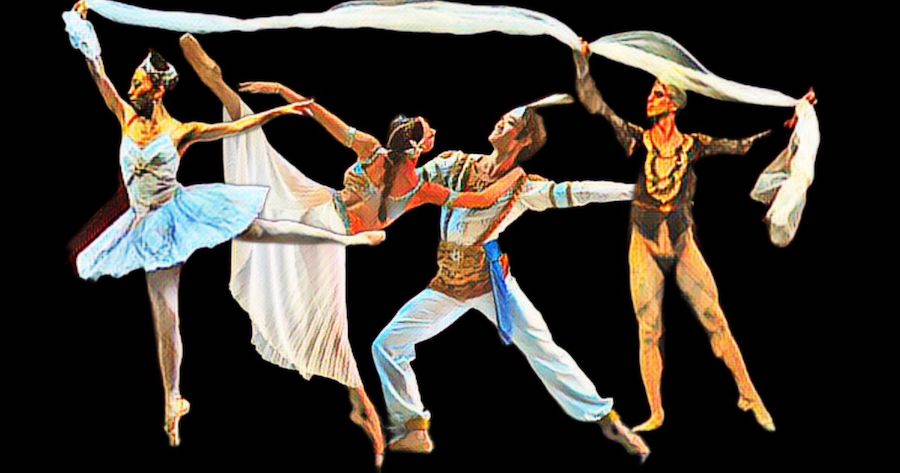
The plot: two women competing for the same man
La Bayadère is a classical ballet in four acts, created by Petipa in 1877 with music by Austrian composer Ludwig Minkus, using the popular formula of the time of seeking “exotic” themes and cultures from other countries. In this case, the story is set in ancient India and revolves around love, betrayal, and revenge.
The long-suffering heroine of the story is the ballerina Nikiya, a temple devotee and dancer (bayadère), who is secretly in love with the warrior Solor. Although she is forbidden to have relationships with any other man, she and Solor swear eternal love to each other, which provokes the wrath of the high priest, who also loves Nikiya.
When she rejects him, the High Priest creates a plan to get rid of Solor, but that, of course, goes wrong. He is chosen by the Rajah, a powerful leader, to marry his daughter, Gamzatti, who is also in love with Solor. The Priest reveals to the Rajah about the forbidden romance, hoping that this will condemn Solor to death, but ends up making the opposite decision: Nikyia is the one who must die. The Raja’s desire is aligned with Gamzatti, who discovers his fiance’s hidden romance and tries to bribe Nikiya to leave him, but when the dancer refuses, Gamzatti becomes furious and decides to eliminate his rival.


Nikyia’s death is therefore inevitable and before she is murdered with a poisonous snake hidden in a flower arrangement, she is forced to dance at Solor and Gamzatti’s engagement party, being humiliated and disappointed. When she is bitten by the snake, the high priest offers an antidote in exchange for Nikiya’s love, but she refuses and dies.
Guilty, Solor smokes opium and has a vision of his beloved in the Kingdom of Shadows, where he asks for and receives her forgiveness. But the next day, at the wedding ceremony, Solor is haunted by the vision of Nikiya, and Gamzatti is tortured with guilt too. During the ceremony, the gods, enraged by the betrayal and violence, destroy the temple, killing everyone inside. In the end, the spirits of Solor and Nikiya are reunited in the afterlife, united forever.

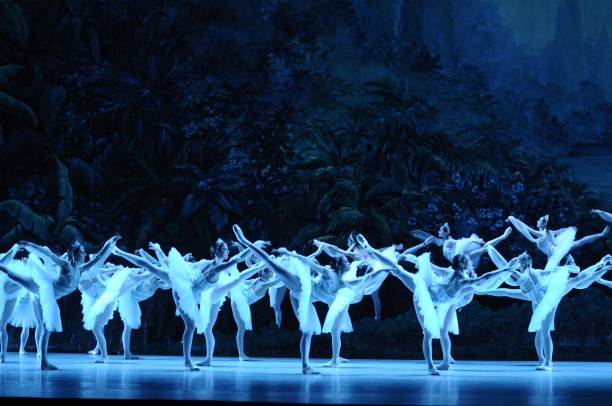
The division of solos and appearances is well balanced between the rivals: in the 1st act it is Nikyia who stands out, but in the 2nd, although she has a spectacular solo, the star is Gamzatti. The 3rd act, the “white” act, is again Nikyia’s conclusion to bring Gamzatti once again in another spectacular solo. In general, the 4th act is excluded from productions, but the Royal Ballet always has it complete.
The first montage: the behind-the-scenes duel
La Bayadère was created as a vehicle for a benefit performance by Ekaterina Vazem, at the time, the prima ballerina of the Imperial Theaters of Saint Petersburg. His rival on stage was the ballerina Maria Gorshenkova, who created the role of Gamzatti. The editing was somewhat conflicting behind the scenes.
With the grandeur of the ballet, it’s no surprise that it took at least six months to create, long enough to give the demanding French choreographer a headache. And the fight – now legendary – was recounted by Ekaterina in her biography, it was about the disagreement between them and the issue of her entry at the end of the ballet. “I associate La Bayadère with the memory of a confrontation with Petipa at rehearsal,” she said. “Petipa began to produce something absurd for my entrance as a shadow, consisting of some delicate and busy steps. Without thinking, I rejected the choreography, which did not match the music, nor did it match the general concept of the dance,” she continued.

The argument escalated until she refused to even try his way. “He completely lost his temper in a fit of rage and without saying a word, I grabbed my things and left the rehearsal, which therefore had to be interrupted”, the dancer describes.
The fight between them continued until the premiere, without Petipa knowing how and what Ekaterina would dance. “I don’t know what Madame Vazem is going to dance, she never dances in rehearsals,” she recounts the choreographer saying. “I wanted to teach this vain Frenchman a lesson and demonstrate to him clearly, right before his eyes, what a talent I really was,” Ekaterina wrote describing how her jumps aroused applause from the entire company. “Petipa, who was on stage, was immediately convinced that the treatment he had given me was unfair. He came to me and said, “Madam, forgive me, I’m a fool,” she says.
The fact is that Ekaterina, as she describes it, felt challenged because she was more of an adagio dancer and Maria had solos that made her fly on stage. Art imitating reality where it was actually Nikyia jealous of Gamzatti?
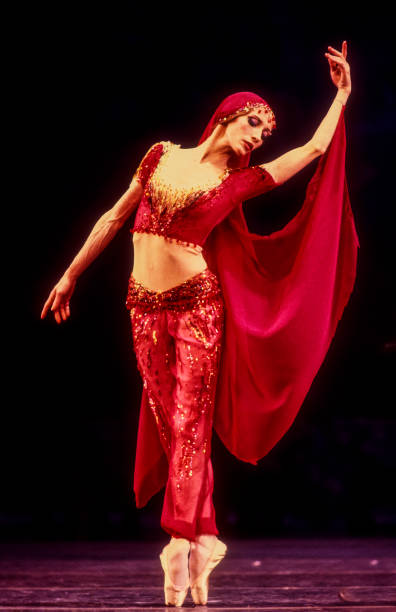
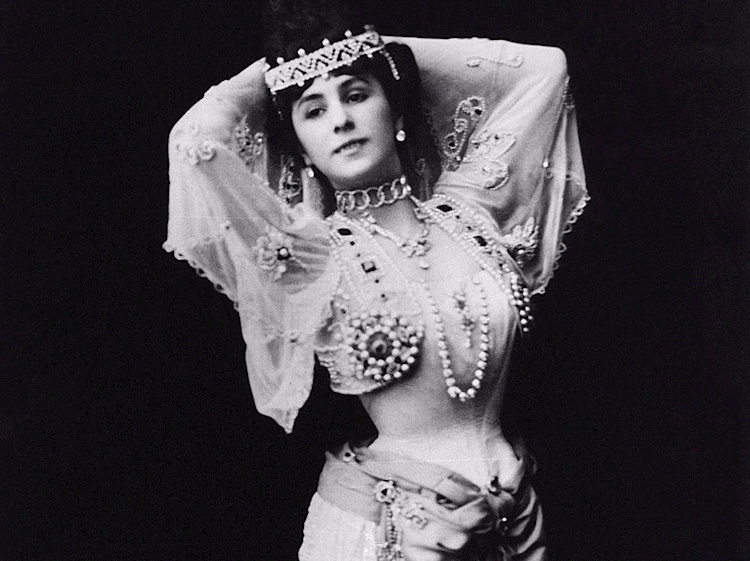
Years later, prima ballerina Mathilde Kschessinskaya danced Nikiya with Olga Preobrajenskaya as Gamzatti, with Petipa making significant changes that remained in the final version. Although part of the ballet was staged by the Theatro Municipal do Rio, it was only in 1980 that Natalia Makarova staged the first complete production of La Bayadère outside the Soviet Union. And, in 1991, it was also Rudolf Nureyev‘s last work for the Paris Opera Ballet.
We can argue that in the West, Makarova’s version became the official one. She first staged The Kingdom of Shadows for the American Ballet Theater in 1974, only releasing the full version six years later. The Russian ballerina starred in the production as Nikyia, with Anthony Dowell as her Solor, but there was unexpected drama for Gamzatti’s role.

The person who rehearsed and was announced as the antagonist was Marianna Tcherkassky, who danced the first act, but was injured and was unable to perform in the main act for Gamzatti: the second act. Taking her place was soloist Cynthia Harvey, who became a star for her role. Promoted to prima ballerina thereafter, she is considered a legendary Gamzatti.
My favorite Gamzattis are Paloma Herrera, who I saw live alongside Amanda McKerrow and Julio Bocca, and yes, Darcey Bursell, who is in the Royal Ballet recording alongside Atylnai Asylrumatova and Irek Mukhamedov. More recently, the Royal had Marianela Nuñez and Natalia Osipova alternating roles. What a dream to have these stars sharing the stage! A duel of stars.

Descubra mais sobre
Assine para receber nossas notícias mais recentes por e-mail.
 miscelana.com