
The Vikings: Valhalla series failed to approach the quality of its original source, the excellent Vikings, although we can argue that it had even richer material on its hands. We may regret it, but at the same time, it fulfilled its role as entertaining content that brings the true stories of fascinating characters: King Canute, Queen Emma, Godwin, and, of course, the Vikings too, including Harald Hardrada, the last Viking king.
Harald’s great-grandson, who we learned to detest in Vikings, who in the series had no children, we have to take into account that in Michael Hirst‘s series Harald dies without descendants, something in line with most modern scholars, who believe that the genealogy that unites the two is part of the legends of the time, and not the historical reality, cited to give legitimacy to the claim to the Norwegian throne. In Vikings: Valhalla, Harald is one of the great heroes, a perfect role for the charismatic (and handsome) actor Leo Sutter.
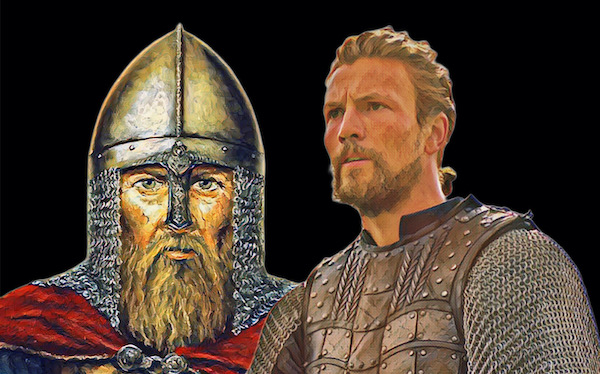
Leo had already done some series and films, but here he gained prominence for the first time, perfectly suited to the challenge and forever one of my favorites to enter the House of the Dragon universe. That said, in farewell to the Netflix series, which announced in the third season that it will stop here, let’s review the trajectory of the real Harald Hardrada, also known as Harald III of Norway.
Harald reigned in Norway from 1046 until he died in 1066 and is a fascinating figure in medieval history, often remembered for his adventures and deeds as both a warrior and a leader, as we see in Vikings: Valhalla.
In the series, and in History, a fascinating man
Harald was born around 1015 and was the half-brother of King Olaf II of Norway. After Olaf’s defeat at the Battle of Stiklestad in 1030, Harald fled Norway and spent many years in exile, around 15, serving as a mercenary and military commander. He particularly distinguished himself in the service of the Byzantine Empire, where he gained fame and fortune. Basically, this journey is the backbone of Vikings: Valhalla.
In 1046, Harald returned to Norway and eventually became king, ruling alongside Magnus the Good until Magnus died in 1047. During his reign, Harald worked to consolidate royal power and expand Norwegian influence. He is also known for his attempts to conquer Denmark, although these campaigns were unsuccessful.
The most famous part of Harald Hardrada’s life was perhaps his attempt to conquer England. In 1066, he invaded England but was defeated and killed at the Battle of Stamford Bridge by Harold Godwinson, the then-king of England. This battle is often seen as the end of the Viking Age, marking a significant transition point in European history.
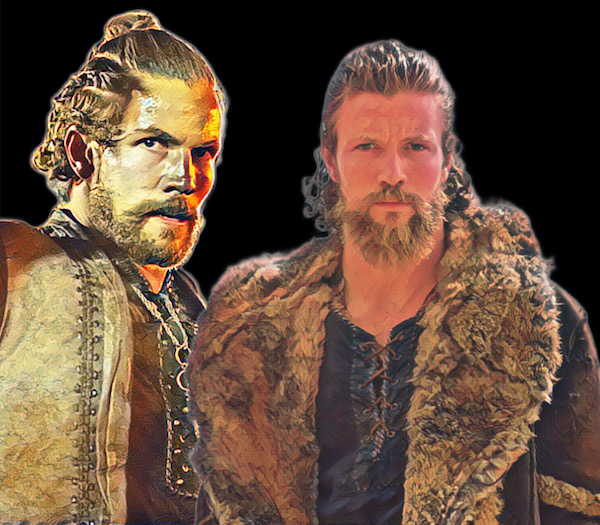
The third and final season of the series retells the true part of his journey through Constantinople and Sicily, including his romance with Empress Zoe. When he left Turkey, Harald married Elisabeth (or Ellisif), granddaughter of the Swedish king Olof Skötkonung, returning to Norway in early 1046.
In his absence, the throne had been restored to Magnus the Good, Olaf’s illegitimate son, while Canute’s sons were fighting for the English throne. As Harold Harefoot and Harthacnut died young, Magnus’s position as king was secured without threat. In fact, when Harthacnut died leaving the Danish throne vacant Magnus also inherited that Crown, defeating Sweyn Estridsson.
When he arrived in Norway, Harald and his nephew made an agreement, in which Harald would rule Norway (not Denmark) together with Magnus (although Magnus took precedence), and divide his fortune. The two remained isolated from each other because, in general, their meetings ended in fights.
“Casually”, a year later, Magnus died without an heir, leaving the throne of Denmark to Sweyn and Norway to his uncle, but Harald was quicker and ignored his wishes, and declared himself king of Norway and also of Denmark.
Harald’s last days
Over the years in Norway, dominating Denmark was more challenging and Harald never truly conquered it, changing his goals and turning his attention to England. His claim was based on an agreement between Magnus and Harthacnut, who died childless, and established that if one of them died, the other would inherit his lands, therefore, England would be within Harald’s rights as well.
The problem is that Harthacnut himself preferred his half-brother, Edward the Confessor, who became king with the support of Earl Godwin, Harold Godwinson’s father. Before he died, also without successors, Edward fueled the hopes of Sweyn and William, Duke of Normandy for the throne, which was occupied by Godwin’s son, Harold Godwinson.
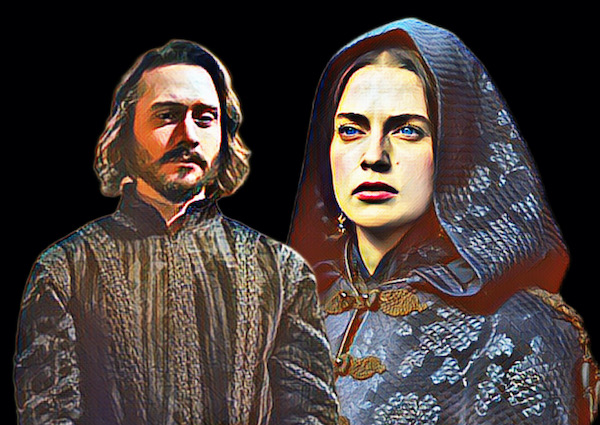

Harald invaded England in 1066 from the North, while to William (later the Conqueror) for the South, but was killed at the Battle of Stamford Bridge, defeated by Godwinson’s forces. Harald was shot in the throat by an arrow and killed early in the battle because he was fighting without armor.
Harold Godwinson’s victory was short-lived: it was soon won by William at the Battle of Hastings, becoming the first Norman king of England.
A warm farewell
The third season of Vikings: Valhalla had to rush the story, but the most incredible parts are the true ones. For Game of Thrones fans, it’s fun to revisit scenarios that we had like King’s Landing (the city of Dubrovnik, among others), but it’s a production that loses the potential of very rich material with a superficial delivery, full of clichés.
It could have lasted for five or more years, but, on the other hand, it was done, he said goodbye at the right time. Skull!

Descubra mais sobre
Assine para receber nossas notícias mais recentes por e-mail.
 miscelana.com
1 comentário Adicione o seu