
Vikings: Valhalla debuted on Netflix during the pandemic, with the mission to excite passionate Vikings fans and win new fans. It was midway, exactly like its hasty, almost abrupt conclusion, which makes us say goodbye to the “new” heroes in the middle of a great adventure. The feeling was that the series ended without telling the writers, kind of turning off the light in the middle of a battle or a speech, a strange and inconclusive ending. Unfortunately.

The differences and choices of Vikings: Valhalla
Vikings: Valhalla takes place around 200 years after Vikings, but brings fascinating characters, one of which could have its own series. Yes, even more than the original! All the main characters are historical characters, from Freydis to Emma, with some artistic liberties, but still with a unique dramatic potential… but poorly used.
One of the qualities of Michael Hirst‘s series was knowing how to choose its protagonist. Vikings followed Ragnar Lothbrok and his sons, with other legendary names such as Rollo, Harald, or Ecbert being his supporting characters. Jeb Stuart chose a trio – Harald, Freydis, and Leif – as leaders, but outlined the adventure of Canute – the first Viking King of England – separately. This made the story weaker and more confusing.
Of course, if the choice were to follow Canute it would leave him very vulnerable to comparisons with Ragnar, which is why the Netflix series established a fictional relationship between the last Viking king, Harald Hardrad, and the brothers Leif and Freydís, which brought youthfulness and energy to the story, but equally, it laid its chief foundation in the single non-historical fact of an incredible adventure.
It would not be wrong, therefore, to say that Harald Hardrad was the great protagonist, after all, Vikings: Valhalla shows his journey to the throne and his transformation from an ambitious young man into a hardened and firm king in the final scene. Powerful? Yes, but still, paradoxically, frustrating.
The reason for this problem lies precisely in “editing” the narrative. Part of the narrative was to present the conflict between the Vikings who converted into Christians and those who still defend the ancient pagan faith. Thus, characters who have names like “Magnus Magnanimus” or the Viking saint, Olaf Harraldsson as the villains of the series. And villains without great dimensions, are just violent and thirsty for blood and power, very cliché, something that Vikings avoided as much as possible.

One success of the series was to establish the romantic bond between Freydís and Harald, creating a beautiful love story between people with opposing views (he, Christian, and she, pagan), which was potentially moving, even though they faced two seasons apart only to briefly meet again in the final minutes. I’m not saying it needed grand gestures (even though saving Freydís is in my book of gigantic gestures), but since the conclusion was inconclusive, it affected that choice.
A fast-paced season finale
In just eight episodes we had to speed up the plot, making everything more confusing.
Canute faces problems with the Catholic Church, which is corrupt and suspicious of his conversion, but the potential of this drama is resolved as unexpectedly as presented. Next, he has to resolve his succession, which is even more problematic because he has children from his first marriage and stepchildren as well, in addition to his children with Emma.

This potential that would be incredible is drawn with brothers, half-siblings, and cousins dreaming of the throne, making alliances, and betraying each other in such a complex way that we easily lose who is who.
Just like one bad apple spoils the rest, Magnus, Olaf’s son, appears out of nowhere wanting everything: revenge and power. And he succeeds, apparently.
Emma and Godwin end as they begin: in a game of deadly chess where neither of them refrains from low blows to attack the other. Canute dies naming Emma his successor, but we know that House of the Dragon was inspired by medieval facts: men would rather burn everything down than leave a woman on the throne, especially with Godwin there. More about them is below.
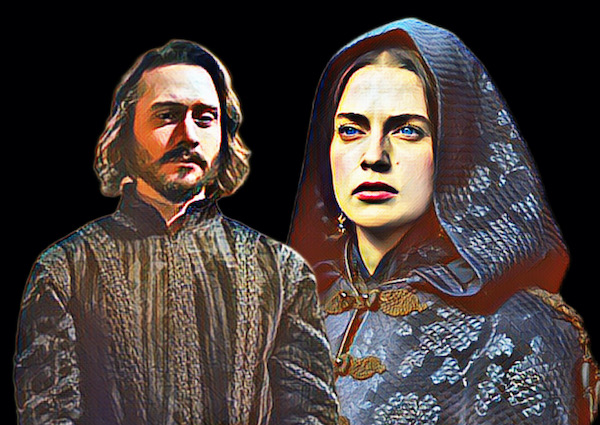
Freydís returns home only to discover that her father is the worst man in the world, who steals, attacks, and conspires against her and worse, who kidnaps her son, Harald, to make her submissive. She can’t because she escapes to Kattegat and sends her boyfriend to find the child. Stigr finds Harald, but he is apparently mortally wounded, it is unclear whether he will be saved.
In Kattegat, Freydis meets Queen Ælfgifu, whose years away have softened her. She’s on good terms with Freydís and even Emma! But Ælfgifu is murdered by Magnus, who also kills her son and takes the crown of Norway for himself. Additionally, she captures Freydís to avenge the death of her father, Olaf.
Kattegat had to be the final scenario and everyone goes there: Leif, looking for Freydís and Harald because, after 15 years traveling the world, he realized that the time had come to effectively become King of Norway. He manages to escape from his prison in Constantinople, breaks with Empress Zoe, kills his captors, and quickly finds Leif again arriving in Norway. There, he crowns himself king, agrees to share the position with his nephew, Magnus, and even says he agrees to “burn” Freydís. Of course, it’s a setup, he arrests his nephew and frees Freydís, letting her and Leif leave for America.
Did you see how strange the ending was? Yes, the series ends like this.
What was left to say?
When Vikings: Valhalla ends with the changes in the kingdoms of Norway, Denmark, and England, the series ends literally one or two seasons ahead of time. For those who know real history, it is very frustrating. We “miss” the open struggle between Queen Emma and Godwin, including the violent actions of both, the torture of Emma having to walk through flames to prove her moral innocence, and the violent deaths of the queen’s children under his command, as Godwin puts it. his son as king and as William the Conqueror becomes the conqueror. The routes for all of this were suggested in the last few episodes but were left up in the air.
This wasted an excellent work by actor David Oakes as the most dangerous of the antagonists, always escaping the obvious and presenting himself as an effective strategist. Laura Berlin, whose beauty is undeniable, handled the clashes between them well, but it is David who deserves the most praise.
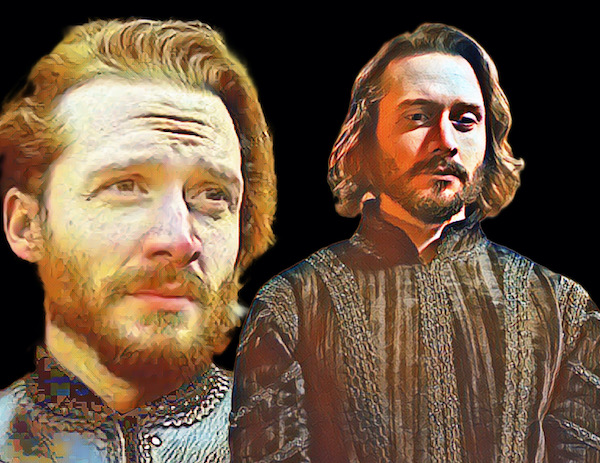
So, let’s clarify some things that were left out:
- Magnus dies “unexpectedly” in the first year of co-reigning with Harald. The series accelerated the process by assuming the obvious never sealed by historians that the Norwegian got rid of his nephew to keep the Crown.
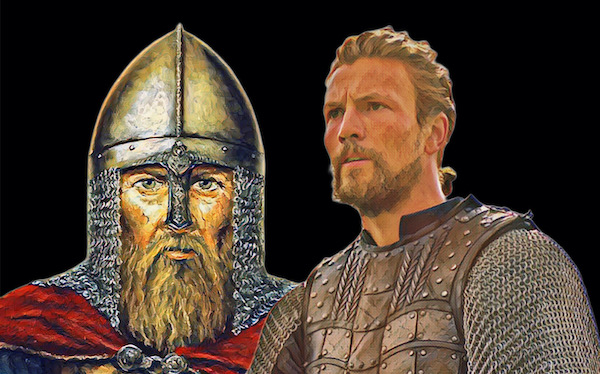
- Harald never dominates Denmark, even though he tries. He then sets his sights on the British throne but dies in a battle in England without obtaining the English Crown, but is the last Viking king in Norway.
- With Harthacnut reigning over Denmark, Godwin deftly defeats Emma. He supports Harold Harefoot in England and when the queen’s firstborn sons invade the country, he helps capture Alfred and hands him over to Harold, who cruelly blinds him, leading to his death.
- Harthacnut’s reign also does not last many years and so the Danish Crown ends up going to Emma’s youngest and Æthelred’s last surviving son, Edward the Confessor, who marries Godwin’s daughter, Edith.
Under the influence of Godwin and Edith, Edward first banishes his mother from Court and then believes the accusations of her relations with the Bishop of Winchester and as a test of her innocence, forces her to publicly submit to the “trial by fire”, which forced her to walk barefoot on nine points of molten iron.
After overcoming the ordeal, Edward accepts Emma back and turns against Godwin who, after a year of exile, forcibly restores his position in the County of Wessex, but dies suddenly of an unknown illness.

Even so, his son ascended the throne after the death of King Edward, in 1066. In other words, Godwin is the father of the King of England. Unfortunately, one had a brief reign as William invaded England and became known as the Conqueror, the first Norman king, ending conflicts with the Vikings forever.
- Leif and Freydís settle on the new continent, today’s North America.
In other words, there was “little” left for Vikings: Valhalla to complete the saga. In that respect, Vikings was complete. He “lost” his hero in the fourth season, when Ragnar died, but his sons held on for the next two seasons and we saw the civil war between them, just as Alfred the Great was raised and was the first king of a unified England to “win ” the Vikings. Here we are left with a cheesy and childish “Hardrada, Hardrada, Hardrada” chant to “close” the plot. Does anyone blame our frustration?
The positive side
As a passionate fan of Game of Thrones, I had fun last season identifying the places where various sequences from Vikings: Valhalla were filmed because as the teams are the same, it was easy to notice the repeated choices.
This connection goes beyond visual, there is a potential for us to one day see actors “leave Kattegat” to “arrive in Westeros”. Especially with House of the Dragon still in progress and spin-offs in development.
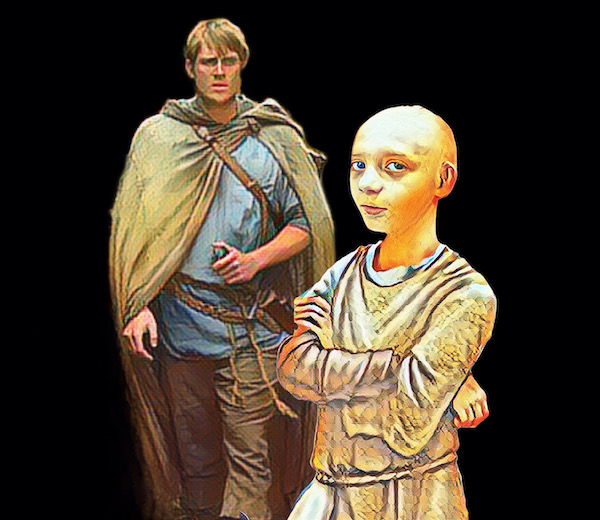

Peter Claffey, who will be in The Knight of the Seven Kingdoms, has a cameo in Vikings: Valhalla. I’m a supporter of Leo Sutter as Aegon I in Aegon’s Conquest series when he leaves the role, I would also accept him as an older Cregan Stark in the final season of House of the Dragon.
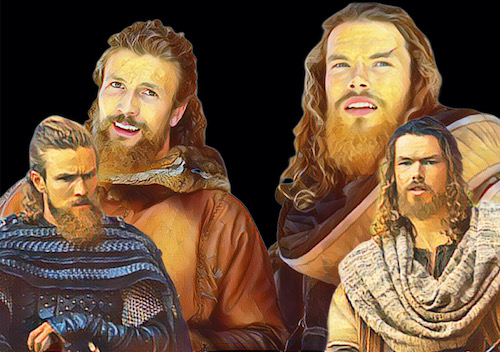
I also see the potential for Laura Berlin, David Oakes, Frida Gustavsson, and Sam Corlett in prominent roles in the Targaryen dynasty. And you?
Descubra mais sobre
Assine para receber nossas notícias mais recentes por e-mail.
 miscelana.com