
Faye Dunaway‘s most striking image for new generations, unfortunately, will always be linked to the biggest embarrassment of the Oscars. Well, it was her voice, after Warren Beaty handed her the winner’s envelope, that announced La La Land as the 2017 Oscar winner, when in fact it was another film. At the time, many said that the confusion also occurred not because of the auditor’s error, but because Warren and Faye hated each other so much that they didn’t speak to each other, so he wanted to show the error and she understood that it was to announce the winner. Hollywood legends are born like this, but, due to Faye’s legendary reputation for being difficult, many people took it into consideration.
That said, before talking about the “documentary” Faye, which arrived on MAX in July 2024, I need to make an addendum, almost like a disclaimer. Anyone who reads MiscelAnas knows how critical I am of the wave of “documentaries” that have been occupying the platforms, many of them bordering on the danger of being purely propaganda formatted as journalism. Netflix is their champion, with a collection of series and titles that have the biographer’s heavy hand in guiding the script, without the slightest concern with the factual truth, just citing the sentimental truth. It’s easy to identify when they start with “my truth” or “my voice”. I would say that today, it is as if documentaries are divided between the true and rarest, which are those that show all sides of the same issue, and documented gaslighting, or Gaslitdocs, which are manipulative and even malicious works of, as I said rather, pure propaganda. These, unfortunately, are increasing in volume every day.

In this scenario, the “documentary” Faye is another example and demands maturity and culture to be appreciated. The film, which was highlighted at Cannes in 2024, is an opportunity or would be, to actually get to know who (truly) Faye Dunaway is, one of the best American actresses of the 70s and 80s, whose unanimous reputation for being difficult made her equally legendary behind the scenes (for all the wrong reasons).
Let’s put it in context: in times when bullying was applied without shame in work environments, Faye Dunaway was famous for being a toxic and aggressive person towards everyone on film sets or outside, earning a reputation for being insufferable. Unsurprisingly, even though she was talented, she lost roles until she ended up almost ostracized. And Faye came intending to change that perspective.
With this positive opening, it would be easy to imagine that I’m not a fan of the actress, but it’s the opposite. As I’m from the 1970s, I grew up at the height of Faye Dunaway’s stardom and she’s more than Bonnie Parker or Joan Crawford, for me, she’s my favorite Milady de Winter! Intense, elegant, and always surprising, she was the greatest, until she wasn’t.
When I learned about her behind-the-scenes complex personality, I was initially skeptical about the reports, but then I had to believe them and accept them. The reputation for being difficult was generally a misogynistic term applied to “women with a strong personality”, intelligent and courageous, but in this case no, it was actually an apparent problem of short patience and a lot of vanities. I was dying for Faye to confirm the opposite.
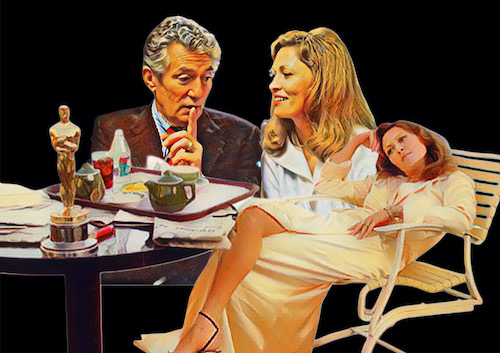
If you’re very young and have never heard of Faye Dunaway, the film gives a quick summary and I’m going to piggyback on the shorter version: a girl born to a poor family in the southern United States and who always dreamed of being an actress. Daughter of an alcoholic father who, being in the army, traveled the world and the country always with her family in tow, Dorothy Faye stood out for her undeniable beauty and as soon as she could, she went to study Theater in New York, joining the group of protégés of Elia Kazan and shine on Broadway before being taken to Hollywood.
She starred in hits, became famous quickly, became a fashion icon, and won an Oscar for the spectacular Network, in 1977. But even the complex Bette Davis openly complained about her behavior as a person: irritated, rude, and dry with people. Only other equally problematic stars, like Sharon Stone, openly defend her. In other words, fame came from truth. And she doesn’t deny it, nor does Faye try to hide it. In fact, it is to address this issue that the documentary was made, a case of a little too late, she recognizes.
In other words, Faye covers the actress’s filmography but focuses on a few titles: Bonnie and Clyde, of course, as well as The Eyes of Laura Mars, Chinatown, Network, Barfly, and The Thomas Crown Affair, obviously. Faye did a lot more than that, but okay, those are the films she will be remembered for. And yes, there is a special space to “justify” the massacred Mommy Dearest.
Director Laurent Bouzereau makes it very clear that there really is an irascible Faye Dunaway, in the first minute he already shows her in a bad mood before I started recording, but after that, it’s just sweetness. This is because Faye Dunaway has always been excessively frank, none of this is new, the difference is that now she has a diagnosis of bipolar disorder, which, as she says, does not erase the past but makes her realize that she would not have control over her personality without due care, therefore it is necessary to tell your story again and in your own way so that we can judge it with different eyes. Or not.
I love Faye Dunaway, I need to repeat, but Faye is not even a documentary or an interview, it is a diary 90% in the first person where everything is retold from her perspective: that of a perfectionist, intense, dedicated, and ambitious woman. Today I am aware that bipolarity has an even greater dramatic impact on mood changes, but that others did not understand it 100%. In other words, we can also see gaslighting.
What is sad about the documentary is the lack of people who testify to the negative side that is the seed of the story, we only have two or three defenders, including his son, or a great silence from colleagues and friends. Deafening, she would say.
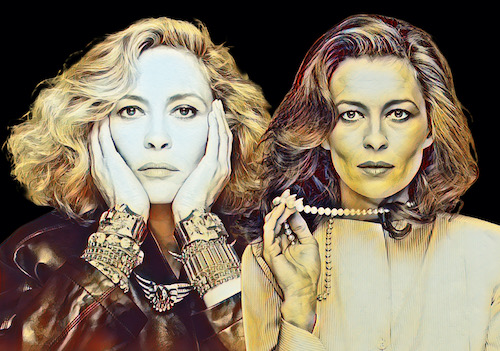
The director had already delivered the excellent Natalie Wood: What Remains Behind, also on the same platform, and denied that it was a “vanity project” by Faye Dunaway. He also argues that he excluded many of the stories (the one with Bette Davis is one of them) so as not to lose the focus of the script, which is to reveal “Dorothy Faye” to the public. His intention is to show us that Hollywood was unfair to the actress. Then he doesn’t hit the mark.
In the end, we have an hour and a half of Faye Dunaway being Faye Dunaway, a diva in every sense of the word, controlling her image and making a half-hearted apology for being who she is. Because he doesn’t regret anything (and why would he? It was brilliant!), it’s impossible to escape a feeling of emptiness, or even a superficial feeling that the “documentary” (I can’t exclude the quotation marks) gives us. She addresses important points of her professional battles, but whether personal ones interfered, we have no way of knowing. She doesn’t connect the dots.
So Faye is a bit bittersweet. Her great performances are not explored, nor is her fragility. The effect is the opposite: at 83 years old, she becomes even more mysterious. And without remorse. “I don’t mean to make an excuse about it,” she says in Faye. “I am still responsible for my actions.” No one doubts it!
Descubra mais sobre
Assine para receber nossas notícias mais recentes por e-mail.
 miscelana.com
Faye was amazing. Most beautiful woman ever
CurtirCurtido por 1 pessoa