
I’ve already talked about the impact of the film Of Human Bondage on Bette Davis’ career, the 1934 production that gave her a lot of fights, heartache, and her first Oscar nomination for Best Actress. Well, the work is turning 90 years old in 2024 and because it is a great classic, it deserves a review.
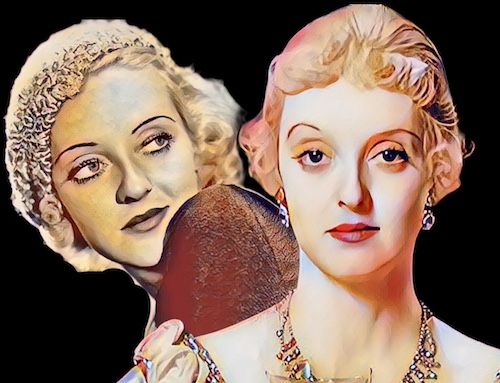
The film had a different name in Brazil, but the book – Servidão Humana (Of Human Bondage) – was written by W. Somerset Maugham and is a semi-autobiographical novel that explores themes of personal growth, the search for meaning, and the complexities of relationships. The story follows the life of Philip Carey, a young man with clubfoot who is orphaned and raised by his strict and unloving uncles. Due to the various rejections that marked his childhood and youth, Philip follows a difficult path of self-knowledge and overcoming, permeated by a toxic and abusive relationship with Mildred Rogers. She represents all the cynicism and evil of the human soul.
The novel begins with Philip’s childhood, detailing his struggles and the emotional and physical pain caused by his disability. He goes through several phases in life, including studying in Germany, trying to become an artist in Paris, and eventually studying medicine in London. Throughout these phases, Philip experiences countless relationships and encounters that shape his understanding of life and himself.
One of the most significant relationships in the novel is with Mildred Rogers, a cold and manipulative waitress with whom Philip falls in love. Despite her indifferent and often cruel treatment of him, Philip cannot free himself from his obsessive love for her. This relationship serves as the narrative thread, highlighting Philip’s vulnerabilities and the complexities of human slavery – both emotional and psychological.
The depth of the book is because it portrays Philip’s journey in his quest to understand himself and find his place in the world. Through his various pursuits and failures, he learns valuable life lessons that contribute to his personal growth and that of the reader as well.
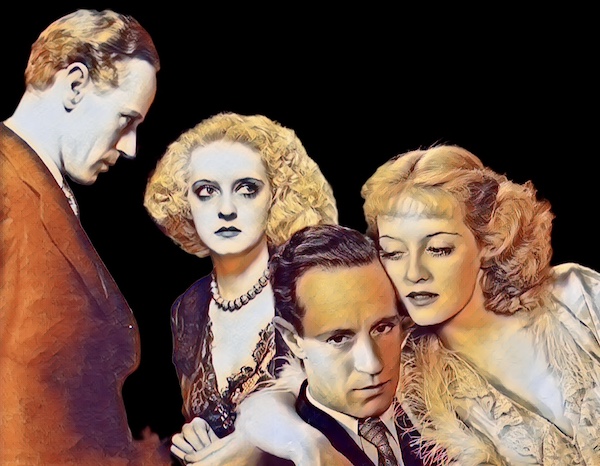
As its title suggests – Human Bondage – is about the various forms of slavery that Philip experiences – emotional, physical, and social, especially in his relationship with Mildred, who exemplifies emotional slavery, where he is trapped by his obsessive love despite knowing it is destructive. Despite numerous setbacks and heartbreaks, Philip’s resilience shines through, and as he learns to accept his imperfections and find contentment in a simple, meaningful life, he achieves that elusive happiness. And that is precisely the final message: true happiness comes from within and is often found in the simple pleasures of life, in a modest and normal existence, the opposite of Mildred’s path.
One of the most moving passages in the novel occurs when Philip reflects on his experiences and realizes the futility of his obsessions and ambitions: “He has always lived in the future, and the present has always, always slipped through his fingers. His ideal was a mirage that he pursued, but that was always out of reach.” It seems a bit like the message of The Great Gatsby too, in the green light reference. Except that Somerset Maugham came before F. Scott Fitzgerald.
And if Philip Carey is the hero of the book, Mildred Rogers is the central female character, often described as an ambiguous figure, whose dubious character is essential to the protagonist’s development.
Part of Mildred’s defects go against a sexist view of female behavior, which contrasts her with other sweet, attentive, and even submissive women while she is described as cold and indifferent, without showing much affection or compassion, that is, she is a difficult figure to relate to. Her emotional coldness is even more evident in her interactions with Philip, who often feels frustrated and hurt by her lack of reciprocity.
Mildred has a tendency to manipulate those around her to get what she wants, so she uses Philip’s affection for material and emotional benefits, without actually committing to him in a meaningful way and causing a lot of pain in his life.
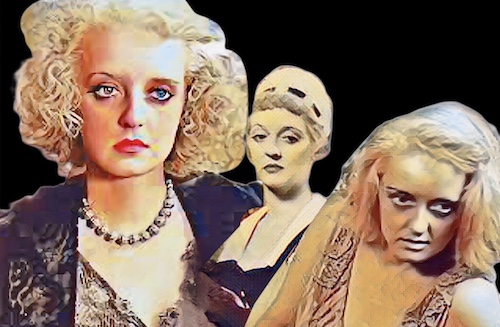
However, despite her apparent coldness and manipulation, Mildred is also an insecure and dependent character, who seeks validation and security through her relationships, often getting involved with men who can provide her with a better lifestyle. Her insecurity is one of the reasons she is unable to truly commit to Philip
Narcissistic, Mildred has a destructive impact on Philip and his parents’ lives. It often seems to be deliberate, but it is more complex than that. Her relationship with him is marked by emotional ups and downs, where she often leaves him in a state of despair with her inability to love or be loved healthily. This toxicity contributes both to Philip’s suffering and to his own downfall. It was not common, at least 90 years ago, to propose a woman as difficult as Mildred as your main female figure, especially treated in a three-dimensional way, with flaws and vulnerabilities that make her effectively human. Although she is often seen as an antagonist, her complexity allows readers to see beyond her superficial actions and understand her underlying motivations.
In the cinema, Lesley Howard perfectly captures both Philip’s personal anguish and his emotional decline, but it is Bette Davis – fearless and unforgettable – who embraces a dangerous character for any actress at the time. She is not afraid of being bad, of being sexy, of being a scammer, and even more so of appearing ugly and destroyed when tragedy finally catches up with the character.
The actress persuaded director John Cromwell to present Mildred in her own way, giving Bette creative control over the character’s behavior and appearance. Innovatively, she insisted on doing her own makeup, ruining her beauty with smudged eyeliner and sweaty foundation, looking scary. She knew that Mildred would allow her to prove herself as an Actress, not a Star, and create a reputation that would become legendary, and the more the public hated or disgusted Mildred, the more they loved Bette Davis.

The campaign for the Oscar nomination, at the time without that name, is part of Hollywood History and is still impacted by it today, 90 years later, with rules implemented to avoid a repeat of what would happen to Bette, some of which still exist today. in force (such as having a company audit votes).
In the end, Bette practically ‘stole’ the film for herself and her interpretation is modern to this day. Her sneer and arrogant stance of a classless woman are intoxicating and she is absolutely magnetic when she enters the scene. She is absolutely fascinating, even if her English, or even Cockney, accent is poor. The inconsistencies that some historians and critics point out about her work in the film are also cited as signs of the great Diva who was just taking her first steps on screen.
For all this and more, we recommend reading the book and checking out the film. It’s a class on cinema, literature, and human behavior. Unmissable.
Descubra mais sobre
Assine para receber nossas notícias mais recentes por e-mail.
 miscelana.com