
Every four years, when we become enchanted by Artistic Gymnastics, we remember the legend Nadia Comaneci, the perfect and unattainable 10 since 1976. And, with that, the famous melody Nadia’s Theme, which was actually composed five years later for the film Bless the Beasts and the Children.
The film is an adaptation of a best-seller of the same name written by Glendon Swarthout, originally published in 1970. Bless the Beasts and the Children tells the story of a group of troubled teenagers who are sent to a summer camp with the intention that the experience will help them become more mature and responsible. In fact, we soon realize, they are outcasts and victims of moral harassment and emotional abandonment.


The main characters are six boys who form a group called “the Misfits.” They feel out of place and marginalized both at camp and in their personal lives, and throughout the story, they embark on a quest to free a herd of buffalo who are destined to be hunted on a reservation.
The book’s main themes include the search for identity and acceptance, criticism of animal cruelty, and exploration of the complexities of adolescence. The boys’ journey is both physical and emotional, and they learn important lessons about friendship, courage, and compassion.
John Cotton is the natural leader of the group, who tries to guide the other boys and who was originally the “owner” of the melody that became Nadia’s Theme and later Cotton’s Dream. It is he who first empathizes with the animals destined for slaughter, and radically gives his life to save the buffalo.
This obsession of the boy is used to help reflect on deeper themes, such as:
Empathy and Compassion: Cotton identifies with the buffalo because they are kept in captivity and mistreated, which he sees as a reflection of his own situation and that of his friends, who also feel trapped and misunderstood at summer camp. Saving the buffalo becomes a way for him to express his compassion and fight against injustice.
Search for Meaning and Purpose: The boys at camp feel out of place and struggle to find purpose in their lives. The mission to save the buffalo provides them with a clear and meaningful goal, giving them a sense of purpose and unity.
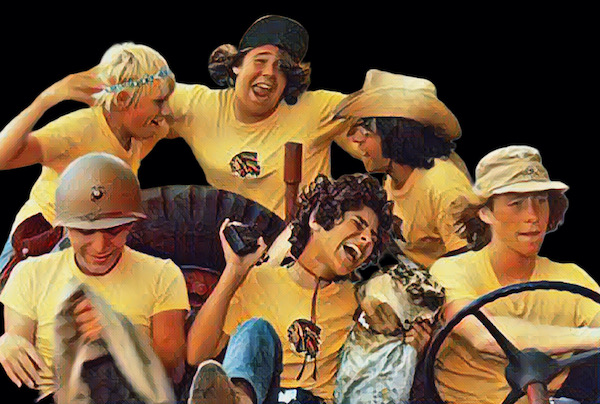
Rebellion Against Authority: The mission also serves as an act of rebellion against the authority represented by adults and the system that oppresses them. By trying to save the buffalo, Cotton and his friends are defying the norms and expectations placed upon them.
Personal Development: For Cotton, the mission to save the buffalo is also a journey of self-discovery and personal growth. By facing challenges and working as a team, he develops courage, leadership, and a stronger sense of identity.
In the cinema, a film signed by Stanley Kramer
With the success of the book, Hollywood naturally saw Bless the Beasts and the Children as a good opportunity for a successful film, which hit the screens in 1971, directed by Stanley Kramer.
The film adaptation maintained many of the central themes of the book, such as the fight for freedom and the search for the identity of the young protagonists. However, as is common in adaptations, some changes were made to adjust the story to the film format.
For example, in the novel, Swarthout details the emotional and physical journey of the boys to criticize the way society treats both animals and young people who do not fit into conventional standards.
Kramer’s film captured the essence of this narrative, highlighting the struggles and triumphs of the young characters. The soundtrack, which included the Oscar-nominated song Bless the Beasts and Children by The Carpenters, helped to heighten the film’s emotional message. In addition, the cinematography used the natural landscapes to create a contrast between the beauty of the natural world and the cruelty of human acts.
Although the adaptation was faithful to the spirit of the book, some critics pointed out that certain elements of the characters’ character and nuances of the plot were simplified or omitted, reflecting the period. It ended up being a less-cited film in Kramer’s collection, but it has achieved cult status and is considered one of the best for addressing so many issues that are still relevant today.
The film’s music was composed by Barry De Vorzon and Perry Botkin Jr. and the instrumental track Cotton’s Dream was re-recorded two years later to become the theme song for the soap opera The Young and the Restless.

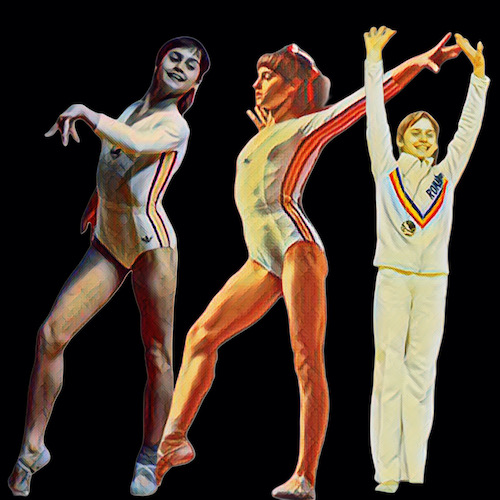
And when ABC wanted a melody that would fit with the slow motion to show the perfect movements of Romanian gymnast Nadia Comăneci during the 1976 Summer Olympics, she won the world over. Her version was edited and extended, it became Nadia’s Theme. The sung version, composed by the same De Vorzon and Botkin Jr., never became a hit. Only when Mary J. Blige used the main notes did Cotton’s Dream or Nadia’s Theme, enter the charts, in 2017.
It’s not easy to find the 1971 film on the platforms but believe me, once you’ve seen it, you’ll never forget it. It’s worth looking for!
Descubra mais sobre
Assine para receber nossas notícias mais recentes por e-mail.
 miscelana.com