
There was a time, a long time ago, when the West only knew about Russian ballet stars through a few tours and films, used as political propaganda by the Soviet government. So, for decades, the greatest Russian ballerina after Anna Pavlova was Natalia Makarova.

With an incomparable technique, Makarova was one of the greatest dance legends of the 1970s and 1980s, and we owe her the production of La Bayadère in its entirety and, above all, an Odette-Odile from Swan Lake, like few others before or since her.
At the age of 84, Natalia was born in Leningrad, at the time the capital of the Soviet Union. At the age of 12, despite being “old”, she auditioned to join the Kirov Ballet School and was accepted, something rare and only applicable to great talents.
Once graduated, she joined the Kirov Ballet company and stayed with them for 14 years, from 1956 until 1970, when she defected and fled to the United States. In those 14 years, she rose to the status of prima ballerina, still in the early 1960s, being one of the most praised and talked about during the Kirov’s tour in London. Her Giselle is legendary.
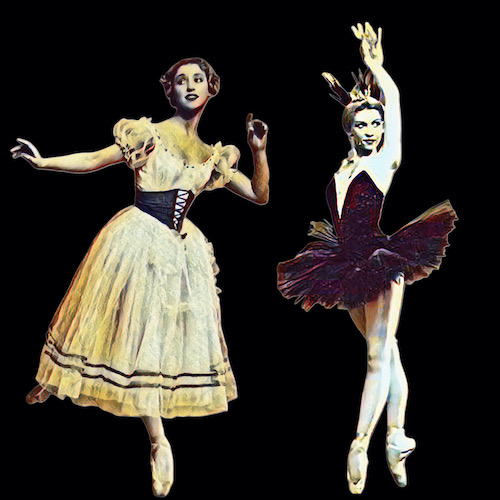
On September 4, 1970, during a new Kirov tour in London, she fled, becoming the first woman to escape the communist dictatorship, 10 years after Rudolf Nureyev. Legend has it that she gave up on returning to the Soviet Union because of a disappointment in love. This must be true. At the time, she was separating from her second husband, filmmaker Leonid Kvinikhidze, and anything goes.
At just 5 feet tall, Natalia – or Natasha, as her friends call her – is small, but she has a gigantic power of command. She was one of the biggest stars of the Kirov when she left everything behind. As she later recalled, she knew that the London tour would be her best, if not her only, opportunity, even if it was very painful and full of tears.
She was only 29 years old, but, as she recounted, she was frustrated by how politics interfered with the company, including choosing dancers to star in productions according to their party ties rather than their talent on stage. The interference also isolated them artistically, with no access to Western choreographers or stars and dancing only what the Party approved. Without much planning, Natalia Makarova decided on the spur of the moment to stay in the West. She told her friends to call Scotland Yard and asked for asylum. “Being spontaneous is what saved me,” she said in a 2012 interview with the Washington Post.

Unlike her friend Rudolf Nureyev, who stayed in Europe, Natalia came to the United States four years before another friend, Mikhail Baryshnikov. She didn’t speak English and had no connections or fame (thanks to the Iron Curtain), so she had to start from scratch. It sounds dramatic, but it happened very quickly. Makarova’s technique was already legendary at the time and she quickly found her “home” at the American Ballet Theatre, which, despite its name, was more open to foreigners than other companies.
The world quickly dubbed her the “new Pavlova” and fell in love with the ballerina. For decades, Makarova was synonymous with ballet and perfection. She also became one of the most popular ballerinas of the 20th century. By the time Baryshnikov arrived at the ABT in 1974, Natalia was already more than settled in her new country. The performances of the two together were some of the most sought-after tickets of those years.
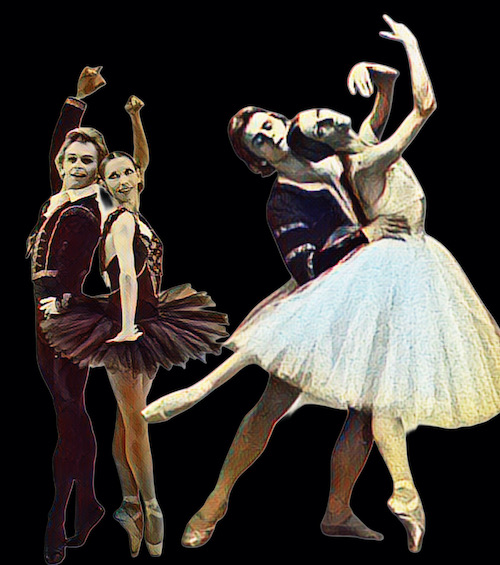
Many cynics indeed criticize the trio for claiming to have left the Soviet Union to dance new works, yet they were always involved in productions of classics like Swan Lake, Giselle, or Don Quixote. Nonsense. The public wanted them in traditional ballets, but they all tried their shoes in more modern works, in theater and cinema.
Thank God there is YouTube to prove how incredible Natasha was in her prime. Her movements were slow, perfect, impossible.

Also to being a perfect swan, whether in Swan Lake or in The Dying Swan, Natalia is also credited with having taken the initiative, in 1980, to reassemble the ballet La Bayadère in its long four acts, something that had not been done outside of Russia until then.
The grand production is still part of the repertoire of the ABT, as well as the Royal Ballet, among several other companies. Having danced the production in Leningrad, Natalia taught ALL the steps to the entire company, from the ensemble to the soloists, in an extremely generous personal effort, after all, there are four acts over almost three hours.
In the premiere, she danced the role of Nikyia, but behind the scenes there was drama. The ballerina Marianne Tcherkarssy was injured in the first act and was replaced by the unknown Cynthia Harvey. One of those moments that define History.

In 2012, Natalia Makarova received the Kennedy Center Honors, a high American award that She recognizes her contribution as an artist.
Even at over 80 years old, until she was 70, she exercised every day in the dance studio at her home in California. She married a third time when she arrived in New York and had her only son, Andrei.
Retired from the stage, she still works putting on La Bayadère, Giselle, and other ballets around the world. Unfortunately, the 40th-anniversary production of Bayadère was suspended due to the pandemic. It would have been incredible. Today, she travels the world either training dancers or supervising the productions of her ballets.


As she recalled in another interview, she spent more time in the West than in Russia, something that influenced her much more as an artist and a person. And for those who aspire to follow in her footsteps, she always remembers: that growing in classical dance does not happen overnight. Discipline is essential. A tip for everyone!

Descubra mais sobre
Assine para receber nossas notícias mais recentes por e-mail.
 miscelana.com