
Stanley Kubrick became famous as one of the most influential and visionary filmmakers in cinema history. He is known for his meticulous and innovative approach to directing and the diversity of genres he explored throughout his career. Here are some specific reasons that contributed to his fame:

Genre Diversity
Stanley Kubrick never confined himself to a single genre, ranging from science fiction (2001: A Space Odyssey), horror (The Shining), war (Full Metal Jacket), drama (A Clockwork Orange), and many others, bringing a new approach and style to each, demonstrating his versatility as a director.
Technical Innovation
Kubrick was known for his obsession with technical details and cinematic innovations. For example, in 2001: A Space Odyssey, he used revolutionary special effects to create a realistic vision of space, long before the era of digital effects.
Complex Narratives
His films often explored complex and philosophical themes, challenging audiences to think deeply about the human condition, morality, and society. Films such as A Clockwork Orange and Dr. Strangelove are notable examples of this.
Legendary Perfectionism
Famous for his perfectionism, Stanley Kubrick is legendary for the level of detail and dedication he demanded and delivered, but this also resulted in films that are often considered masterpieces.
For example, Kubrick was famous for his insistence on doing multiple takes of a single scene until he got exactly what he envisioned. For example, in The Shining, the scene in which Jack Nicholson’s character, Jack Torrance, breaks down a bathroom door with an axe took over 60 takes. The famous line “Here’s Johnny!” became iconic, in part due to the intensity and exhaustion that Nicholson brought to the performance after so many repetitions.
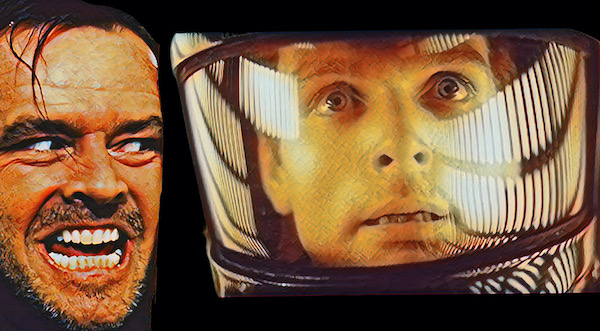
The director’s attention to detail extended to the sets and props used in his films. Barry Lyndon, he insisted on using authentic 18th-century costumes and props and even had candles specially made to accurately recreate the period lighting, which contributed to the film’s distinctive visual style. In fact, the lighting techniques were considered innovative because, to achieve a naturalistic look, he used special lenses developed by NASA to film. However, this approach required extensive preparation and precise coordination, even if the result was a unique and immersive visual experience.
Another famous trait was his ability to change the script during filming. Kubrick was not afraid to make significant changes, for example, in 2001: A Space Odyssey, he worked closely with science fiction writer Arthur C. Clarke, constantly revising the script to reflect new ideas and technological advances. This iterative process ensured that the film remained cutting-edge and visionary.

The sound design also received a lot of attention, in fact, extraordinary attention in his films. In A Clockwork Orange, he meticulously selected pieces of classical music that would heighten the emotional impact of scenes. The juxtaposition of violent images with beautiful music created a powerful and disturbing effect. Music, by the way, deserves a more detailed description (a separate post).
Moving on to post-production, Kubrick was deeply involved in the editing process, often spending months refining the final cut of his films. For Eyes Wide Shut, his last film, he was undergoing adjustments until his death, demonstrating his unwavering commitment to perfection. With Barry Lyndon, legend has it that he spent 42 days editing a single scene.
Distinctive Visual Style
His films are visually distinctive, characterized by innovative cinematography, careful composition, and use of light and shadow. His attention to visual detail helped create unique and memorable atmospheres in his films.
Cultural Impact
Many of Kubrick’s films have had a lasting impact on popular culture and continue to be studied and discussed by critics and filmmakers alike. Films such as 2001: A Space Odyssey and The Shining are often cited as significant influences on subsequent works in cinema.
Descubra mais sobre
Assine para receber nossas notícias mais recentes por e-mail.
 miscelana.com