
If I told you today that 60 years ago, in 1964, Julie Andrews and Audrey Hepburn starred in a historic fight, I bet you wouldn’t believe it. But it’s true. And one of the legends, I mean, legendary truths of Hollywood.
The fight that put two icons of sweetness, elegance, and talent on opposite sides was caused by Jack L. Warner when he bought the rights to the musical My Fair Lady for the cinema. That’s because he snubbed Julie and forced Audrey into the film version, for a double ‘humiliation’ that marked the careers of both. An almost unbelievable story.
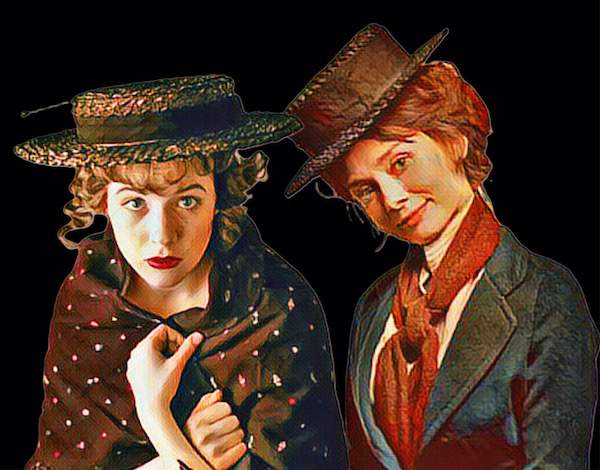
A huge success in the theater, but an unknown star
My Fair Lady is a musical by Alan Jay Lerner and Frederick Loewe that is an adaptation of Pygmalion, a 1913 play by George Bernard Shaw. It tells the story of a poor flower girl, Eliza Doolittle, who takes public speaking lessons from Professor Henry Higgins, a phonetician so that she can pass herself off as a lady and fool snobbish British society.
The musical premiered in 1956 and was a success, and the production soon became a phenomenon, winning all the major awards in London and New York, making its star, the young Julie Andrews, a star. However, when Warner bought the rights to make a new film (Pygmalion had been released in theaters in 1938), they thought that Julie would not be a strong name for the box office.
According to the actress, years later, the owner of the studio came to see a performance at the theater and insisted on going backstage to talk to her. Talking about the film, Julie understood that it was a matter of formality to sign the contract and asked “When do we start?” She never suspected that he was still evaluating whether SHE would be in the production (all the other actors in the musical were hired). When she found out that she would still be tested, she was outraged. “Screen test? You saw me play the role and you know I can do a good job,” she said, refusing to go through this embarrassment.
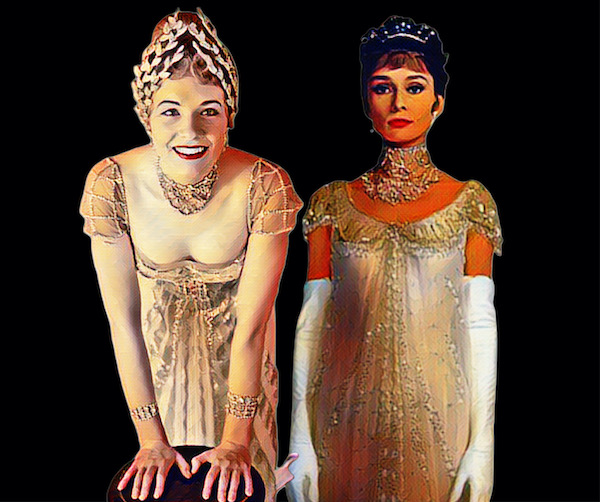
Despite having an “unknown” acting as the star, he publicly declared that he would only consider established actresses for the role, after all, it was the most expensive film in Hollywood history at the time, surpassing the contemporary Cleopatra. Julie was still light years away from being famous and missed the chance, many claim, on a whim.
The sweet Audrey Hepburn got into the drama because she had a “name”
The competition for the role of Eliza was a big deal in Los Angeles 60 years ago, with all the stars who could sing (and those who couldn’t) wanting a chance at what was guaranteed to be a success. Audrey Hepburn, the sweet and popular actress who already had an Oscar, was one of the immediate names to be considered.
“You can say ‘Audrey Hepburn’ and people instantly know you’re talking about a beautiful and talented star. In my business, I have to know who brings people and their money to the box office of a theater,” confirmed Jack Warner.
The former classical ballerina, who worked in a vaudeville theater in London, had already shared the screen with the legend Fred Astaire years before, without singing anything of note. The music for My Fair Lady required a powerful soprano, which she wasn’t, but she knew she wouldn’t be bad.
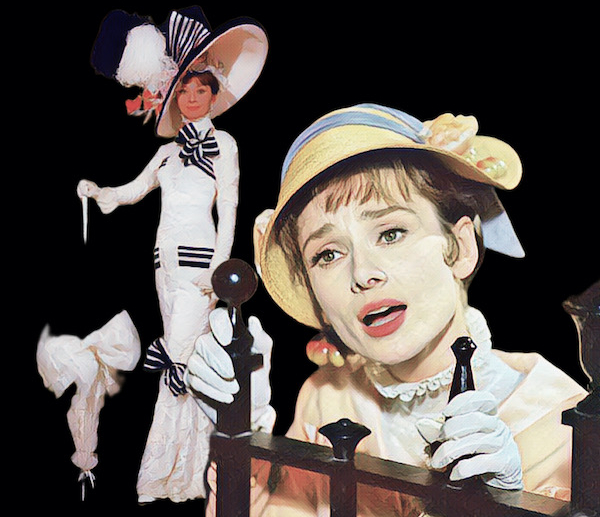
Until the 1960s, studios simply chose actresses based on their looks and popularity appeal; if they couldn’t sing, they would be dubbed. That’s what they did with Ava Gardner and Natalie Wood, to name just two. But Audrey, who didn’t want to pretend to sing, balked at the challenge.
Hepburn was well aware of the growing furor, but two things influenced her decision to accept the role. But let’s be real: ego spoke louder than wallet. For the role, Audrey was paid a million dollars (a fee paid at the time to only three stars: Marlon Brando, Sophia Loren, and Elizabeth Taylor) and was chosen by the studio. The doubt, gossips say, ended when she learned that Liz Taylor would not be as purist about being dubbed and was about to sign the contract. Audrey quickly changed her mind.
To be fair, Audrey was not a sweetheart. She felt for Julie and was unsure whether she was ignoring the sisterhood and thinking only about her career. “I understood the consternation of people who had seen Julie on Broadway. Julie made that part her own, and for that reason, I didn’t want to do the film when it was first offered,” she said. “I learned that if I turned it down, they would offer it to another movie actress. I thought I had the right to do it as much as the third girl, so I accepted,” alluding to the “danger” that in addition to Cleopatra, Liz would also be Eliza Doolittle in the same year. Poor Audrey, she got herself into a mess.
Backstage coldness, Julie’s revenge at the Oscars
Composer Alan Jay Lerner broke the news to Julie Andrews, who was starring in another hit at the time on Broadway, Camelot. “I wanted you to do it so badly, Julie, but they wanted a name,” he lamented.
The recording sessions were tough for Audrey. She prepared herself to sing with private lessons and training, expecting – and accepting – to be dubbed “only on the high notes.” But even so, her voice was judged inadequate, and she was dubbed by Marni Nixon, keeping the actress’s voice in small parts. This, for Audrey, was the height of humiliation.
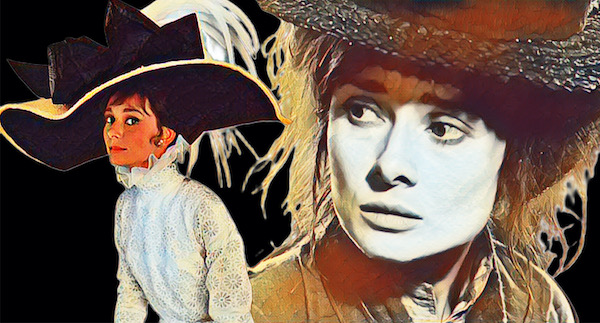
Hepburn and Nixon rehearsed and then recorded together, with the actress still convinced that her voice would be used primarily, and still taking singing lessons every day. The situation went on for weeks, with no one willing to tell her the truth. In the end, it is estimated that up to ten percent of the final recordings were by Hepburn.
“She was very hurt because she felt that if she had taken Julie Andrews’ place and could not sing, it would reflect very badly on her,” revealed conductor André Previn. “But she never said a word. I’m sure she cried about it.”
To make matters worse, the cast resented her casting as the lead, and she was treated coldly by her co-star Rex Harrison. Okay, to be fair, Rex had been horrible to Julie too. “He felt that any fuss made about Audrey or Julie was pointless because no one was interested in the girl. They were only interested in him…”, revealed Previn, mentioning Harrison’s legendary narcissism.
In the face of pressure from the press, Audrey’s growing “rivalry” with Julie only made the star feel even more cold-hearted treatment from her colleagues. Many even declared that they thought it unfair for a movie actress to dare to take the role of a stage actress. The fact that she was being paid millions turned her into the antagonist and Julie, the underdog.

To make matters worse, Julie was chosen by Disney to star in the musical Mary Poppins, which was a huge box office success and earned her, a “newcomer”, and an Oscar nomination for Best Actress. The comparison between the two reached such a point that Audrey, being the only one from My Fair Lady not to be nominated for the award, went to the ceremony and with her historic class endured the cameras on her, always cutting to Julie, as if they were enemies.
To make matters worse (for Audrey), Julie Andrews won the Oscar and everyone was left trying to decipher her real feelings while her rival poked at the wound saying “My thanks to Mr. Jack L Warner, who made it all possible.” It was not an easy night for Audrey Hepburn.
Today the actress’s performance, even without her real voice, is praised and it is impossible to deny that her charisma fits perfectly into the plot and that she is more than convincing as the perfect Lady. Obviously, Cecil Beaton‘s costumes are among the most iconic and copied in the last six decades.
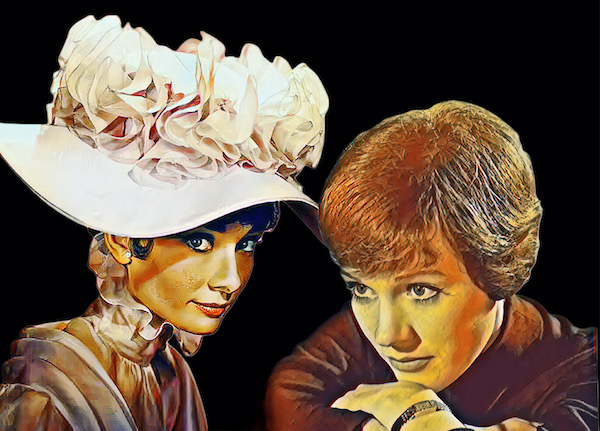
Looking back on history today, we are once again surprised that both actresses immortalized by their sweetness entered history because of such heated gossip by fans and executives. To this day, we can still find Team Julie and Team Audrey, and it must be admitted that, if it weren’t for Audrey, My Fair Lady could have been a success, but possibly not as legendary. Mary Poppins has the effects and boldness to help Julie become a star, but would it have attracted the same attention without them?
I’m Team Audrey only because she’s a genuinely great person. Which of the ladies would be the best? The unsympathetic Rex Harrison was surprisingly diplomatic: “I love both my Ladies,” he said. So do we!
Descubra mais sobre
Assine para receber nossas notícias mais recentes por e-mail.
 miscelana.com