
In the 1995 play Masterclass, American playwright Terrence McNally created a perfect setting for us to get to know Maria Callas. Inspired by real events, the soprano gave some classes in New York after retiring from the stage, he created a story in which Maria is an authoritarian but paradoxically fragile teacher. Faced with students who make her reflect on her Art, her Talent, and her life, she navigates through painful and revealing memories about her career and also her personal life. Curiously, we never hear her sing (only her students) and the most famous arias are an instrumental backdrop for the drama.
I saw Patti Lupone as Maria Callas in New York, and, in Brazil, we had Marília Pêra in a magnificent performance and, in Paris, Fanny Ardant was directed by Roman Polanski, before starring as the soprano in the film Callas Forever, in 2001, directed by Franco Zeffirelli.

On all these occasions, no one dared what Pablo Larraín decided to do with Angelina Jolie in Maria: ask the actresses to sing. Callas’ voice, known as La Divina, is striking and distinct from all others; it is almost heresy to ask anyone to try to imitate it. In the case of Maria, Angelina will not “sing” everything: she uses her voice and mixes it with Callas’ to give the scene veracity, and when the soprano “loses” her ability, the actress will gain greater relevance. It makes sense.
Maria is not an adaptation of Masterclass, but it follows the same concept as the play. On stage, the narrative culminates with the aria most associated with Callas, Vissi D’Arte, in a moving monologue about the sacrifice made in the name of art that is sung in the opera Tosca. We will undoubtedly see this dramatic moment in the film.
The origin of Vissi D’Arte
Composed by Giacomo Puccini for the second act of the opera, Vissi D’Arte is sung by the main character, Floria Tosca. In the story, Tosca is an opera singer in love with the painter Mario Cavaradossi who has been arrested by the police chief, Baron Scarpia, who wants Tosca for himself. Scarpia offers Cavaradossi’s freedom in exchange for Tosca’s sexual favors. Desperate and conflicted, Tosca sings “Vissi d’arte” as a plea to heaven, asking why she is being punished despite having lived her life dedicated to art and faith.
The lyrics of the aria reflect her anguish and perplexity in the face of her situation and say “I have lived for art, I have lived for love, I have never harmed a living soul!”, she begins, closing with the tragic plea, “In the hour of pain, why, why, Lord, why do you reward me so?”
The aria expresses deep pain and a sense of injustice and, although Puccini almost eliminated it because he thought it took away from the rhythm of the story, it is one of the most moving and memorable moments of the opera.

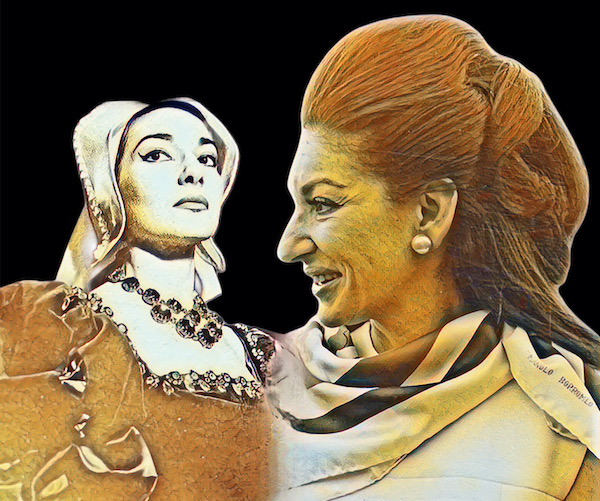
Tosca has three acts and is based on the play “La Tosca” by Victorien Sardou. It premiered in 1900 and is still one of the most popular in the classical world. It was the fifth play composed by the Italian, one of the most skilled at mixing grand dramas with music. This is considered one of his best works, after all, Tosca is – herself – a great opera singer
The creation of “Tosca” went through several stages of development. Puccini was drawn to Sardou’s play because of its dramatic potential and the emotional complexity of the characters. He worked intensively with his librettists, Luigi Illica and Giuseppe Giacosa, to adapt the play to operatic form. The adaptation process involved much negotiation and rewriting to ensure that the narrative would be cohesive and effective on the operatic stage.
Vissi d’arte was written for the protagonist as an introspective and emotional lament, highlighting Tosca’s vulnerability and humanity and designed to capture the essence of the character in a moment of crisis. The melody is lyrical and expressive, complemented by rich harmony that emphasizes Tosca’s despair and passion. The musical structure of the aria allows the soprano to demonstrate both technical skill and emotional depth.
This aria is a perfect example of Puccini’s skill in combining text and music to create a moment of profound emotional impact, both for the character and the audience.
The Association Between Callas and Tosca
Of all the great interpreters of the role, Maria Callas is most often associated with the aria Vissi d’arte than any other, thanks to her iconic and deeply emotional interpretation of the piece. Callas, one of the most renowned sopranos of the 20th century, was known for her ability to convey intense and complex emotions through her voice and acting, which made her an ideal interpreter for the role of Tosca.
In addition, Vissi d’arte is an extremely challenging aria from a technical and emotional point of view, demanding vocal control and the ability to capture the essence of the character, something that is which she did in legendary fashion.
One of Callas’s most recognizable traits was her unique ability to infuse each note with intense emotional charge, in this case, making the audience feel Tosca’s suffering and anguish. Furthermore, when at her peak, Callas’s vocal technique was impeccable and she navigated the technical demands of the aria with apparent ease while maintaining the clarity and beauty of the sound. If all that were not enough, she was a gifted actress who brought a powerful stage presence to each performance, making her interpretations memorable not only aurally, but visually.


Luckily, we have recordings of several interpretations of Callas singing Vissi d’arte – in audio and video – and they are still references for opera singers and music lovers today, in the 21st century. The most famous recording was the performance 60 years ago, at Covent Garden, recorded in 1964. This performance of Vissi d’arte was acclaimed by critics and audiences as one of the greatest interpretations of this aria of all time, but some argue that the 1953 version is the most perfect. Callas – for me – can never go wrong.
The melodic and technical precision of Vissi D’Arte transformed the aria into a piece almost independent of Tosca, a moment of boldness and even exhibitionism for sopranos on stage. But none has equaled Maria Callas.
Descubra mais sobre
Assine para receber nossas notícias mais recentes por e-mail.
 miscelana.com