
Not that an excuse is needed to remember and talk about Maria Callas, but with the film Maria starting its worldwide circuit (and rumors of an Oscar for Angelina Jolie), it is easy to remember that 70 years ago, La Callas was born, the soprano who reappeared as a sylph and became a fashion icon.
Yes, after already becoming famous for her voice, Maria was determined to also be a beautiful woman, but at over 95 kilos, her measurements above the standard of thinness were an obstacle. After a severe diet, with conflicting versions of how she managed to lose more than 30 kilos in a short period and many trying to take credit for the “transformation”, from doctors to her ex-husband, Maria Callas reappeared in 1954 weighing just 63 kilos, slimmer and more beautiful than she had ever been before.
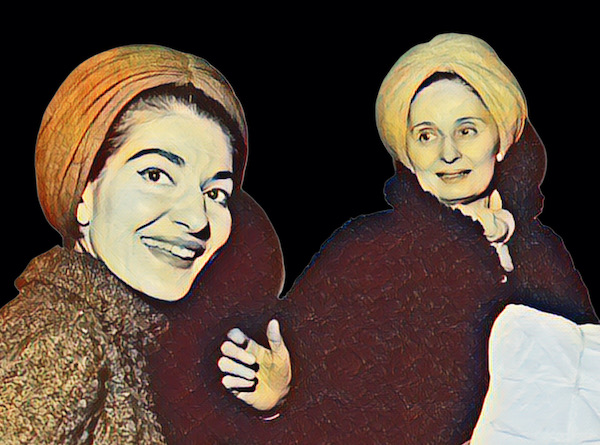
Callas’ vanity did not come from her ex, Giovanni Battista Meneghini, or even from the conductor Tulio Serafini, but from herself, a determined woman with a vision of what she wanted for herself and her career: to be recognized as beautiful too. And she had to dress accordingly.
Legend has it that her favorite designer, Elvira ‘Biki’ Bouyeure, met her in 1951 but refused to dress her until Maria had lost at least 30 kilos. “Nothing less”, she said. When she returned with the suggested weight, a partnership was born that would last a lifetime and yield Biki the authorship of one of the most copied, praised, and iconic looks of all time: La Callas.
Although Biki was the stepdaughter-granddaughter of the composer Giacomo Puccini, it was through Maria’s teacher and mentor that the two met: Luis de Hidalgo, Elvira de Hidalgo‘s brother, was the director of Biki’s studio in Milan and was the bridge between the two women.
With more than a third of her body weight having changed, Maria Callas had to redo her entire wardrobe and Biki helped her create her signature, with the support of her son-in-law, Alain Reynaud, who was trained by Jacques Fath. With the two of them, Maria not only learned what to wear, which accessories to use, or how to do her hair or makeup: but with etiquette lessons, she became an elegant woman in her gestures and clothes as well.
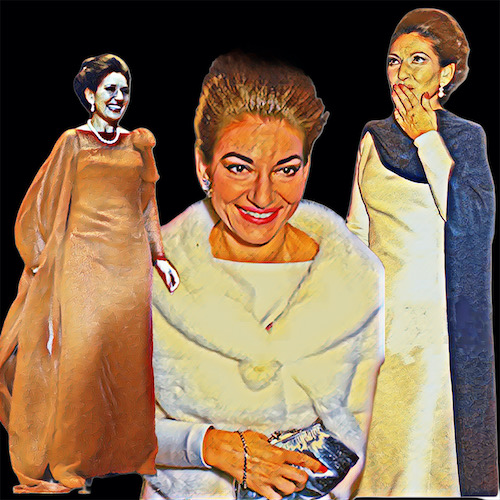
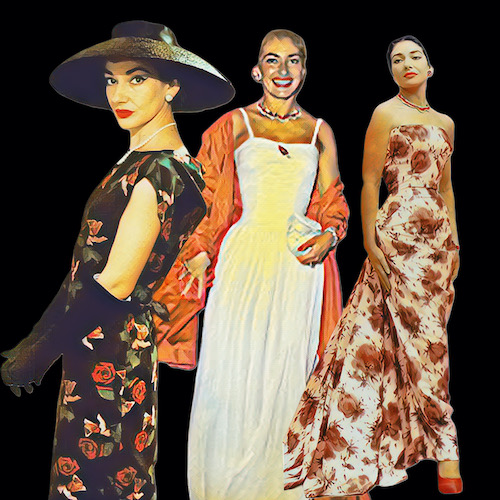
Of course, Christian Dior and Yves Saint-Laurent were also part of this new phase, but Biki was her absolute favorite. With gloves, feather fans, fur coats, and dramatic hats, her style screamed “Diva”. She visited the studio almost daily and soon her wardrobe included twenty-five fur coats, forty suits, one hundred and fifty shoes, two hundred dresses, and at least three hundred hats. The gloves were never repeated: after being used, they went to the trash. What else could you expect from a star?
And curiously, Biki always preferred to be considered a tailor, not a designer. Fashion became her livelihood because she was creative by nature and she opened her first studio in 1934, together with her aristocratic colleague Gina Cicogna. Part of her positioning showed boldness: she only dressed a few “beautiful” women. Her brand was eclectic and included everything from lingerie to suits, from dresses to accessories, and she also created rugs, sheets, and tiles. Many credit her with starting ready-to-wear in Italy, as well as mixing bold colors and unusual fabrics, betting on artificial materials for day and evening dresses.
“I met Maria in 1951 at Wally Toscanini’s house,” Biki once said in an interview. “She was a real mess, a fat ‘rich and vain’ madame who loved accessories that matched, her shoes with her bag, and even better if they were in shiny patent leather,” he recalled.
“Maria was a sponge. Her talent was a great gift. What she learned seemed to have always belonged to her, as if it were something innate. For example, her grace in wrapping herself in a shawl. I remember only one person who could keep up with her, Cardinal Montini, who later became Pope,” he continued with the memory.
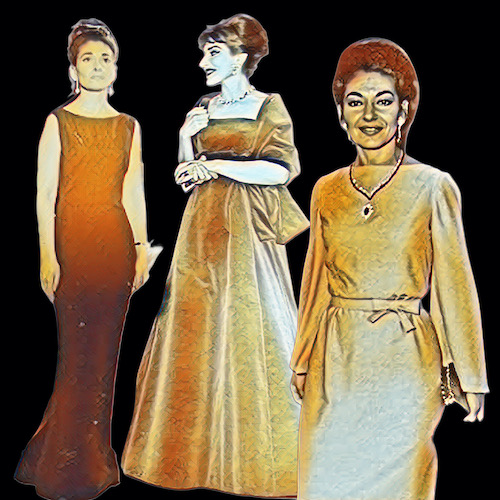
Biki, who was born into a famous and prestigious family, circulated among the famous and influential people of her time. Being Maria Callas’ Pygmalion made her timeless. Her costumes were for both the stage and the singer’s private life, listing in writing – at least in the early years – how to put together each outfit, including accessories such as hats and shoes.
Callas’ most classic looks are by Biki: from the red dress at the Paris concert, the black evening cape in wool crepe for the opening of the Teatro alla Scala season in Milan in 1970, the paisley coat in 1971, and the long dress with a silk satin collar that Callas wore at the farewell concert at the Royal Festival Hall in London in 1973. On the Italian’s recommendation, she wore honey-colored satin with sable trim; a long leopard print gown, as well as bold contrasts of crimson velvet and black satin, and large capes draped over her shoulders, and other details.
In total, the partnership between the two lasted 25 years, only ending with Maria’s death in 1997, at the age of 53. Biki was one of the close friends who had access to the star’s body, lying in her bed in a gray dress, with a rose and a cross on her chest. She said that Callas finally looked serene. Biki herself would only die in 1999, at the age of 92.
With so many of Biki’s looks being recreated for the film Maria, it is worth celebrating the meeting of Art and Style, in a genuine and inspiring female friendship.
Descubra mais sobre
Assine para receber nossas notícias mais recentes por e-mail.
 miscelana.com