
For Generation X, Brad Pitt and Angelina Jolie’s drawn-out divorce is more like a real-life version of The War of the Roses than Mr. and Mrs. Smith, although in both films the conflicting couple destroys their property. The difference is the dark message of the 1989 film, which will turn 35 in 2024 with a remake starring Benedict Cumberbatch and Olivia Colman. For those who don’t know the original, sorry, there will be a list of spoilers here.
The announcement of the film, which is already being filmed in England, was made in April and is no surprise. At the time it was released, the trio Kathleen Turner, Michael Douglas, and Danny DeVito were known for the romantic comedies Romancing the Stone and The Jewel of the Nile, so those who went to the cinema without a doubt were shocked by the dark tone of The War of the Roses. And yes, especially its tragic ending, which DeVito, the director of the work, had to fight with the studios to keep.

In the book, more secrets and drama
Before it became a film, The War of the Roses was a bestseller, praised by the New York Times and highlighting the author Warren Adler. Released in 1981, it is strange to consider, but at the time, divorce was still taboo and complex. Dramas like Kramer vs. Kramer, from 1979 and An Unmarried Woman, from 1978, were “daring” and we women can see that women were not always portrayed sympathetically.
The book, which plays on the protagonists’ surnames in an allusion to the Wars of the Roses, was met with positive reception and praise for its unique and dark take on divorce and the disintegration of a marriage.
The story details the bitter and violent separation of a couple, Oliver and Barbara Rose, who turn their home into a literal and metaphorical battlefield. As the New York Times put it at the time, “Oliver and Barbara Rose discover a greater passion in divorce than in marriage.”
The book was notable for its mix of dark humor and drama, which captured the attention of readers and critics alike. Critics praised Adler’s ability to explore the depths of marital animosity in a way that was both disturbing and captivating. The plot revolves around Oliver and Barbara Rose, a couple who appear to have a perfect marriage but quickly disintegrate into a bitter and destructive battle. The couple’s main problem is the deterioration of their relationship due to a series of accumulated resentments and a lack of communication. Oliver and Barbara begin to realize that they have different interests and desires, which leads to growing discontent on both sides. Barbara feels that she has sacrificed her own dreams and aspirations to support Oliver’s career and take care of the family, while Oliver believes that he deserves recognition for his hard work and success.
This lack of communication and mutual understanding leads to an escalation of conflict, culminating in a violent dispute over ownership of the house they live in. The house, which initially represented the success and stability of their marriage, becomes a symbol of the war between them. Both refuse to compromise, turning their lives into a literal battlefield, with increasingly extreme acts of revenge.
The story highlights themes of miscommunication, selfishness, lack of empathy, and the destructiveness that can arise from a marriage in crisis. It is a dark narrative that explores how love can turn to hate and how the lack of conflict resolution can lead to tragic consequences.
In cinema, physical, psychological, and unexpected violence
When it hit theaters in December 1989, The War of the Roses grossed over $160 million at the American box office, driven by the marketing appeal of its main actors, but it caused some division. The undeniable chemistry between De Vito, Douglas, and Turner was used precisely to reverse the expectations of the public, who were left shocked and disturbed by so much violence between the two. Surprisingly, it is the most successful film of the three together.
Although the work is still presented as a “dramatic comedy”, those who have been married and separated certainly cannot see the humor. The quality lies precisely in the boldness of the story in maintaining the bitter, angry, and resentful tone of the couple, even with Fox wanting to change the ending to have a “happier” alternative. It is, as De Vito warns from the beginning: it is a cautionary tale. It made me think of the scene in When Harry Met Sally, a contemporary of The War of the Roses, in which Harry explodes when his friends are arguing about whether or not to keep a table and clearly disagree. He warns, irritated, that in love everything is beautiful but that later, the same table they disagree on will be the target of a dispute. He was not wrong.
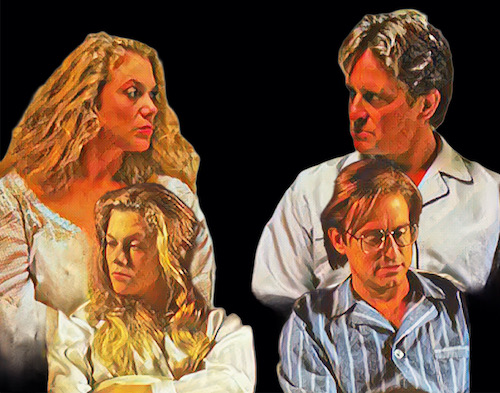
The discomfort of the story is to show realistically that even when doing everything right and feeling happy, the path to unhappiness is on the way and if they turn down that road, nothing is enough to avoid war. Everything that is overlooked – the laugh that they don’t like, the snoring, the quirks – becomes an object of pure hatred.
The remake
The fact that The War of the Roses got it right is precisely that although it was influential for several films that dealt with the same theme, it was not mentioned or discussed, so it is surprising that more than three decades later it is getting a remake. What could they “change”?
Without a doubt, the talents of Cumberbatch and Colman are enough to arouse curiosity, but in the 21st century, the driving force behind Barbara’s frustration in the story – having given up her profession for her husband – no longer has a place of identification. Do you know what gives me confidence? It’s that the script is written by Tony McNamara, of whom I am a big fan.
The proposal for a remake began circulating in 2017 and says that it will be a “reinterpretation” of the book, more than the film. It will only be ready in 2025. Will we be surprised?
Descubra mais sobre
Assine para receber nossas notícias mais recentes por e-mail.
 miscelana.com
1 comentário Adicione o seu