
The most common image of classical ballet in recent times has been associating the world of dance – which demands discipline, dedication, overcoming, and competitiveness – with the horror genre. But what was terrifying was dancing in the 19th century, when danger was imminent when stepping on stage. Being a ballerina in the 1800s was not only difficult, but incredibly dangerous, and many lost their lives because of it, becoming known as The Burning Ballerinas.
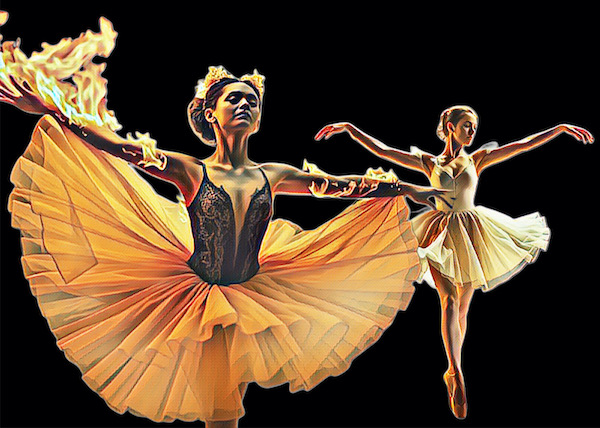
There are several tragic stories due to the lethal combination of gas lighting and the highly flammable tulle fabrics used on stage. To make matters worse, because of the lighting, dancers often performed every night dangerously close to the flames that could consume them. Some, in fact, burned. Statistics show that in 1860 alone, at least 3,000 women died in fires when their dresses caught fire. A subject that would undoubtedly give rise to horror and drama films.
The Romantic movement, which encompassed 19th-century culture in general, made ballet one of the favorite means of artistic expression, a perfect means of escapism. Women, like sylphs or fairies, were the biggest stars and the cult of the classical ballerina was at its peak.
During this period, ballerinas wore the well-known bell-shaped dress with short sleeves, low-cut bodice, and long skirts. The most idolized throughout Europe were Marie Taglioni and Fanny Elssler, enemies on stage with opposing styles. While Elssler was described as “fiery, exotic and sexy”, Taglioni was “spiritual, ethereal and otherworldly”, having been the first to “float” on her toes.


Marie, an Italian, and Fanny, an Austrian, inspired many young women around the world, such as Emma Livry, in France, and Clara Webster, in England. Two potential stars made history due to the tragedy and danger of the stage at the time and the most symbolic of this period called the “holocaust of the ballerinas”.
Emma and Clara were two potentially great ballerinas who became legendary due to safety errors. Emma, Taglioni’s protégé, is considered one of the saddest stories in dance because she died at just 21 years old, spending a year suffering from almost 70% burns to her body, especially her legs. At 20, her costume accidentally caught fire as she was getting ready to go on stage. Clara Webster had a fate no less tragic.
180 years ago, before she died in 1844, she was touted as the greatest potential star of British ballet. The accident happened when she was dancing in The Revolt of the Harem at Drury Lane. Before she went on stage, her dress brushed against the flame of an oil lamp on the stage and caught fire within seconds.
No one thought of lowering the curtain, so the audience witnessed the entire event. The description of the scene, given by a journalist, is terrifying:
“Feeling the fire, she sprang up and rushed upon the stage. The motion fanned the flame, and almost in an instant the whole of sight and inflammable material of her dress was a mass of fire. With piercing shrieked she sought for safety among her companions on stage. For a Moment they surrounded her, but the frightful spectacle the unhappy girl presented made them shrink from the contact with her. It was unfortunate they did do, as then nothing could have prevented their own dresses catching fire and the consequences would have been indescribably terrible.
Never ceasing to rush wildly about the stage, and apparently losing all presence of mind, Miss Webster approached the side wing. A carpenter instantly seized her in his arms, disregarding the danger, took her off the stage and throwing her on the ground, extinguished the flames. He was himself greatly burnt in the effort.
All ha passed so rapidly, a few instants only elapsing from the time mIss Webster sprang from the bath all her exit from the stage, that the audience were bewildered. The rapidity and the terror of the incident made it appear like a frightful illusion. The consternation of the house, however, was extreme and shrieks burst from many of the ladies present. After some delay, it was stated by Mr. W Payne that hopes were entertained that Miss Webster was only slightly injured and the ballet was allowed to proceed.
Miss Webster was conscious immediately after the occurrence, She was frightfully burnt about the arms, bosom, and face and suffered extreme agony.

(…)
Everything was done to relieve the pains of the sufferer and go a time hopes were entertained of her recovery. On Monday, the Stage manager wrote a letter to the papers stating that Miss Webster was out of danger. (…) Her medical attendants seemed never to have doubted that she had received mortal injury She died at 2 o’clock on Tuesday morning.
When her remains were viewed by the jury it was apparent how severely she had suffered. Her face, her neck, and arms were much blistered and discolored.
The Jury’s Verdict was “accidental death”. Miss Webster was in her twenty-first year“.
“Miss Webster was conscious immediately after the occurrence. She was terribly burned on the arms, chest, and face, and suffered extreme agony. (…) Everything was done to relieve the sufferer’s pains and pass a time when there was the hope of her recovery. On Monday the stage manager wrote a letter to the newspapers stating that Miss Webster was out of danger. (…) Her medical attendants seem never to have doubted that she had received mortal injuries. She died at 2 o’clock on Tuesday morning. (…) When her remains were viewed by the jury, it was clear how severely she had suffered. Her face, neck, and arms were badly blistered and discolored. (…) The jury’s verdict was “Accidental Death”. Miss Webster was in her twenty-first year.”
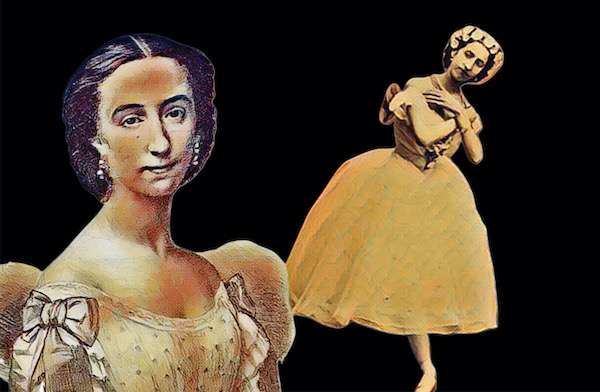
One would think that the tragedy of Clara Webster’s death would change something regarding the safety of performers, but it didn’t. The alternatives were heavy, dull fabrics, “getting in the way” of the performance and leading many to choose the risk. In 1862, Emma Livry experienced moments of pain and panic similar to Clara’s.
“At a dress rehearsal for an opera, the dancing superstar Emma Livry wore a costume that evoked the etherealness of the ideal female ballerina. It had a corset bodice and a fluffy skirt that ended around her calves. But before her entrance, her skirts came too close to a gaslight and her costume caught fire. Instead of an angelic beauty floating across the stage, Livry became a hellish nightmare engulfed in flames. She ran across the stage in a column of flames before a fireman could put it out. Livry survived the night and spent another eight grueling months recovering, only to die of blood poisoning related to her burns,” a newspaper reported.
Just a year earlier, in the United States, four British dancing sisters had also caught fire on stage. The Gale Sisters were a quartet and were on tour in America when, on the night of September 14, 1861, they took the stage in Philadelphia for the last time.
Zela, just 16, was retrieving a costume backstage when a jet of gas set her clothes ablaze. Her sisters, Hannah (20), Abeona (18), and Ruth (15), along with several other dancers, tried to put out the flames, but as they approached, the fire quickly spread to them as well. Eventually, one of them ran toward the stage, and the shocked audience did not understand what was happening. They were asked to calmly leave the theater, little did they know that at least a dozen girls were trapped in the dressing room, burning. Several jumped from second-story windows to the street below. Ultimately, nine died of their injuries, including the four Gale sisters.

All of the accidents, historians suggest, could have been avoided even before the conversion to electric lighting with the invention of Edison’s light bulb. Gas lamps could have been protected by wire, and attendees could have been given fire blankets to hand out in an emergency. Neither was done, and the risk quickly led to higher ticket and newspaper sales. A macabre reference that already signaled the connection between ballet and horror. A sad truth that is still used commercially in the 21st century. A nightmare.
Descubra mais sobre
Assine para receber nossas notícias mais recentes por e-mail.
 miscelana.com