
As published in CLAUDIA
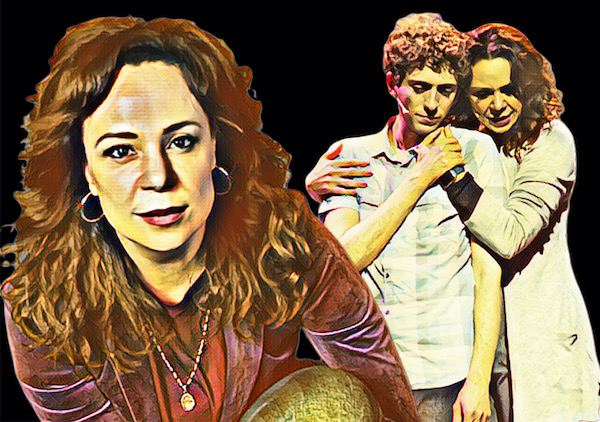
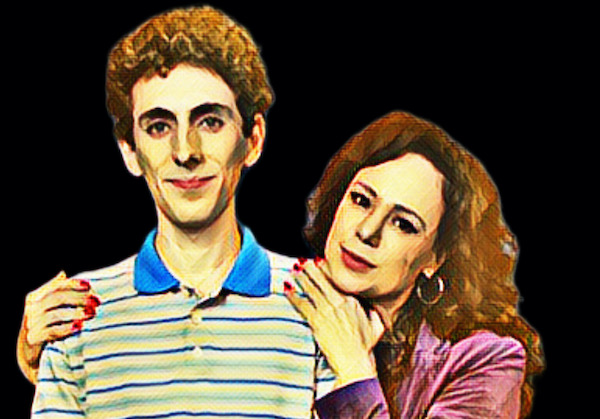
I confess that when I see Vannessa Gerbelli in the movies or on TV, I end up forgetting what a singer with a powerful voice she is. That’s why I was even more impacted when I saw her on stage, in the Brazilian production of the musical Dear Evan Hansen. In the play, which is playing until September 22 in São Paulo, at Teatro Liberdade, the actress plays a role with which she personally identifies: that of a single mother of a teenager who navigates the demands of being a provider, friend, caregiver and, of course, a woman. We know how balancing all these plates is so complex and the emotion that Vannessa conveys in the role immediately awakens sympathy and compassion in us.
Dear Evan Hansen tells the story of Evan, a teenage student who struggles with anxiety disorder and feels invisible among his peers, until a small lie puts him in the spotlight, leading him on a journey of self-discovery and redemption. The themes of the musical are extremely sensitive and address fundamental issues of mental health, social phobia, depression, bullying, the pressure of virtual life, emotional relationships, the importance of belonging, and the need for emotional support in the family and school environment.
It is even more moving when we think that the story is inspired by a real event, when my favorite duo: Benj Pasek and Justin Paul, who are behind the hits La La Land and The Greatest Showman, read the news of a student who committed suicide and left behind a series of letters that seemed to indicate that he had a friendship with another person – and that, in fact, there was no such thing. Benj and Justin identified with the anguish and their own experiences in high school and college to create the musical.
Winner of several awards on Broadway and around the world, Dear Evan Hansen was also turned into a book and a film, which is on Netflix, with Ben Platt and Julianne Moore in the roles that in Brazil are played by Gab Lara and Vannessa Gerbelli. (The full cast includes Mouhamed Harfouch, Flavia Santana, Hugo Bonemer, Thati Lopes, Gui Figueiredo, and Tati Christine).
Remembering that since 2015, September has been Yellow Month and is dedicated to suicide prevention, the themes of Dear Evan Hansen become even more relevant. The mental health of young people has been gaining increasing and global attention, and the challenges are immense. As Heidi Hansen, the protagonist’s mother, Vannessa has moments of great emotion precisely because of the pressure that family members face to help and identify their children to navigate these issues. Running between one performance and another, she managed to take a break for a quick and exclusive chat with CLAUDIA.
CLAUDIA: Vannessa, before entering the play and the importance of the role of Heidi… it’s so good to hear singing (again), it was incredible. How is your connection with singing and musicals?
VANNESSA: Thank you very much, I’m happy! I’ve been singing since I was little and my family is all about music. My mother plays the piano and my brother is an exceptional guitarist. When I started doing theater, musicals absorbed me, because I already had some experience as a singer in bands (I started singing in trios and vocal sextets at 15. We sang jazz, rock and roll, and entertained weddings and parties…). Even though I was still an inexperienced actress, I got roles in the musicals of the time, which were growing in São Paulo with the technical influence of Broadway. It was in a musical, Cazas de Cazuza, that I was discovered by TV Globo.
CLAUDIA: Heidi is a very “common” woman for all of us: alone with her son, having to support him materially and emotionally, sacrificing herself, and somehow still being or feeling pointed out as a “failure”. Are we too hard on these women?
VANNESSA: Women are naturally dedicated and can care, but I think this has been overexploited by our society. We are too demanding, yes. I don’t know any woman of my generation who doesn’t suffer because she doesn’t know how to set her limits clearly for others and for herself. I think we are in a movement to look at each other with more respect and affection, supporting each other, but this is very recent. It is a slow transformation because it is very difficult to recognize an abusive pattern when it has been imposed since childhood and that you recognize in your mother, in your grandmother… that is in your DNA. Women have always worked exhaustively at home without any recognition and have always been expected to be beautiful, balanced, and have the virtues of a good wife, a good mother, and a good professional. It is humanly impossible to comply with all of this.
CLAUDIA: How do you identify and present What about Heidi? What could she have done differently?
VANNESSA: She is a woman who struggles. She wants to have a more comfortable life, so she invests in a late college education. She wants her son to overcome his difficulties and be successful. So far, so good… The problem is that she carries pain that she has not yet overcome. She feels inferior, perhaps because her husband abandoned her, perhaps because she does not have the money she would like. She feels very helpless behind the facade of a strong woman. I think she could have invested more in healing her hurts.
CLAUDIA: What did you, as a mother, learn from Heidi?
VANNESSA: I really like the message she leaves at the end: She would never give up on her son. Her love is unconditional and I recognize that in myself. Nothing would make me give up on my son.
CLAUDIA: Is there a special moment in the musical that moves you the most? The production is incredible!
VANNESSA: Thank you! I really like the moment when Evan makes his “mea culpa”. The song is beautiful and the lyrics tell the pain of someone who doesn’t accept themselves, doesn’t love themselves. The vulnerability he exposes at that moment redeems him. The same happens with Heidi, right after, there are two wonderful moments in the play.
CLAUDIA: How has the audience’s response been?
VANNESSA: The audience gets very emotional and recognizes themselves in the characters, that’s what we always want to see in the audience!
CLAUDIA: The themes of the musical are dense and delicate, but treated in a very moving way. Did you know the play? How did you get involved in the production?
VANNESSA: I didn’t know, but I knew it was a success abroad. When I heard about the theme, I immediately wanted to participate. As an artist, I choose issues that I think are important for our time and this play brings very important discussions to the audience… Mental health, belonging, cancellation, family, authenticity.
CLAUDIA: And to “switch off” after the show? What do you do?
VANNESSA: Our group is so fun that we switch off very quickly. The contact with the audience is also delightful and leads to good exchanges when we leave the stage.
CLAUDIA: What are your plans after Querido Hansen?
VANNESSA: I wrote a musical with songs by Zeca Baleiro, inspired by my favorite movie, A Estrada da Vida. I also have a project in the audiovisual industry, as a screenwriter. Its theme is also mental health.
Descubra mais sobre
Assine para receber nossas notícias mais recentes por e-mail.
 miscelana.com