
Anne Boleyn was Queen of England for only a thousand days, was beheaded 488 years ago, and is still the topic of discussions, books, theses, films, series, operas, paintings, and posts in the 21st century. She is, without a doubt, one of the greatest female myths that arouse fascination and discussion, with an undeniably lasting legacy in history and popular culture.
Depending on the historical period or the source, Anne can be described as a martyr, feminist, con artist, seductress, witch, prostitute, passionate, vengeful, infatuated, indifferent, jealous, possessive, victim, intelligent, or innocent, you can choose. Maintaining this mystery for nearly five centuries gives some perspective on the impact she had not only on the lives of the English in general but certainly on King Henry VIII, who discarded his wife and broke with Catholicism for Anne, only to tire of her and have her executed a few years after making their relationship official.

Anne Boleyn was instrumental in the English Reformation, establishing the Church of England and contributing to the already complex religious polarization in Europe. She was, of course, also the mother of Elizabeth I, one of the greatest monarchs in history, but she was executed on charges of treason, adultery, and incest because she did not promptly produce a son for the King.
Her dramatic rise and fall make her story compellingly mysterious, for Anne has been described as shrewd and charming, a symbol of many themes, including the dangers of ambition, the capriciousness of power, and the complexities of female influence in a male-dominated society.
Today it is undeniable that Anne was tried on false charges, put together to create a quick and false trial, and the differences in opinions guarantee an ongoing debate, something that the lack of historical records – often contradictory and incomplete – allows for various interpretations and theories about her life and character.
Given this scenario, is it surprising that Anne Boleyn has become a popular topic in literature, film, and television? Of course not. And they fuel the public’s interest in finding out more.
The burning question: did Anne Boleyn betray Henry VIII?
Notoriously, Anne Boleyn was beheaded in 1536 after being found guilty of adultery, incest, and high treason. But, over the centuries, many historians have come to argue that these charges were fabricated as part of a political maneuver orchestrated by Thomas Cromwell, Henry’s prime minister, to remove Anne from power.
Henry VIII was desperate for a male heir, as the succession to the Crown was only for male heirs. Catherine of Aragon had already “failed” in the role, but had been married for nearly 24 years and the Queen was “past her childbearing years”. Anne, but, was under pressure and had been unable to produce a surviving son in less than three years of marriage, only a daughter. This “failure” put her in a precarious position, as Henry’s wish for a male successor was a significant driving force in his marriages. Perhaps she was counting on more years? The King was in a hurry and would not wait long, it became clear.
The charges against Anne included adultery with several men, including her own brother, George Boleyn. The evidence presented at her trial was weak and largely based on questionable testimony, so many historians argue that the trial was a sham, designed to guarantee her conviction.
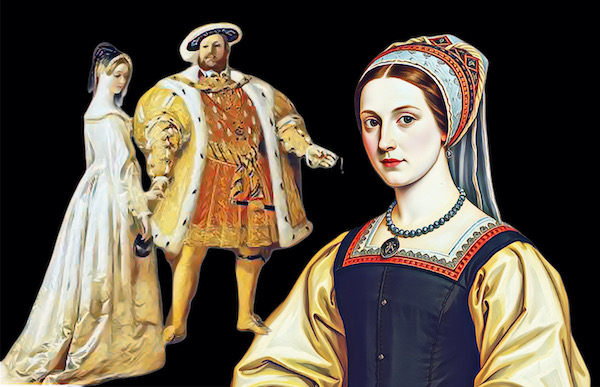
Thomas Cromwell, who played a significant role in Anne’s downfall, had political motivations for wanting her removed, but the truth is that Anne had many enemies at court, and her influence over Henry was seen as a threat by various factions.
Knowing that the King was fickle, the Queen’s antagonists had no trouble with the fake news without much effort. While Henry VIII believed the accusations against Anne or found them convenient, his motivations were more pragmatic than personal betrayal. By removing Anne, he managed to marry Jane Seymour, who he hoped would give him the male heir he so desired. And she did.
Why did Henry VIII become disenchanted with Anne Boleyn?
After all the drama and work to marry Anne Boleyn, why did Henry VIII become disenchanted with her in less than two and a half years? There is a list.
Biographers point out that one of the main reasons Henry VIII married Anne Boleyn was not passion, but his wish for a male heir to secure the Tudor dynasty. When she gave birth to a daughter, Elizabeth, in 1533, it was a disappointment and an even greater problem for both of them. Since her next pregnancies resulted in miscarriages or stillbirths, it was seen as a “failure” on her part to produce a male heir and this significantly diminished Anne’s value in Henry’s eyes.
Anne Boleyn’s relationship with Henry VIII was a catalyst for the English Reformation, as Henry broke with the Roman Catholic Church to make her his wife, a decision that led to significant political and religious upheaval. As Anne’s influence grew, so did her enemies at court, who worked to undermine her position and turn Henry against her. It didn’t help that what had been a strength soon became a weakness. Anne Boleyn was known for her intelligence, wit, and assertiveness. While these qualities initially appealed to Henry, they eventually became a source of tension. Anne’s strong opinions and involvement in political matters sometimes clashed with Henry’s expectations of a submissive queen, leading to friction in their relationship.

Perhaps the least highlighted but undoubtedly having a huge impact on the King’s “disenchantment” is that Henry VIII was notoriously unfaithful, and his interest in other women, including Jane Seymour, contributed to his waning affection for Anne. Once she married, Anne ceased to be the woman to be conquered, and Jane Seymour, in particular, caught Henry’s attention, and he began to see her as a more suitable and compliant partner.
Even today, in the 21st century, an unfaithful woman is unacceptable in a patriarchal society, let’s imagine 488 years ago. Women had lovers, but they never be discovered. So, if the King had doubts about his wife’s virtue, it would have been the easiest way to remove her. It is thus cruel, but not surprising, that Anne Boleyn was accused of adultery and treason, but the greater surprise is that it included incest. Whether these accusations were true or invented by her political enemies is still debated by historians. Nevertheless, these accusations provided Henry with a convenient pretext to get rid of Anne. She was arrested, tried, and executed in May 1536.
And what was Anne Boleyn like?
Anne Boleyn was definitely a woman ahead of her time, as contemporary accounts describe her as intelligent, charismatic, and strong-willed. Known for her sharp mind, it was precisely this striking presence that captivated Henry VIII and many others at court, as her education and cultural sophistication were also always highlighted, having spent part of her youth at the French court.
Devoted to Protestantism, Anne exerted considerable influence over Henry VIII to promote the religious cause as well as to advance the status of her own family. Her ability to navigate the treacherous waters of court politics, at least for a time, demonstrates her political acumen. Yet, Anne’s inability to produce a male heir changed the game and the political machinations of her enemies led to her downfall.
Because she was such a patroness and so distinctly different from the socially passive women of her time, the tragic Queen had a huge cultural impact, becoming a topic of fascination in literature, film, and television. Her life and death have inspired countless works, reflecting her lasting impact on English history and culture.
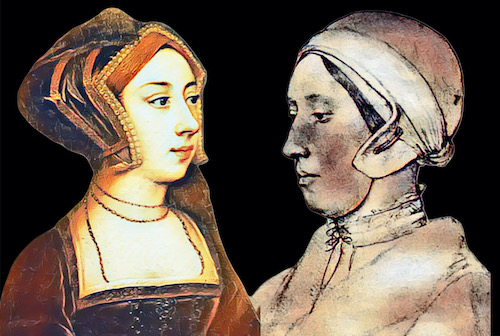
Can we imagine a different outcome for Anne Boleyn?
If we let our imaginations run wild, we can engage in a bit of historical fiction to imagine different outcomes for Anne Boleyn.
If Anne had been capable of giving birth to a healthy male heir, she would have remained in Henry’s favor. This would have solidified her position as queen and perhaps protected her from the political intrigues that eventually led to her downfall. The birth of a son would have satisfied Henry’s wish for a male successor, potentially preventing his interest from turning to Jane Seymour. It would not go so far as to suggest a happy marriage or fidelity, but it certainly would not have lost her head.
The Queen might have formed stronger political alliances within the court. Had she garnered more support from influential nobles or foreign powers, it been harder for her enemies to orchestrate her downfall. By solidifying her political base, Anne might have created a buffer against the accusations and conspiracies that led to her execution. But a Catholic Spain and France applying pressure did nothing to help her devotion to Protestantism.
Another potential scenario involves Anne being exiled rather than executed. Henry VIII had earlier annulled his marriage to Catherine of Aragon, and it is conceivable that he might have opted for a similar solution with Anne, especially if there had been significant pressure from foreign powers or domestic factions to spare her life. Anne could have lived out her days in a convent or exiled to a foreign court. But he knew he had already become a laughingstock, which is why he was so open to fake news.

Had Anne been capable of effectively countering the charges of adultery, treason, and incest, she might have been acquitted. This would have required a combination of strong legal defense, possibly aided by sympathetic judges or juries, and the discrediting of her accusers. Such a scenario would have been difficult given the political climate, but not entirely impossible.
And finally, if Henry had fallen in love with another woman who was willing to wait in the wings, he might have been less inclined to execute Anne. Instead, he could have sought to quietly annul the marriage and place Anne in a less threatening position, such as a dowager queen or a lady of the court, while he pursued his new interest.
These alternative scenarios depend on a variety of factors, including Anne’s political acumen, her ability to navigate the treacherous waters of Henry’s court, and the willingness of other powerful figures to support her. Although history unfolded in a way that led to Anne’s tragic end, imagining different outcomes allows us to explore the complexities and contingencies of her life and times. It’s worth wondering
So, was Anne Boleyn a heroine or a villain?
The characterization of who Anne Boleyn actually was depends largely on one’s perspective and the historical context considered.
Arguments for Anne Boleyn as a heroine include Anne’s influence on Henry VIII in catalyzing the English Reformation because Anne is said to have introduced Henry to key reformist texts, contributing to the establishment of the Church of England. She is also seen as a champion of education and the arts because Anne was well-educated and had a significant impact on the cultural and intellectual life of the court. Above all, she was a strong and independent woman in a time when women had limited power. Anne Boleyn carved out a significant role for herself, which is why she is portrayed as strong and ambitious.
Those who view her in a negative light argue that Anne was manipulative and overly ambitious, often portrayed as having used her charm and intelligence to seduce Henry, leading to the downfall of his first wife, Catherine of Aragon, and the subsequent religious and political turmoil. It’s the old “it’s the woman’s fault” that places the eternally unfaithful King in the passive role of seduction.
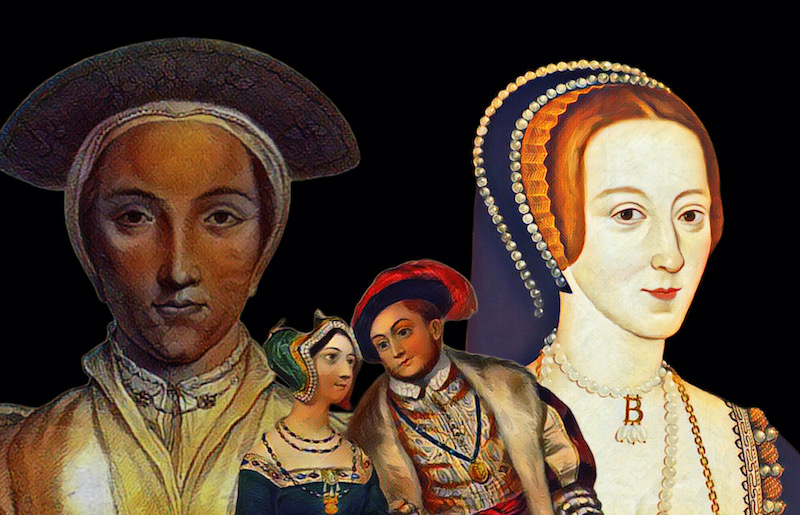
Those who dislike Anne should remember that during the thousand days she was Queen, she was directly involved in the complex and often ruthless political maneuverings of the Tudor court. Her actions and alliances contributed to significant upheaval and conflict. This is why she had many enemies because her accession involved the displacement and suffering of others, including Catherine of Aragon and her daughter, Mary. Anne Boleyn’s actions, from her involvement in the campaign to annul Catherine’s marriage, can be seen as politically motivated and, by some accounts, ruthless. For example, she supported Henry’s efforts to delegitimize Princess Mary, which had significant personal and political ramifications.
This is why historical figures like Anne Boleyn often defy simple categorization, and her story is a reminder of the complexity of human motivations and the impact of historical events. For example, Anne’s role in the downfall of Cardinal Wolsey, Henry’s chief minister, is a point of contention, with some seeing her involvement as a necessary step in the reform of church and state, while others see it as an act of personal revenge and ambition.
Which Anne do you choose?
In Film, literature, and theatre: a popular character
The literary portrayal of Anne Boleyn is not monolithic, and this duality reflects the contentious and multifaceted nature of her historical legacy. There are so many books about Anne Boleyn that her profile varies significantly depending on the author and the context in which she is portrayed. Historical fiction, plays and academic works have taken different approaches to her character, leading to one literary image that only fuels the next.
In works written during or shortly after her lifetime, Anne Boleyn is often portrayed negatively. For example, in the writings of Catholic propagandists, she is portrayed as a manipulative schemer who seduced King Henry VIII and was responsible for the downfall of Queen Catherine of Aragon. Nicholas Sander described her as immoral.

The rehabilitation of Anne Boleyn’s image only began in the 19th century, the Victorian Era, when she began to be portrayed as a tragic heroine, a victim of Henry VIII’s tyrannical and capricious nature. Modern historiography of the 20th and 21st centuries has sought to provide a more balanced view of her biography.
As a result, many historical novels and modern biographies have sought to reassess Anne Boleyn’s legacy, often portraying her in a more sympathetic light. Authors such as Philippa Gregory in The Other Boleyn Girl and Hilary Mantel in Thomas Cromwell present Anne as a victim of political machinations and a woman of intelligence and ambition who was caught up in the dangerous power struggles of Henry VIII’s court.
In Mantel’s book, which is the basis for the Wolf Hall series, Anne is portrayed as a complex, ambitious, and vulnerable character, in a portrait that provides insight into her motivations and the precariousness of her position at court.
Books that seek a balanced view, acknowledging both her ambition and the harsh consequences she faced, are exemplified by Alison Weir’s biographies, which often attempt to provide a nuanced portrait, acknowledging Anne’s significant role in the English Reformation while also detailing the controversies and challenges she faced. She and Eric Ives have worked to separate myth from fact, and this has only sparked new waves of portrayals of Anne Boleyn in a new light.

In the theatre, her portrayals often highlight her charm, intelligence, and ambition, as well as the political and personal intrigues surrounding her life and downfall. One of the most notable plays is Howard Brenton’s Anne Boleyn, where she is seen as a spirited woman deeply involved in the religious and political upheavals of her time. Another significant portrayal is in William Shakespeare’s play Henry VIII (also known as All is True), where Anne is not the central character, but her presence and influence are essential. In it, Anne is portrayed as a charming and somewhat enigmatic figure whose rise and fall are crucial to the narrative of Henry VIII’s reign. Shakespeare’s Anne is often seen as more passive and manipulated by the forces around her, reflecting the historical prejudices of her time.
In Maxwell Anderson‘s Anne of a Thousand Days, which was adapted for the screen, the plot dramatizes her romance with Henry VIII and her eventual execution. Anderson’s portrayal emphasizes Anne’s intelligence, strength, and tragic fate, providing a more personal and emotional view of her character.
In film and television, we can highlight:
Anne of a Thousand Days (1969), with Geneviève Bujold as Anne Boleyn, who was nominated for an Oscar. A more recent one, The Other Boleyn Girl (2008), stars Natalie Portman as a cunning and ambitious Anne, willing to do anything to secure her position, even if it means manipulating those around her. The relationship between Anne and her sister Mary, played by Scarlett Johansson, is also a central theme. And, going back to Robert Bolt‘s A Man for All Seasons (1960), Anne Boleyn isn’t the central character, but her presence is significant.
The film (and the play) deals with Sir Thomas More’s moral and legal conflicts with Henry VIII, particularly regarding the king’s divorce from Catherine of Aragon and subsequent marriage to Anne Boleyn. The role of Anne, played by Vanessa Redgrave, is key to More’s execution.
In The Tudors (2007-2010) Natalie Dormer was Anne’s defender, and Dormer’s portrayal is complex, showing Anne as both a victim of her circumstances and an active participant in the political machinations of the court. Her performance is widely praised for its depth and nuance. In Wolf Hall and Bring Up the Bodies, by Hilary Mantel, adapted by Mike Poulton (2013), actresses Lydia Leonard and Claire Foy gave praised performances.
Officially rejected by her daughter, Anne was loved by few
After a traumatic childhood and constant threats of assassination, Elizabeth I used to proudly say that she was her father’s daughter and never mentioned her mother (although it was discovered after her death that she always carried a hidden image of Anne with her). The queen’s statement that she was “her father’s daughter” reflects her recognition of the qualities and attributes known at the time.
For example, Henry VIII was known for his strong-willed nature and decisive leadership, particularly in his break with the Roman Catholic Church to establish the Church of England. Elizabeth inherited this assertiveness and political astuteness, which she demonstrated throughout her reign, especially in her handling of religious conflicts and her ability to maintain a relatively stable and prosperous England. On the other hand, Elizabeth’s Protestant leanings and her efforts to establish a religious settlement in England can be seen as an extension of the reformist ideas that Anne Boleyn supported in life.
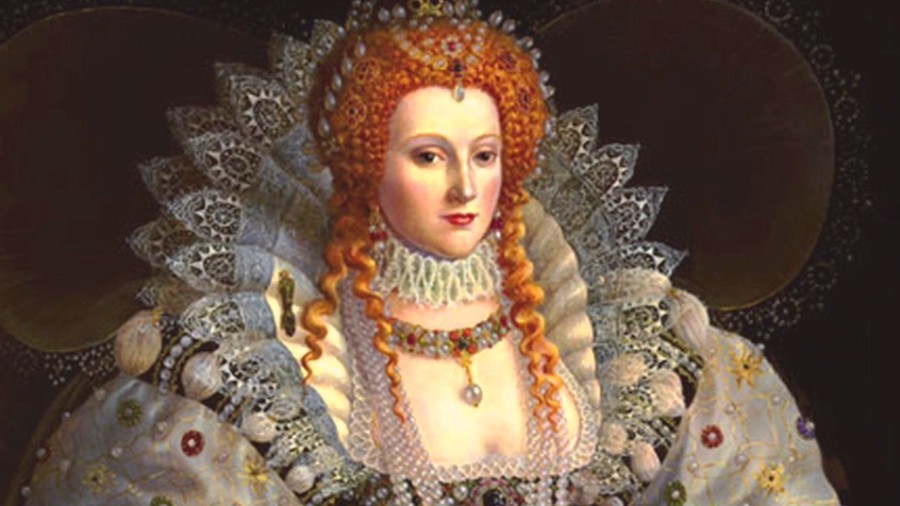
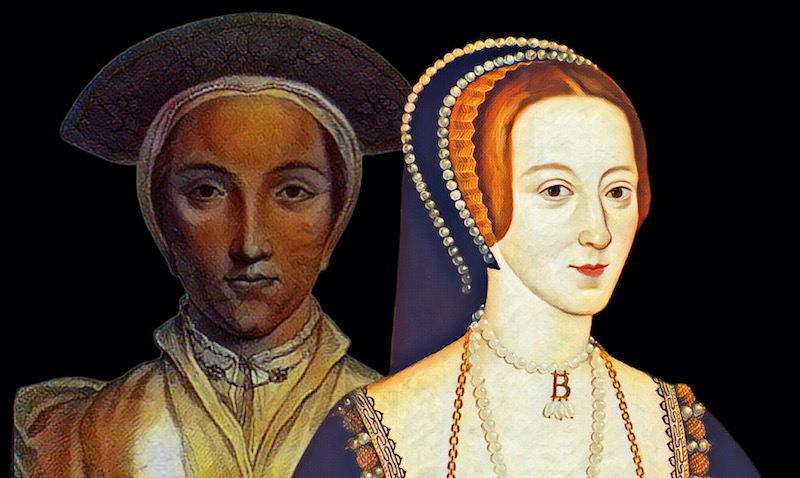
Her father’s charisma and command were undeniable, and Elizabeth was also known for her eloquence, intelligence, and ability to inspire loyalty and admiration among her subjects. Her speeches, such as the famous one at Tilbury before the defeat of the Spanish Armada, demonstrated her ability to connect with and motivate her people.
On the other hand, she continued to navigate the complex religious landscape of her time, promoting a moderate form of Protestantism and attempting to calm tensions between Catholics and Protestants.
Historians point out that Anne Boleyn’s influences are reflected in the intellectual and cultural influence of the Elizabethan period. Elizabeth I was highly educated, fluent in several languages , and a patron of the arts, promoting cultural flourishing. But even more powerful was the Virgin Queen’s great fear and caution in putting her enemies to death.
Her mother’s tragic fate left a profound impact on Elizabeth and instilled a sense of caution and resilience. She had to navigate a court full of intrigue and danger, and her mother’s fate may have influenced her decision to stay unmarried and keep control over her own destiny.
Were all the accusations against Anne Boleyn false?
And the question comes back to whether ALL the accusations against Anne were false. Today, it is believed that they were. They were all largely fabricated. Historical evidence suggests that these accusations were part of a political maneuver orchestrated by Thomas Cromwell, Henry VIII’s prime minister, who saw Anne as a threat to his power and influence.
To this end, Anne was accused of having illicit relationships with several men, including her own brother. However, many historians argue that these charges were based on shaky evidence and forced confessions. The lack of reliable witnesses and the speed of the trial further suggest that the charges were fabricated. She was also accused of conspiring to kill the king and plotting to marry one of her alleged lovers. Again, there is little concrete evidence to support these allegations.
The treason charges were likely intended to secure her execution, as treason was considered one of the most heinous crimes in Tudor England. Finally, it is important to understand the political context of Anne’s downfall. By 1536, Henry VIII was eager to remarry in the hope of securing a male heir, which Anne failed to provide in less than 3 years. Jane Seymour, who would become Henry’s third wife, was already in the mix.
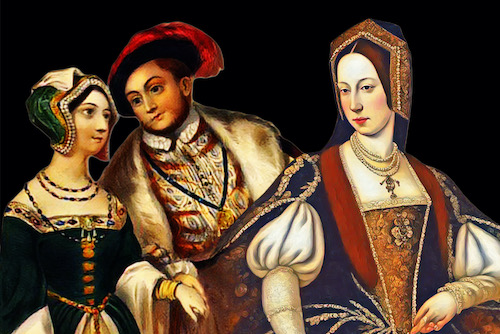
Cromwell and other courtiers saw Anne’s downfall as an opportunity to align themselves more closely with the king and gain favor. Modern historians therefore agree that Anne Boleyn was the victim of a politically motivated conspiracy. While she may have had her enemies and was not universally liked, the consensus is that the specific accusations against her were largely unfounded.
If Anne Boleyn is no longer a villain, what about Henry VIII?
Henry VIII is one of the best-known monarchs in English history, and his portrayal has evolved significantly over time, reflecting both his complex personality and the profound impact of his reign.
Today, he is seen as a strong, authoritarian ruler who centralized power and significantly expanded the influence of the English monarchy, marking the beginning of the modern English state, with reforms that strengthened the military and restructured the government, but he was also a tyrant.
Henry VIII’s reign is now characterized by his ruthless and often brutal methods of maintaining power. He is known for his six marriages and the execution of two of his wives (in addition to Anne, he had Catherine Howard killed). His treatment of dissenters and opponents, including the execution of Thomas More and the dissolution of monasteries, further cemented this image.
If he was once the “Renaissance Prince”, seen as handsome, charismatic, and cultured, a patron of the arts and education, this is no longer the case today. The facts contrast sharply with his later years when he became more despotic and paranoid.
From a feminist perspective: how do we view Anne Boleyn?
An empowered woman who challenged the traditional roles assigned to women. It all effectively began with her refusal to be another mistress of the king. Of course, everyone claims that it was for reasons of political ambition, but she was able to postpone the consummation of their relationship, which can be interpreted as her assertion of control over her own body and future in a society dominated by men. Moreover, she determined the rules by which Henry could have her.
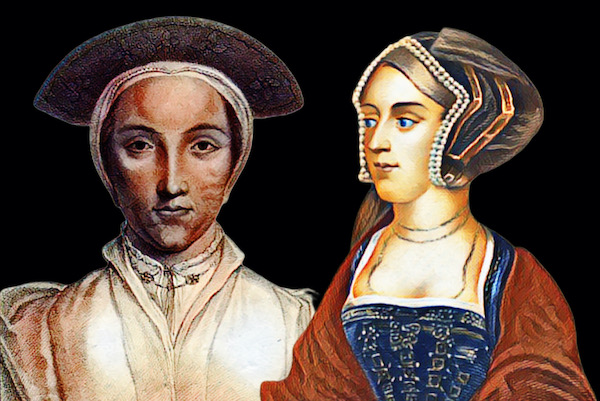
Despite her initial success, Anne ended up being a victim of the patriarchal structures of her time. Her inability to produce a male heir, something that is genetically impossible for women to determine alone, highlights the precarious position of women who dared to step outside traditional roles and the severe consequences they could face.
Throughout this, Anne’s influence extended beyond her own lifetime, particularly through her daughter, Elizabeth I, who became one of England’s greatest monarchs. Anne’s legacy can be seen as contributing to the eventual rise of a powerful female ruler, challenging the norms of her time and resonating with feminist ideals of leadership and female empowerment.
And clearly, a mystery that is still far from being solved.
Descubra mais sobre
Assine para receber nossas notícias mais recentes por e-mail.
 miscelana.com
1 comentário Adicione o seu