
I’m sure Sir Ian McKellen could be on the shortlist for the Best Actor Oscar for his performance in The Critic. Anything McKellen does is excellent and, in this case, he’s flying high.
The actor plays Jimmy Erskine, a feared – and cruel – theatre critic in 1930s London who is gay and ends up involved in a series of crimes to keep his secret. An adaptation of Anthony Quinn‘s novel Curtain Call, it brings together a series of interconnected characters whose lives become entangled for various reasons, including murder.
What outsiders don’t know, or did not know, is that Curtain Call is a novel that combines elements of historical fiction, mystery, and drama, to vividly tell the story of the golden years of British theatre.
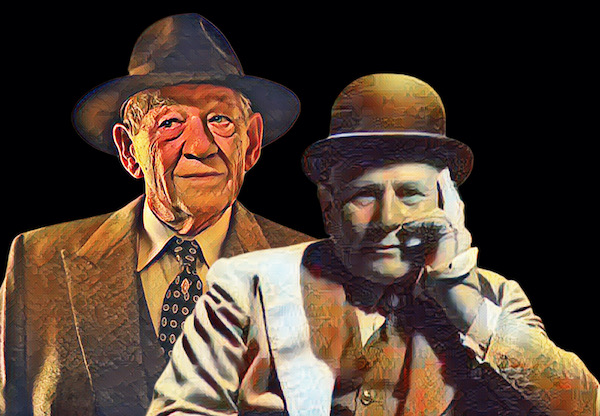
The character of Jimmy is inspired by James Agate, a renowned English theatre critic, best known for his incisive and witty reviews of plays and performances. Born in 1877, Agate initially pursued a career in journalism before becoming a respected figure in the world of theatre criticism, writing for several publications including The Sunday Times and The Tatler.
Agate was particularly known for his sharp observations and his ability to capture the essence of a performance or play with a few well-chosen words. His reviews were not just critical but also delightful pieces of writing in their own right, full of humor and a keen sense of the theatrical world, earning him a reputation for being fair and brutally honest, which earned him respect and notoriety in equal measure. An example of Agate’s wit can be seen in his review of a play, where he commented: “Long as it is, the play is shorter than it looks.”
In addition to his work as a critic, Agate was also famous for his series of diaries, collectively known as Ego. These diaries, published in nine volumes between 1935 and 1947, provide a fascinating insight into the cultural and social life of his time. They include not only his thoughts on the theatre but also his reflections on various aspects of life, making them a rich resource for understanding the period.
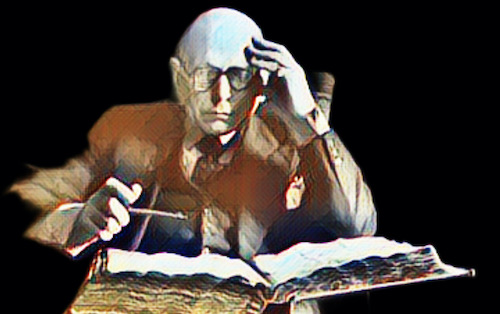
Agate’s wit and eloquence, combined with his deep understanding of the theatre, made him a significant figure in English literary and cultural circles. He was passionate about the theatre and believed in its unique power to entertain and inspire, regardless of its deeper meanings or messages.
James Agate’s contributions to literary criticism and the theatre remain influential, and his diaries continue to be read for their rich portrayal of early 20th-century British theatre and society. He died in 1947, leaving behind a legacy as one of the most distinctive voices in theatre criticism.
In Curtain Call, and therefore The Critic, the character Jimmy Erskine is often considered a fictional representation of the real-life theatre critic James Agate because of the similarities between them. Starting, of course, with their profession, as both are renowned theatre critics and therefore at the heart of the theatre world, where their opinions and assessments have significant influence.
Like Agate in real life, on-screen (and on the page) Erskine is known for his sharp wit and biting commentary, with a keen eye for detail and a penchant for incisive criticism, often with a touch of humor and sarcasm. This candor has earned them both good connections but also many rivals among prominent figures in the industry.
In addition, Jimmy Erskine also leads an extravagant lifestyle, characterized by his love of the finer things in life, including good food, drink, and the arts, enjoying the privileges that come with his social and professional position. Both men struggle with personal demons and vulnerabilities involving their sexuality and the social pressures of the time to hide their gayness, Erskine, of course, going to radical lengths to keep it a secret.
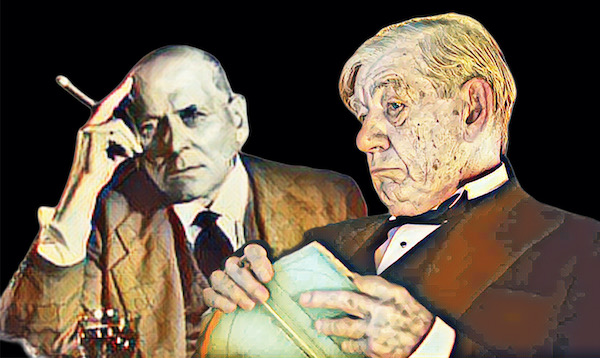
The historical context is worth noting because it is set during the interwar period and reflects the era in which James Agate lived and worked, giving depth to the similarities between the fictional and real-life figures. By drawing parallels between these two figures, Anthony Quinn’s book provides a rich and nuanced portrait of a theater critic navigating the complexities of the literary and theatrical world during a fascinating period in history.
Critics were divided on the film, and ironically enough, “McKellen is the reason to see The Critic. This extraordinary actor could not ask for a character more suited to his depth of understanding and experience. Every tilt of his head, every curve of his shoulders, every angle of his hat, and the variety of surprising ways in which he dangles a cigarette from his lip tell us who Erskine is, what matters to him, and how he plans to reclaim what he considers his rightful status,” says the respected Roger Ebert.
The Hollywood Reporter, meanwhile, says that “Perhaps The Critic would have done well to heed the rare sincere advice Jimmy offers: ‘Less,’ he concludes. ‘It’s a dagger to the soul. But less is the only note.””, complaining about the confusing script. “Almost every character except Jimmy feels underwritten, and almost every relationship is built on artificial plots,” says the THR critic, who highlights the talent of Sir Ian McKellen. “The Critic succeeds in building its antihero, but it’s too confused to say much about him, or the world in which he exists.”
I, for one, can’t wait to check it out!
Descubra mais sobre
Assine para receber nossas notícias mais recentes por e-mail.
 miscelana.com