
The dance world experienced a heartbreaking Friday the 13th in one of the most heartbreaking farewells in recent times. Michaela Mabinty DePrince, who made history in her short career, passed away suddenly at the age of 29.

Michaela’s life story is nothing short of incredible and has become a book as well as a documentary, with her not only standing out in the world of dance and becoming a pop icon, starring in campaigns for famous brands such as Nike, being admired by Madonna and dancing with Beyoncé.
A pioneer, humanitarian, and committed, she was born in Sierra Leone, orphaned by the war, was adopted and taken to the United States where she discovered classical ballet and became a star. She credits her strength and artistic development to ballerina Magali Messac (ex-ABT) and was one of the dancers who fought against racism in the ballet world, alongside Ingrid Silva and Misty Copeland.
Born as Mabinty Mangura in Kenema, Sierra Leone, in 1995, Michaela DePrince was sent to an orphanage at the age of three after her father died fighting in the civil war and her mother died of hunger during the conflict. Abandoned by an uncle, the hardship of being an orphan in a country in conflict presented an even greater challenge for the girl: she had vitiligo, a condition in which patches of skin lose pigmentation and for this reason she was a victim of prejudice among children, who called her “the devil’s daughter”. To make matters worse, she also suffered abuse, as she recalled years later in an interview. “We were classified as numbers and number 27 was the least favorite and that was my number, so I received the least amount of food, the least amount of clothes and everything,” she revealed.
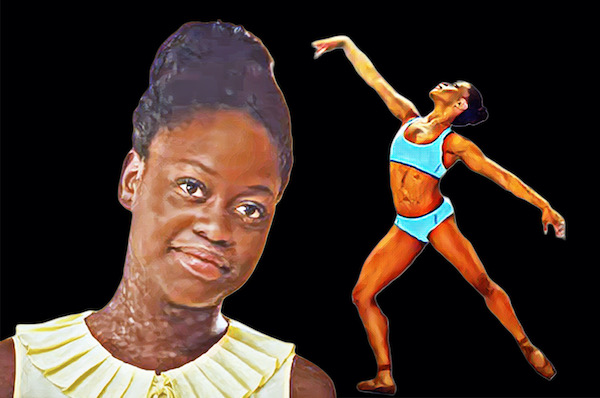
Her destiny changed when she was adopted at the age of four by an American couple and moved to the United States, changing her name and settling in New Jersey. She brought with her a passion for ballet that, she says, was born when she was still in foster care and saw a picture of a ballerina on the cover of a magazine. “All I can remember is that she looked very, very happy,” she said years later, adding that she decided to “become exactly that person.”
Her adoptive parents embraced the girl’s dream and enrolled Michaela in an academy. One of the most prominent ballerinas of the decade was born, who faced racism and prejudice head on, defying everyone who said she didn’t have the right body type or skin color to be a ballerina.
Michaela made headlines when she became the youngest principal dancer at the Dance Theatre of Harlem, having just graduated from high school. From there, at just 17, she went to Europe and joined the National Ballet in Amsterdam, where she became a second soloist. In 2017, she made history by dancing the role of Myrtha in the ballet Giselle for the English National Ballet.

In 2021, she returned to the United States as a second soloist for the Boston Ballet. Her dancing has been recorded in videos on her social media, in her participation in Beyoncé‘s album Lemonade, in videos by other artists, and also as Swanilda in the recording of the ballet Coppelia in 2021, in a film that combines dance and animation.
Memories of the war have never left her mind and she has dedicated herself to helping child survivors like herself, becoming a spokesperson for the organization War Child. She participated in the documentary First Position and wrote an autobiography, Taking Flight, released in 2016. In 2018, Madonna announced that she would direct a film about her life, but the project has not yet taken off and is only in the script stage. Will it happen now?
The cause of Michaela’s death has not yet been released, but the dance world mourns the loss of one of its greatest and most promising talents and agents of change. Rest in Power.
Descubra mais sobre
Assine para receber nossas notícias mais recentes por e-mail.
 miscelana.com