
I have an unpopular and potentially cancelable opinion: George R. R. Martin always loves the next adaptation of his work until it takes on a “life of its own.” With Game of Thrones, he was involved until season 4, remained neutral in the following seasons, and generally sits on the fence about the conclusion. I’ll get back to that later. With House of the Dragon, his current nemesis, he was all love until the changes in season 2 (and I’m with him on that disappointment), so forgive me for being cynical when he can’t stop praising A Knight of the Seven Kingdoms. Everything is fine until it’s not!
And I say this because actor Peter Claff posted the announcement that filming for the next series has ended, officially starting the clock to anticipate trailers, teasers, and release date announcements.
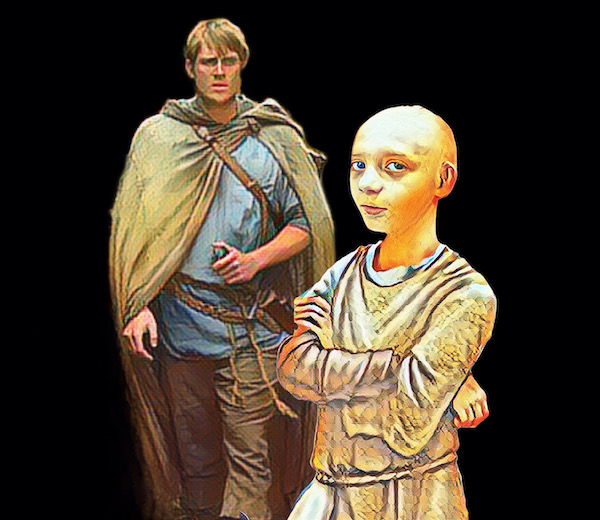

“I loved what I saw. Great cast. Dunk and Egg look like they stepped out of the pages of my book. My readers are going to love them. I certainly do,” said the writer who praised showrunner Ira Parker: “He’s doing a great job.” Sound like something you’ve heard before? Because you have. The countdown to some author complaints has begun. Just wait and see.
Yes, the countdown to some author complaints also begins.
Are you disagreeing? Remember that George R.R. Martin stated “I have seen all ten episodes (albeit in rough cuts) and loved what I saw. Ryan and Miguel and their incredible cast and crew have done a magnificent job. Hot D is everything I hoped it would be; dark, powerful, visceral, disturbing, stunning to watch, populated by complex and very human characters brought to life by some truly incredible actors,” he wrote on the eve of the premiere. Fast forward in time, and he seems to have changed his mind.
“When Ryan Condal first told me what he intended to do [exclude the character Maelor], a long time ago (in 2022, perhaps), I argued against it, for all these reasons,” Martin wrote. “However, I did not argue too much, or too vehemently. The change weakened the sequel, I felt, but only slightly,” he vented, listing the problems that this creative decision will have on House of the Dragon. He’s 100% right, but we can still hope that the alternative works. In Game of Thrones, similar changes worked out really well, like the whole Sansa Stark arc, which gained another dimension.
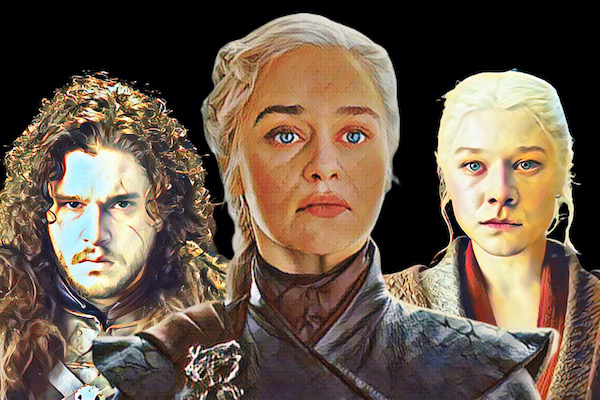
It’s ironic, somehow, that on his blog he’s generally been softer on GOT than HOTD. “How will this all end? I hear people asking. Same ending as the show? Different? Well… yes. And no. And yes. And no. And yes. And no. And yes,” he wrote in 2019, still owing and promising to finish the book that was never published in time to guide the series. “There are characters who never appeared on screen and others who died in the series but still live on in the books… so if nothing else, readers will know what happened to Jeyne Poole, Lady Stoneheart, Penny and her pig, Skahaz Shavepate, Arianne Martell, Darkstar, Victarion Greyjoy, Ser Garlan the Gallant, Aegon VI, and a myriad of other characters, big and small, that viewers of the series never got the chance to meet. And yes, there will be unicorns… of a sort…” he teased eight years ago. “Book or series, what will be the ‘real’ ending? It’s a silly question. How many children did Scarlett O’Hara have? How about that? I write. You read. So everyone can draw their own conclusions and argue about it on the internet,” he hedged.
So here’s my argument: the controversial ending of Game of Thrones clearly has to do with what George R. R. Martin intended to write more than 10 years ago, but with cultural changes and the violent reaction of fans, he found himself unable to reveal, admit or justify what was almost unanimously rejected. The “yes. And no. And yes. And no. And yes. And no. And yes” can be and seem to be SEVEN points that we don’t like. Which ones? The seventh is the most decisive: YES, the story was supposed to have Bran as King and not Jon or Daenerys. The other six are less obvious.
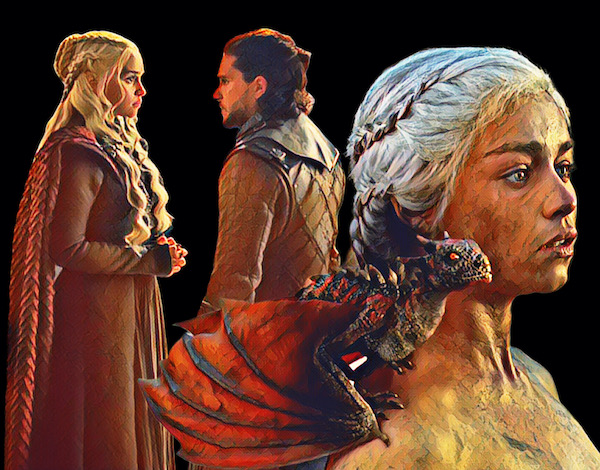
The quickest and most vehement reaction against House of the Dragon has clearer motivations: 1) the story is written with a beginning, middle, and end, unlike GOT 2) The experience of having remained silent when the writers changed crucial plot points profoundly alters the conclusion of the story and at this point, I would say that everyone who survived the end of Game of Thrones is terrified of what “ending” means.
Having said all that, the author himself acknowledges that writing for TV is quite different and that it is necessary to adapt the trajectory so that it fits into a few hours. Therefore, starting the project by approving what is being done is not significant. It is more important to have this opinion precisely when the second season is being worked on, so saying that A Knight of the Seven Kingdoms is perfect now is marketing, if it is confirmed later, it is relevant.
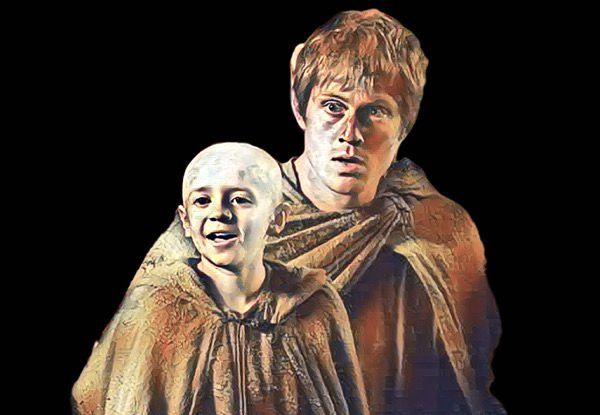
And yes, let’s remember that in addition to owing us the conclusion of the GOT saga on paper, we also need to conclude Fire and Blood and Martin himself says that he has more stories of Dunk and Egg to tell. Honestly? Complaining about the screenwriters who are adapting what’s not finished, is kind of easy, right?
Now let’s wait for the next adventure in Westeros!
Descubra mais sobre
Assine para receber nossas notícias mais recentes por e-mail.
 miscelana.com
3 comentários Adicione o seu