
In The Gilded Age, we follow the stories of the rich, the servants, and the black elite in New York at the turn of the 19th century. This part of the story is led by Peggy Scott (Denée Brown) and brings a new and interesting layer to the series because she is the link between two universes that barely spoke to each other at the time.
We meet Peggy in the pilot when she is at the same train station in Pennsylvania where a poor and lonely Marian Brooks (Louise Jacobson) is desolate after being robbed and having – literally – no money or home, not even friends to help. Out of pity, Peggy helps her and what would be a moment to never return changes the lives of the two young women forever.

Full of secrets (I even considered that she was part of the scam that I was sure Tom Raikes was pulling on Marian), Peggy was not necessarily friendly or considered Marian her friend, but she did gain the independence she needed to stay away from her parents in Brooklyn.
Peggy actually has more possessions and security than the vulnerable Marian. She comes from a prominent black family in Brooklyn, the daughter of Dorothy (Audra McDonald) and Arthur Scott (John Douglas Thompson). But for now, she prefers to work as a secretary for the wealthy Agnes van Rhijn (Christine Baranski).
As we gradually discover, Peggy went to Pennsylvania to find a clue to locate her son, taken from her at birth and initially presumed dead. She does not want to reestablish contact with her family because her father was against Peggy marrying Elias Finn, a young man who worked with him but had no prospects or education. Peggy and Elias ran away to Philadelphia, where they got married, but he did abandon her shortly after they lost their son.
Peggy and the unity she represents in The Gilded Age came about from the desire of showrunner Julian Fellowes and history consultant Sonja Warfield to include the perspective of black society in the period, which is rarely seen in period films or series.
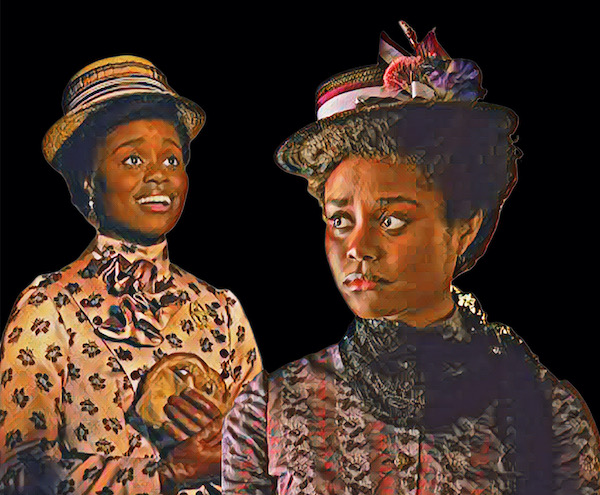
Peggy’s dream is to be a writer, and for now, in addition to being a secretary, she works as a journalist at The New York Globe, a real-life black newspaper that opened in 1887. The importance of this part of the story cannot be emphasized enough. The Gilded Age is set just 15 years after the end of the Civil War. There is overt and structural racism, but the most important thing is to burst the bubble of only showing black characters when the subject is related to slavery. In the North, there was an independent black elite, people with jobs, degrees, and who were free. Some by birth, but most were still born slaves and free.
At the end of season 1, Peggy discovers that her son is alive and manages to locate the family that adopted him, but in the first scene of season 2, it is revealed that the child died of a fever. Peggy returns to New York and throws herself into work to forget her pain. At the New York Globe, she becomes involved with the editor-in-chief, journalist T. Thomas Fortune (Sullivan Jones), a real-life historical figure often called the father of black journalism. In one episode, Peggy traveled with Fortune to Alabama, despite her mother’s warnings, to report on the work of Booker T. Washington’s Tuskegee Institute. There, a lynch mob terrorized them and they were forced to flee for their lives. Upon returning, when she bumps into his wife and baby son, Peggy decides to leave the newspaper and Thomas.
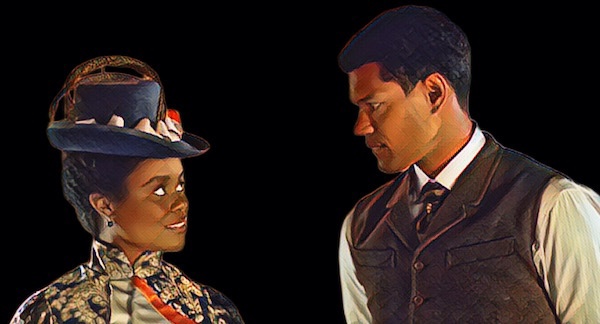
In the third season, Peggy will not be alone or abandoned in New York, since the plot will focus on Newport and for this reason no less than five new characters have already been confirmed. Among the ‘new’ faces will be Frances Ellen Watkins Harper, the famous black suffragette who inspires Peggy to get involved in her cause, despite the differing opinions of those around her. And yes, a new love interest for Peggy.
Peggy Scott also won over audiences thanks to her actress, Denée Brown, who rose to prominence on Broadway as part of the cast of Hamilton. Peggy is inspired by pioneering historical figures such as journalist Ida B. Wells and physician Susan McKinney Steward, but her main reference is writer Julia C. Collins, whose 1865 novel, The Curse of Caste; or The Slave Bride, is widely cited as the first novel written by an African-American woman and addressed themes of racial identity, interracial marriage, and the injustices of slavery and racism. Like Peggy, Julia worked as a teacher and wrote articles on racial upliftment and empowerment.
And after all that suffering, we’re ready to see Peggy happy, aren’t we?
Descubra mais sobre
Assine para receber nossas notícias mais recentes por e-mail.
 miscelana.com