
“But Mr. Heathcliff forms a singular contrast to his abode and style of living. He is a dark-skinned gipsy in aspect, in dress and manners a gentleman . . . I know, by instinct, his reserve springs from an aversion to showy displays of feeling . . . He’ll love and hate equally under cover, and esteem it a species of impertinence to be loved or hated again“
Author Emily Bronte‘s description and presentation in Wuthering Heights of one of the most complex characters in literature – Heathcliff – a man with no surname, no clear origins, and a dark, tortuous, and torturing soul, generates much controversy even today, more than two centuries later. Was she describing his ethnicity metaphorically or literally?

The discussion heated up again with the announcement that Emerald Fennell had chosen the Australian – and white – Jacob Elordi as her Heathcliff, and social media immediately reacted. Against it, of course.
“If Jacob Elordi is Heathcliff, forget this adaptation. A central point of the story is that Heathcliff is a non-white man 🫠🫠,” adds Rafaela Justiniano.
“And this white Heathcliff? 👁️,” complains Ana Rosa.
“But unfortunately Heathcliff is not going to be the first white Heathcliff, right? Only one adaptation has a black actor as Heathcliff (2011 film), in the other films they are white men,” comments Vaneza Nunes on Threads.

“Maybe I’m in my literature bag today, but I don’t know how you can read WUTHERING HEIGHTS and come away thinking Heathcliff is white. That’s just not how he’s described in the book,” says Meechan Whitson Meriweather.
There’s an equally valid argument that Heathcliff – being a gypsy – is of Romanian origin, as more than one Threads user points out. “Heathcliff is meant to be at least partially of Romani descent. It’s one of the reasons that he’s othered throughout the novel, as well as one of the reasons that Cathy ultimately rejects him. Racism is a central part of Wuthering Heights. Casting a white actor shows a lack of understanding of the novel. Given Fennell’s prior works, I expect that this will be a very pretty movie, but not a good one. And it will once again show that she doesn’t understand the issues she wants to talk about,” argues Robi Locksley.
So, what’s the right version?
As mentioned, racism is one of the most sensitive and important themes in Bronte’s entire novel. It is literally because Heathcliff is “different” that Cathy rejects the idea of marrying him, even though in the same sentence she describes her visceral passion for him with the iconic phrase “I am Heathcliff”. However, the same racism in Art in general prevented the physical description of his skin color from being taken into account in almost all the film and TV portrayals of the role.

Experts argue that Mr. Lockwood’s description of Heathcliff, which is one of the first sentences we hear about him, is intended to highlight the contrast between Heathcliff’s origins as an orphaned gypsy and his current position as a gentleman. And that it would also justify his resentment and actions against his enemies. In addition to his “dark-skinned gypsy appearance”, he is described as “rough as a saw and hard as a stone”. A man who “must have had some ups and downs in his life to make him so rude.”
This entire opening dialogue is important because Mr. Lockwood represents us, an outsider who accidentally enters the life of those toxic relationships in Wuthering Heights. Nelly, as a witness, warns him – and us – to keep our distance because no one knows exactly who Heathcliff is and never will.
In the book, Emily Brontë describes Heathcliff with a complexity that reflects his multifaceted nature, often portrayed as a dark, intense, and often terrifying figure.
He was found on the streets of Liverpool (this is an important detail) by Cathy’s father, Mr. Earnshaw, who brings him home and raises him, treating him like a son. Described as a nameless “gypsy boy”, this initial description already suggests an air of mystery and social exclusion.
Heathcliff’s physical appearance is extremely important in the story to emphasize his intense behavior, often associated with an almost supernatural presence, reflecting his enigmatic and disturbing personality. This is why Brontë uses words like “merciless,” “vindictive,” and “passionate” to describe him.
Heathcliff is driven by strong emotions, especially love and hate. His passion for Catherine Earnshaw is intense and possessive, and his quest for revenge against those he feels have wronged him is relentless.
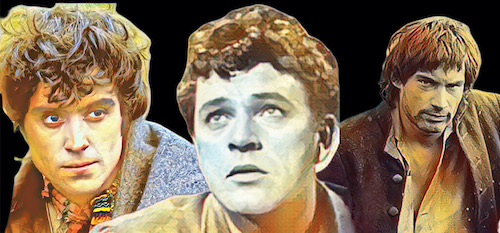
Another important sign of race problems is that in the book, Heathcliff is often compared to wild animals, which confirms his untamed and primitive nature. Thus, he is described as “a lone wolf” or “a tiger on the prowl”, suggesting his ferocity and unpredictability.
The mystery surrounding him contributes to everyone, except Cathy, being afraid of him. And suffering too.
Those who believe that all the discussion around Heathcliff’s ethnicity makes him a kind of Cleopatra in trousers have fewer arguments against it than the Queen of Egypt. Cleopatra, as an Egyptian of Greek origin, finds the Egyptians against any suggestion that she was black, even though Egypt is on the African continent. I will not go into that trap.
Heathcliff, on the other hand, has strong suggestions that Emily Bronte was indeed specific in her description. She clearly says “dark-skinned” and Liverpool, where Heathcliff was found, is home to the oldest black community in Great Britain and, consequently, one of the oldest in Europe. Yes, Romanian gypsies are also not considered white and are described as dark-skinned, but let’s agree that the author’s brilliance did not leave this part open to discussion.
Although everyone can imagine “their” Heathcliff, cinema and TV have contributed to the confusion surrounding the character’s ethnicity. In only one version, in 2011, he was played by a black (and young) actor. Furthermore, he has been the favorite role of Caucasian actors who, as much as they can do to get closer to the “darkness” of the mysterious man, wear black hair and sometimes have a tan. Even his dark eyes have appeared very blue in some cases.

Of the most famous, Laurence Olivier is one of the oldest, having paved the way for the others in the 1939 film, alongside Merle Oberon. After him, in 1992, Ralph Fiennes – still unknown at the time – became the most praised for having best captured the essence of the character, but Tom Hardy also left a remarkable Heathcliff on TV in 2009, offering a dark and menacing interpretation that highlighted Heathcliff’s vengeful nature. There is a Heathcliff for everyone!
It is easy to understand the attraction to the role: Heathcliff is a character who displays a wide range of emotions and behaviors, from deep and passionate love to bitter revenge and cruelty. For an actor, playing a character with so many layers offers an opportunity to demonstrate skill and depth of interpretation. Furthermore, Heathcliff is an antihero, meaning that he is not clearly good or evil. His ambiguous morality and extreme actions challenge actors to find the humanity in a character who commits horrific acts, making the interpretation more challenging and rewarding.
What no one disagrees with is that Wuthering Heights is more than just a classic of English literature; it is one of the most recognized works in world culture, and Heathcliff is one of the most iconic characters of all time. Playing such a well-known and respected character can be a milestone in an actor’s career and an opportunity to leave his mark in a legendary role. They could only respect his true appearance…
Descubra mais sobre
Assine para receber nossas notícias mais recentes por e-mail.
 miscelana.com
1 comentário Adicione o seu