
There is an almost absolute truth in Hollywood: if a celebrity wants to ‘control the narrative’, that is, give THEIR version of the facts, their social networks are not enough. From there, it is essential to find outlets that can endorse their vision of the truth and, apparently, two outlets publish what they want: People Magazine and Netflix.
In the magazine, which never reveals the sources of the articles and always identifies them as “close” or “friends”, long ‘exclusive’ articles corroborate what the celebrity feels. Blake Lively did this recently when People published that “friends” confirmed that she was confused and sad about the negative repercussions of her rude attitude towards reporters in the past or even her almost irresponsible position on domestic violence. At other times, Meghan Markle and Prince Harry are also quoted by “close sources” whenever they want to complain about the British Royal Family. Brad Pitt has friends who testify to how much he suffers at the hands of the “vengeful” Angelina Jolie. And so on.
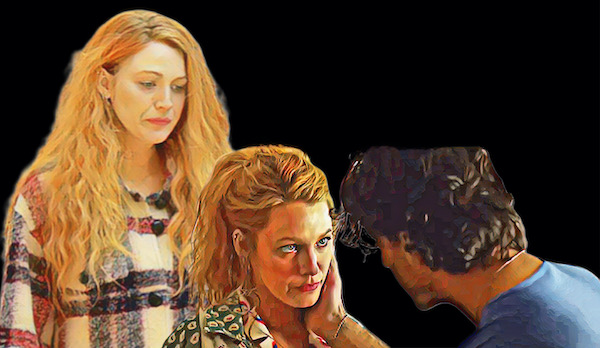

On Netflix, there are endless what I call “pseudo-documentaries”, or specials, that do not listen to the critical side and only give voice to those who whine or complain. In both cases, I am even more concerned about those who bet on this communication strategy: what are they trying to hide?
I am an idealistic romantic and I still believe that reporting or exposing articles or documentaries must have identified sources and give space to opinions contrary to what is being discussed as well. The old “every story has two sides” does not change with what we feel. Distance may not come from testimony, but from a chance for everyone to speak so that the reader/consumer can decide which side they consider the most correct.
However, I also understand that today’s culture seems lazier. In general, people want to hear an opinion and then decide whether or not to support it. I know it seems like the same thing, but it’s not. This toxicity that currently dominates platforms like X drives the algorithms and the addiction to saying anything to be in the spotlight.
And who’s to say that even including names and facts doesn’t give one side editorial weight? Of course, it does, but the fact is that what Netflix and People have done is eliminate the most important thing in the exchange of information: ‘accountability’, which the translation as ‘responsibility’ doesn’t seem to be enough. You have to be accountable for what you say.
Anonymity in complaints, in my opinion, applies to content about crimes, because it’s a matter of protecting those who are collaborating. But, even here, not all complaints can only come from confidential sources. From the first one onwards, there needs to be someone officially supporting what is being revealed. Anonymity in entertainment, on the other hand, is gossip. And those who publish or display clearly manipulated content are also part of the fake news industry. Ironically, many of the celebrities who are using fake news are the ones who complain about it. A complex vicious cycle.
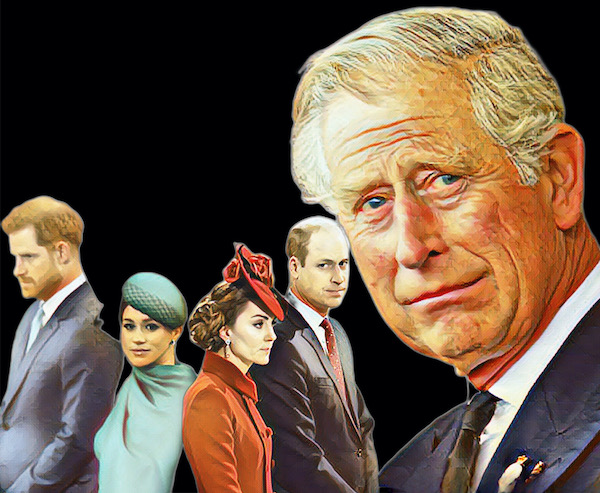
I have been following it for months, but I stopped talking about the British Royal Family. The topic always brings in viewers, but what seemed innocent to me has become just another element of this current sick and aggressive situation that I chose to leave. There are countless YouTube channels and social media accounts where verbal and psychological aggression overcomes sanity and incites tragedy. Seeing what was written about Kate Middleton during the period in which she discovered she had cancer was worthy of a horror movie script.
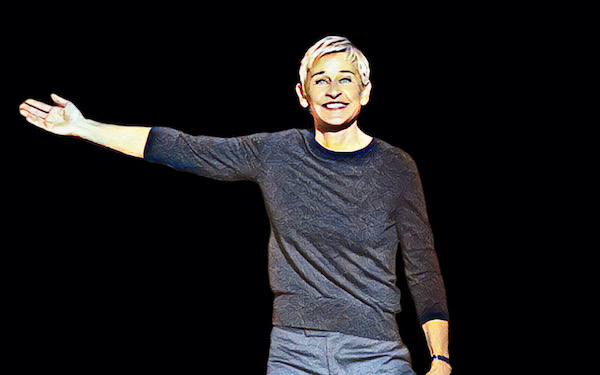
I am old-fashioned, I admit, and I still consider it a basic rule that retaliating in kind is cathartic, but inadvisable. The problem is that today we are all seen as “brands” and forced to have a “communication strategy” and “positioning”. That is why there is an urgency to “master the narrative” and respond quickly to what can take away its value. Because it is perceived as financial, first and foremost. This is what Ellen DeGeneres says correctly in one of the rare moments of her Netflix special: she has to care about what people think of her because her popularity is her currency. And she is a millionaire.
The pseudo-stand-up Ellen DeGeneres: For Your Approval is actually a public therapy session and a rant to fans about the most recent cancellation she survived. Ellen tries to make us laugh at her, at the criticism, at the chickens, but nothing really works. Unless you are a hardcore fan of hers, of course. It is all forced with pauses for laughter so that the applause extends to a standing ovation and yes, she shows that Oprah is in the audience. The sad thing is to see that Ellen didn’t understand anything and that official apology? It wasn’t sincere.
Confessing her vulnerability after being accused of being “mean” and complicit in mistreatment, it is okay to have a space to express her point of view. The talk show was canceled in 2022 due to low ratings and accusations that the host, whose signature motto was “be kind to each other,” was more adept at “do what I say, but not what I do.” Accused of being in fact cold, starry, harsh, and unfriendly, by preaching more empathy she ended up putting the spotlight on herself.
Ellen is sincere when she admits that she “fell into the trap” and “didn’t have the profile” to follow her own advice. She suggests, trying to make us laugh, that the most appropriate thing would have been to “tell everyone to f*** off because then they would see that I’m kind.” I know she’s trying to pass this statement off as a joke, but she’s emphasizing the criticism that she really admits that her motto wasn’t consistent with her life, and therefore wasn’t authentic. Now, of course, one has to be ignorant (although there are people like that) to recommend aggression instead of empathy, but when the many examples of her antipathy towards ‘ordinary’ people are used against her, one must be self-critical before discussing forgiveness. The fact is that philanthropy is profitable, as is a positive image. Ellen’s (false?) kindness earned her popularity, audience, and money. While the tripod was working, even though she was aware that her persona was complex, she went along with the game. She only complained when she was confronted.
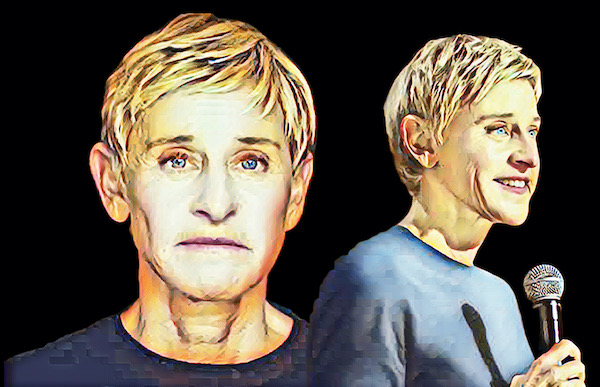
For the comedian, who had already experienced cancellation when she announced to the world that she was gay, it is possible to start over and turn things around. Maybe at 66 years old, it will be more difficult, but the point is that the slip-ups of her “deafness” are even clearer when she forces the hand to argue that she was only canceled because she is a woman, and, in the greatest triple: woman, gay and old. How can we talk about her with these letters? But we can. There is homophobia, misogyny, and ageism, but there is also a demand for authenticity, responsibility, and transparency.
Ellen, like others who are outraged when accused of moral harassment, generally has difficulty understanding that being assertive, specific, and, even more so, demanding, does not require being harsh, distant, pedantic, or indifferent. Aggressive attitudes at work, even if passive, contribute to an evil that everyone must combat at its root which is precisely the negative effect on people’s mental health. It is an extremely difficult topic because it is subjective, but in her case, it was not just one or two people accusing her of being “mean”, but dozens.
For someone as famous as Ellen, it is indeed impossible to be nice to everyone all the time. There is, of course, the surveillance that she also makes fun of, but it is all part of the equation. She was the one who came up with the motto of kindness, she could have done without it or created another one. Even if, she has the right to, Ellen sees herself as a good person. The Netflix special, therefore, is not about “apologizing,” but almost about taking it back. For someone from an older generation (myself included), the current concept of apology is closer to the feeling of submission to critics, humiliation, and public lynching. Because usually, those who make a mistake generally do not do so consciously. Therefore, they have to change their internal and external understanding and then apologize. To be honest, it requires a willingness to revisit the situation with an open heart. And it hurts a lot.
During my career, I have worked with famous talents here in Brazil. I have also worked in toxic environments. They are not always noticed or controlled by the talent, but the further away they are from the team, the more room there is for evil to take hold. On the other hand, fame is like a moth and a flame: people surround the talent to the point that it becomes necessary to isolate them to have privacy. Then, subordinates build the bridge and the problems begin.

When Ellen apologizes in the special, claiming that not only does she not have the profile to be a boss, but she also didn’t act like one, the first part sounds honest, the second like an excuse. Every time she plays the victim, she is contradictory, which makes the stand-up unfunny and weird.
The special basically has what I call the “Johnny Depp effect.” After the actor was canceled and practically destroyed by his ex-wife Amber Heard, who accused him of domestic abuse, Depp sued Heard and won a surprising legal and media victory. He went all in and exposed himself like never before in the defamation lawsuit. He became a YouTube sensation and regained his popularity among fans. Hollywood didn’t open its doors again, but he says that was never the goal. What he wanted, he achieved.
Depp’s courage is unique. He opened up about his life in a way that no reality show could do because both sides spoke in the same circumstances and the verdict was that Depp was right. Defeated, Amber Heard, like Ellen, insists that she is the victim and that misogyny influenced the outcome. Some agree with her, but no one denies that the general public found Johnny Depp’s testimony to be more authentic and truthful.
Comparing the formats, I wonder if celebrity trials are the new reality shows waiting to be explored. MAX has a format of making two opposing documentaries and letting us decide, but there is no live element like Depp Vs Heard.
So I feel very sorry for Ellen, for everything, but even more so for being stuck in a tough emotional moment. She claims that the special is a farewell and that she really wants to take care of her chickens. Once again, it didn’t sound authentic. The art of apologizing is really boring and very difficult.
Descubra mais sobre
Assine para receber nossas notícias mais recentes por e-mail.
 miscelana.com
1 comentário Adicione o seu