
As a child, one of the Disney Princess animations that had the biggest impact on me was Sleeping Beauty. Aurora, along with Cinderella and Snow White, formed a trio of princesses and, since the films were old and made for the cinema, they were rarely shown in full on TV, creating an even greater myth for the fairy tale. To add to the fantasy, it had Tchaikovsky’s music. Therefore, I could never let 2024 come to an end without talking about the 65 years of a classic.
If I told you that 65 years ago this children’s favorite was considered a failure and problematic, I bet you wouldn’t believe me. But it was.
Sleeping Beauty hit theaters almost 10 years after Cinderella, took many years to complete, and made less than expected, creating a gap of decades until Disney returned to betting on princesses. That’s right, between Aurora and Ariel, from The Little Mermaid, the studios were no less than 30 years away from them, almost a metaphor for Charles Perrault‘s story.
The animated musical was one of Walt Disney‘s greatest dreams, he had wanted to make this film since 1938, following Snow White and the Seven Dwarfs because he was in love with the ballet’s score and knew that Tchaikovsky’s melodies would be perfect for the fairy tale. Composer George Bruns was hired to adapt the symphony into songs and did an incredible job. But if that part was easy, the rest, not so much.
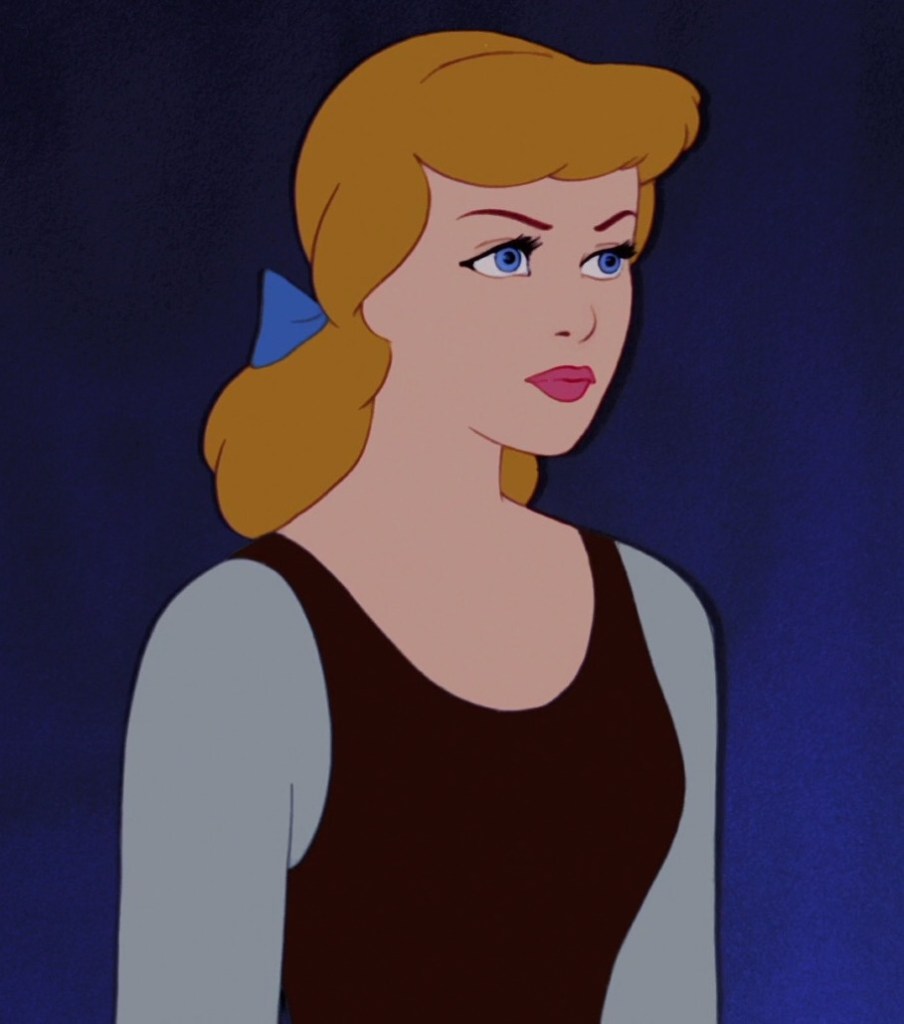
The difficulties in reaching the studio owner’s goal stalled the project and others took over, including Cinderella, which hit theaters in 1950. In addition to taking almost a decade to complete, it cost around 60 million dollars (in today’s terms), making it Disney’s most expensive animated film at the time. Visually challenging, the film takes into account the look of pre-Renaissance tapestries and was also chosen because Walt Disney wanted to surpass the two previous films.
In terms of story, just like the ballet, the screenwriters changed the most popular version, from 1697, in which Perrault expanded on the story. If we follow this comparison, the difference is in the reduction of the number of fairies from eight to three, but eliminating the Lilac Fairy (whose melodic theme is the most famous). We also have a longer story about the prince, who is now called ‘Philip’. The antagonist, Maleficent, remained unchanged.


The comic vein of the cartoon, which was even more necessary to make it child-friendly, was centered on the secondary characters, such as Aurora and Felipe’s parents, as well as the fairies, further highlighting Maleficent’s evil (until it was revised in the 2000s, in the film with Angelina Jolie). Another significant change that had a great impact was that they decided that Aurora would be raised as a peasant and that she would only discover her noble status when she turned 16, so there would be a scene in which she would undergo the transformation of the dress that is obviously iconic.
The change was also important for the love story: instead of having a strange prince awaken her with a kiss of true love, Aurora and Felipe would really fall in love, unaware of their identities, so when he saved her, the kiss would be consensual and genuine. The screenwriters did not anticipate cultural problems in more than six decades; they just wanted to give more use to the male character who generally has little relevance in the story. In a roundabout way, it worked.
The difference between the princesses
The behind-the-scenes situation was so tense that there are several stories of how Walt Disney would tear up the papers with ideas he didn’t like. The original director suffered a heart attack and had to be replaced. And even then, there were more changes in command.
The demand to be original weighed on the animators. As Cinderella used a Rococo style, Sleeping Beauty had to be a combination of images from Medieval Art and Art Deco style, a suggestion inspired by the unicorn tapestries in the Cloisters at the Metropolitan Museum of Art in New York.
Another innovation of the film was that Sleeping Beauty was the first animated film to use the Super Technirama 70 widescreen process and the second was filmed in anamorphic widescreen, after Lady and the Tramp, released four years earlier.

Not everything had to be different, however. To get the images so perfect, the team had a cast of real actors acting out the scenes, to draw them. The images of Mary Costa and model Helene Stanley as Princess Aurora, Bill Shirley as Prince Phillip, Eleanor Audley as Maleficent, Verna Felton as the fairy Flora, Barbara Luddy as Merryweather, and Barbara Jo Allen as Fauna, among others, are hilarious to compare the final result.
Although the actors had their features immortalized, Aurora was partially mirrored by Audrey Hepburn while Phillip, yes, got that name and face similar to the husband of Queen Elizabeth II of England, the Duke of Edinburgh.
The voices: even with few lines, meticulous choices
Nothing escaped the attention of the meticulous Walt Disney. For the voice of Aurora, who has 18 lines in the ENTIRE film, it took three years to find Mary Costa, who had to train to hide her southern accent. She was hired in 1952 and for seven years, she recorded several versions of the script, with her and Bill Shirley recording duets until the studio owner considered that the voices “matched”.

We always highlight the incredible and frightening Maleficent by Eleanor Audley, who immortalized not only the witch but also gave us Cinderella’s frightening stepmother. When invited to the project, the actress initially refused because she had tuberculosis and doubted that she would have the stamina for the recordings, but she changed her mind when she got better. His talent is invaluable because he manages to have a threatening and even sweet pedantic quality, which is incredible. His gestures were all used in the film.
Tchaikovsky’s music as a guiding thread
The decision to use the perfect ballet music for the cartoon was one of the best for Sleeping Beauty, even though it was almost discarded because it was considered complex. Tchaikovsky himself considered this work to be his best, because “the subject is so poetic, so suitable for music, that when composing it I was completely absorbed, and I wrote with a fervor and passion that always result in work of merit”, he wrote.
The soundtrack by Jack Lawrence and Sammy Fain was recorded, with seven original songs, but the team quickly changed their minds and returned to the ballet because the duo’s Broadway-style did not fit with the medieval look of the film.
The waltz from the 1st act became the love theme, Once Upon a Dream and Maleficent’s theme, never sung, was perfect for the villain. The march from the third act became Hail to the Princess Aurora, and was sung by the royal subjects who were going to the castle for the christening; the bluebird theme, also from the third act, became I Wonder, sung by the princess. The Puss in Boots Theme (also from the third act) became Maleficent’s hypnotic music to lead Aurora to prick her finger; and the Silver Fairy’s theme (need I say it’s from the third act of the ballet?), was to become Riddle, Diddle, One, Two, Three, to be sung by the fairies Flora, Fauna and Merryweather as they prepare birthday presents for Aurora, but it was discarded and only the melody remained in the final version.
The public’s disappointment
While he insisted on deciding everything, Walt Disney followed Sleeping Beauty while he dedicated himself to the creation and opening of his theme park: Disneyland. This also contributed to the delay in its release.
The original idea was for it to hit theaters in 1955, but it only actually premiered in 1959. Walt Disney was always dissatisfied with what he saw and asked for improvements. With so much going on at the same time, production of the film was suspended, although the castle at Disneyland (in Los Angeles) was named Sleeping Beauty Castle.
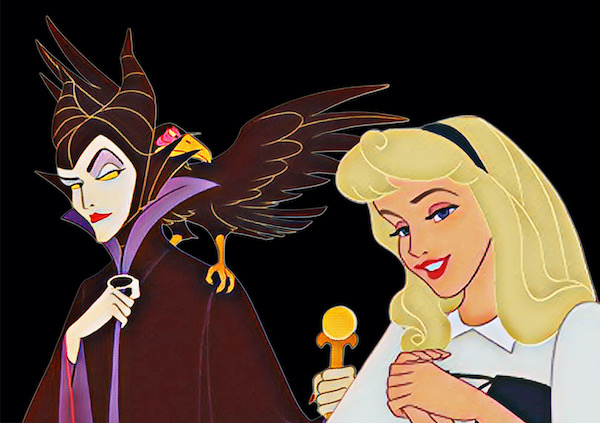
Production on the film resumed in December 1956, but it still went through a lot of turbulence until it premiered in theaters on January 29, 1959. Critics were lukewarm, praising the music (which was from the ballet) and art direction, and complaining a lot about the script.
Initially grossing only $5.3 million at the start, Sleeping Beauty officially became a failure. Only decades later, when it was re-released, did it become one of Disney’s most artistically acclaimed films.
Maleficent revised
Over time, the themes of Sleeping Beauty, as well as those of other princesses, have been revised to adapt to changing societal values, especially about feminism. Luckily, there are elements from the period that alleviate the common passivity of princesses, but there are still elements that the 2014 live-action retelling, of Maleficent, did, both in the story and in the antagonist.
By placing the witch as the protagonist, 10 years ago it was innovative to give the narrative Maleficent’s perspective on the fairy tale, with Angelina Jolie in the title role and Elle Fanning as Aurora. The success was so great that it had a sequel, Maleficent: Mistress of Evil, in 2019.

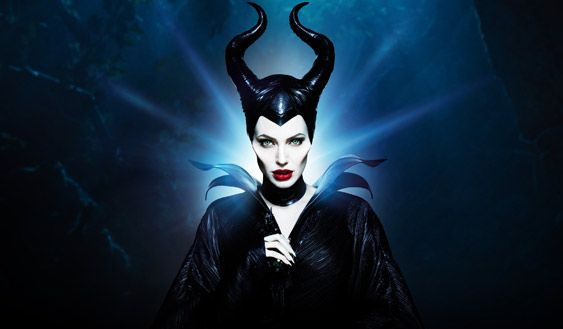
All three films are now considered classics, with the 1959 Sleeping Beauty being selected for preservation in the National Film Registry of the United States Library of Congress as “culturally, historically, or aesthetically significant.” A happy ending for princes, wizards, fairies and princesses.
Descubra mais sobre
Assine para receber nossas notícias mais recentes por e-mail.
 miscelana.com