
The story of Rosemary Kennedy — sister of John F. Kennedy and the victim of a lobotomy that shocked the United States — has returned to the center of cultural conversation after inspiring Sofia Falcone’s trajectory in The Penguin.

The younger sister of US President John F. Kennedy was, for many decades, almost a historical secret, a person literally hidden from the general public and the family, by the guidance of her parents, Rose and Joe Kennedy, who tried to erase all the details about her. After all, what the family constructed as a public image depended, in part, on what was kept out of it.
Why? Because they authorized a frontal lobotomy in Rosemary’s brain, against the will ladye young light, and with that, she lost any communication capacity or relationship with the world. The shame of what moved them to commit this crime with their own daughter, as well as the consequence, created a scary taboo about her.
Rosemary was born with intellectual disabilities, something that,omething that for a “perfect family,erfect family” was seen as a defect, one that, for Joe, could disturb her political obsession. His Rose was born in 1918, in a dramatic situation where delivery was difficult and traumatic.
It is reported when Rose went into labor, neither the obstetrician nor thewassthetist were available, and the obstetric nurse was the one who helped her, but waited as much as she could so that they might be able to arrive. While waiting, the recommendation was that, when contractions became more frequent and intense, Rose held her legs united to keep the fetus’s head in the channel of the birth. The painful process continued for two hours and the suspicion is that, by restricting oxygen flow, the probability of children’s brain damage increased. This is bec,ause Rosemary at the age of 19 still had the mental capacity of a 9-year-old.
Not knowing how to deal with a girl, who had difficulty learning, went through several boarding schools, always with difficulty completing the year. It was not only intellectual disability that was problematic, Rosemary was also fighting weight to maintain the beauty aesthetics her father expected of all Kennedys.
After his family returned to the United States (Joe was a US ambassador in London) in 1940, Rosemary’s life changed radically. At the age of 22, he returned to school and, as he was 7-12, was technically presented as an “assistant teacher”. But she had constantly agannoyinge and annoying behavior, attacking relatives physically and verbally, quite different from the sweet girl everyone knew so far. Worse yet, she showed signs of sexual desire that were absolutely unthinkable for a “family girl.”
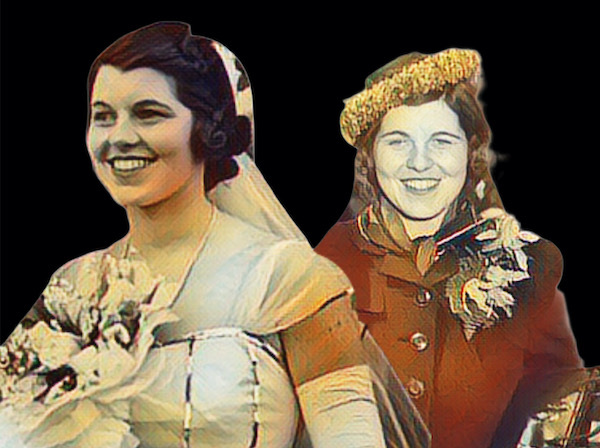
She ran away from home and one day was found wandering the streets of Washington, D.C. at dawn. For Joe, terrified at the risk of scandal and an unwanted pregnancy of her daughter, nothing would bquestion of the limit to “tame it.” Your choice was to submit Rosemary to a lobotom,y.
Even today, it is chilling that a father may have deliberately chosen this brain surgery in a daughter, but at the time, it was a treatment defended as a “pioneer” and recommended to “calm permanently in disturbed patients.” What is scary is to imagine what the true goal of lobotomy would be when 80% of patients submitted were women. The Quey increases the drama in that doctors did not think the method was recommended for Rosemary Kennedy, after all, the results were uncertain, and there was no evidence that the procedure cured mental deficiency. Nothing took from him Kennedy’s decision.
At just 23 years old, in late November 1941, the young woman was tied to an operations table at George Washington University Hospital. Only with a local anesthetic in the head so that she could participate verbally in the procedure, the holes in both temples were drilled, and their reactions were monitored. In four cuts, Rosemary became incoherent, then silent.
As a result, Rosemary’s “docility” came with her becoming hopelessly unable to walk, talk, or do anything on her own. Hospitalized first for seven years in ainstitution installation, and the other 57 in a convent, was sporadically visited by her father and the brothers but was never even mentioned by his mother for at least 20 years. Only when Joe was disableddida stroke that Rose visit her, but Rosemary responded violently at the reunion.
Rosemary died in 2005 at the age of 86. Its history was only made public in the late 1980s, yet surrounded by some mysteries. And how did this traumatic story end up in the DC universe? Through the history of Sofia Falcone.

Sofia was the daughter of Gotham’s boss, as shown in the series The Penguin. Already traumatized by her mother’s apparent suicide when she was under 10 years old, Sofia was Carmine Falcone’s favorite (Mark Strong) until he suspects that his daughter could reveal to police that he was the murderer of women known as The Hangman.
Even confused to know that his father is a serial killer, Sofia is still trying to defend him when he sets her up to be arrested (like the killer) and hospitalized in Arkham. To make matters worse, the young woman goes through an electroshock and torture process, with no chance of proving her innocence.
Tortured, assaulted, and wronged, we saw Sofia suffering to survive amid the sadists and sadistic, and radically changing personality after trauma in a great work by Cristin Milioti. Although Sofia, unlike Rosemary, managed to survive the shocks without damaging her brain, her psyche was clearly shaken. What makes it even more terrifying is that the worst part of the nightmare was so close to reality.
Sofia, now using the giant last name, killed her whole family as revenge and now comes behind the penguin. And isn’t I cheering even more for her than Batman? And you?
Descubra mais sobre
Assine para receber nossas notícias mais recentes por e-mail.
 miscelana.com
2 comentários Adicione o seu