
When we talk about Imitation of Life, people generally remember the 1959 film starring Lana Turner. The big-screen drama, which was a remake of another production starring Claudette Colbert in 1934, was under the mystery of the real-life murder of Lana’s lover by her daughter. The title ‘Imitation of Life’ was too perfect for true crime, gossip, and celebrities to be left out, right?

But in fact, the original, which will be 90 years old in 2024, as well as its remake that will be 65, remains current due to other extremely sensitive and relevant themes: racism and female empowerment. Not necessarily to highlight progress, but to realize how we are still crawling with problems that have long been discussed by society.
First: the book
Imitation of Life hit the bookstores in 1933, becoming an immediate bestseller. The author, Fannie Hurst, created a work that had a significant impact on both literature and popular culture, mainly because it addressed complex themes of race, identity, and social class in the United States. The story focuses on the lives of two women, one white and one black, and their daughters, highlighting the racial dynamics and the difficulties faced by people of different backgrounds.
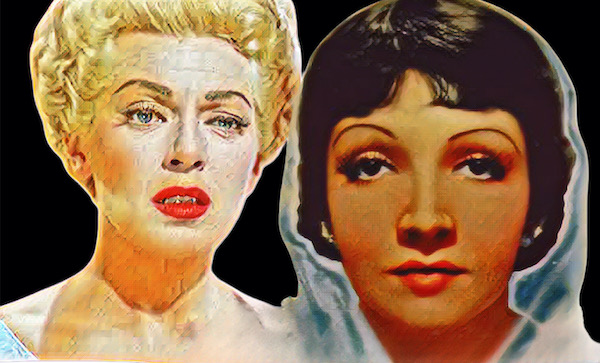
One of the most notable impacts of the book was its adaptation for the cinema, as I mentioned. The novel was made into two Hollywood films, one in 1934 and the other, more famously, in 1959, directed by Douglas Sirk. The 1959 version in particular is considered a classic, known for its moving performances and the way it addresses issues of race and identity. These adaptations helped bring the book’s themes to a wider audience and stimulated discussions about race and the complexities of race relations in the United States and around the world.
Additionally, Imitation of Life brought to the fore the issue of “passing” (when a person of one race is accepted as a member of another), which was a relevant topic at the time and still resonates in debates about racial identity today. The exploration of these issues in the novel and its film adaptations helped pave the way for deeper discussions about race and identity in society.
Who was Fannie Hurst?
Fannie Hurst was a prominent American novelist and short story writer of the early to mid-20th century. Her works often focused on social issues, particularly those affecting women and immigrants, and she was known for her vivid characterizations and emotional storytelling. In addition to Imitation of Life (1933), Back Street (1931) was also adapted for film (in 1961, starring Susan Hayward and John Gavin).
Fannie was also an advocate for social justice and women’s rights, using her platform to speak out on issues such as racial equality and women’s suffrage. She was a member of several organizations dedicated to these causes and was recognized for her contributions to literature and society during her lifetime.
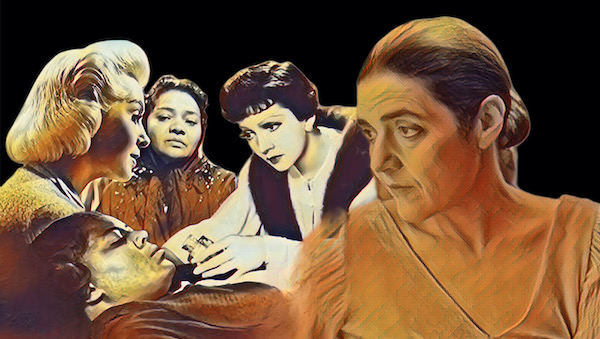
Fannie Hurst’s work was not unanimous. Her text was considered “cheesy” due to its melodrama and earned her the nickname “the Queen of Sob Sisters”, or the “Weeping Sisters”. The tears of others made the author a millionaire and extremely popular. They could complain, but they read them in droves.
Over the course of about 50 years, Fannie wrote no less than 17 novels, 9 volumes of short stories, 3 plays, several magazine articles and had 33 film adaptations of her written works, in classics with Doris Day, Frank Sinatra, John Garfield and Joan Crawford, as well as, of course, Claudette Colbert and Lana Turner.
Inspiration from the Author’s Real Life?
There is a school of thought that argues that the friendship imagined by Fannie came from inspiration from her personal life. The writer was very close to the novelist, folklorist and cultural anthropologist of the Harlem Renaissance, Zora Neale Hurston.
Zora and Fannie became best friends after they met in 1925, at a literary contest sponsored by the National Urban League, in Harlem. While Fannie was known as a bohemian and bold for openly being a friend of blacks, Zora went through many difficulties to establish herself as a writer, having to support herself by working for a Broadway actress and also as Fannie’s personal secretary, companion and driver while investing in her own education. Not much different from what happens in the book and in the films with the characters.

The themes and plot of Imitation of Life
In Imitation of Life, Fanny Hurst‘s proposal was to explore complex themes of race, identity, social class and the relationships between mothers and daughters.
The plot revolves around two women: Bea Pullman, a white widow who struggles to support her daughter, and Delilah Johnson, a black woman who becomes a friend and business partner.
Bea’s business. Together, they open a pancake business that becomes extremely successful. Delilah has a daughter, Peola, who is light-skinned and struggles with her racial identity, trying to pass as white to escape racism and the limitations imposed by society.
There are four central themes that the author weaves into the drama.
Racism and Racial Identity: The book explores the difficulties faced by light-skinned people who can “pass” as white, highlighting the internal and external tensions and challenges associated with this choice.
Social Class and Aspiration: Bea and Delilah’s economic rise through their pancake business highlights issues of class and social mobility, showing how financial success can affect personal and family dynamics.
Mother-Daughter Relationships: The complex relationships between Bea and her daughter, Jessie, and between Delilah and Peola, are central to the narrative. The book explores love, sacrifice, and the conflicts that arise from these relationships, especially in the context of social expectations and personal pressures.
Search for Identity: Peola, in particular, represents the search for identity and acceptance in a society that is deeply divided along racial lines. Her internal and external struggle to find her place reflects a universal desire to belong.
These themes continue to resonate with readers and viewers, offering a critical look at social issues that are still relevant today.
The 1934 film
What all historians today point out is how relevant the film Imitation of Life was 90 years ago. It was one thing to have a bestseller, but it was another to put sensitive themes on the screen. That is why John M. Stahl’s film Imitation of Life, starring Claudette Colbert and Rochelle Hudson, stars in a film that is considered “a defining moment in the history of women in film and a defining moment for African-American casting in Hollywood.”
Of course, there is much that has been left behind almost a century later, such as the female ambition to be empowered in cooking, as well as the complex relationship between the servant Delilah and the now uncomfortable Bea. But, although the narrative is flawed and problematic, it was bold for having a female and inclusive protagonist in an extremely misogynistic and racist period like the 1930s. Two women becoming millionaires without the help of men? At the time, it was considered just a Hollywood fantasy…
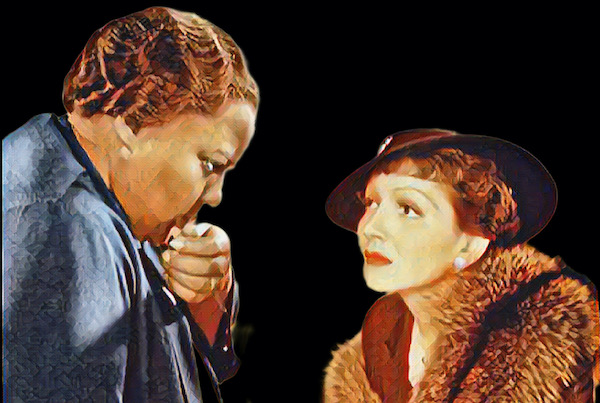
Delilah and Bea are single mothers trying to make a name for themselves in a world dominated by men. Together, they start a pancake business based on an old family recipe from Delilah. Their professional success and sisterhood come up against another challenge. Although the daughters also love and support each other, they have other problems.
Jessie, Bea’s daughter, has problems with her mother leading a normal romantic life, often getting in the way of her relationships. As for Peola, it’s even more dramatic. She suffers and witnesses structural racism and, as she is biracial, she “passes” as white, always trying to distance herself from Delilah, with dramatic consequences for everyone.
The main problem with the 1934 film also deals with the absurd racist restrictions of American society at the time, which prohibited and restricted a series of themes on screen. Before filming, the studio needed to have the script approved by the Production Code Administration, which prohibited representations of “miscegenation” (the term defined by the Hays Office as “sexual relations between the white and black races”), which is the heart of the plot of Imitation of Life. It is believed that due to the restrictions to comply with the code, the poorly drawn black characters in the book became stereotyped. Even so, the attempt to take a serious approach to the subject is still applauded, even if it fails.
The 1959 classic and the problems that persist
In 1959, director Douglas Sirk chose to revisit the success of 25 years earlier and update Imitation of Life as a vehicle for Lana Turner, Juanita Moore and Sandra Dee. It would be his last work and both Lana and Juanita would be nominated for Oscars.
In the ‘updated’ version, which is also problematic today, the story begins in 1947, where widow Lora Meredith (Turner) dreams of becoming a famous Broadway actress, and one afternoon on Connie Island meets Annie Johnson (Moore), who is also a single mother, after momentarily losing sight of her daughter, Susie. The girl had become close to Sarah Jane, Annie’s daughter, and was thus welcomed by both.
The friendship between Lora and Annie is immediate, although we also immediately see the conflict and drama of Sarah Jane, who is biracial and passes as white, but lives and witnesses racism in a complex and painful way. The two families begin to live together when Lora offers to help Annie and the temporary plan ends up being a lifelong one with Annie taking care of the house and Lora achieving an acting career and becoming a star.
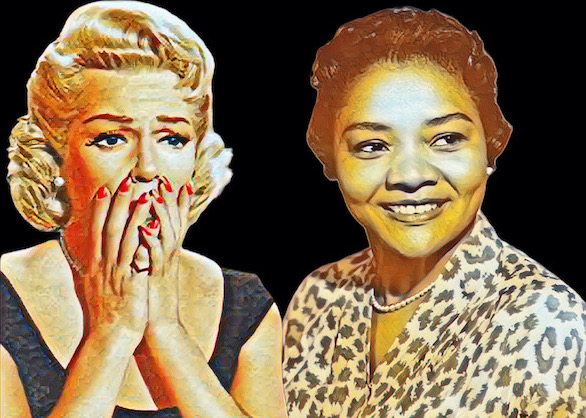
It is difficult to see here today how Lora – who considers herself inclusive – perpetuates structural racism and the difference are clear: the white woman achieves success and fortune, but the black woman can only aspire to be a caregiver. Thank goodness we are fighting to overcome this barrier! In 1959, however, another scenario was still impossible and it is precisely the main drama of the story, that of Sarah Jane who rejects her biological mother and gets involved in endless lies in order to have an opportunity without having to deal with the racial issue.
Obviously Sarah Jane is portrayed as the antagonist, her personal revolt is narrated as a decadent ambition and because of her, the already suffering Annie is so disappointed with the rejection that she dies of a broken heart, leaving the young woman regretful and lonely at the end of the story. In the book, unlike the films of 1934 or 1959, Sarah Jane never reconnects with her mother and moves on with her life without looking back.
The differences in the script were made in an attempt to eliminate some issues, such as the fact that Bea, as the white businesswoman, offers only 20% of the company’s profits to Delilah when she is the one who cooks and owns the successful recipe. This is “toned down” in the 1959 version, where there is no such commercial exploitation between the successful actress and her personal assistant. However, to “toned down” the exploitation, in both versions it is Delilah/Annie who refuses something better. Out of pure sentimentality, she chooses to refuse the money to remain as Bea/Lora’s assistant. In other words, putting herself down is altruism on her part. This issue has certainly not aged well.
Finally, Imitation of Life is much more about racism than feminism. It is revealing that for the role of Sarah Jane, most of the actresses considered were white, and the one chosen, Susan Kohner, had Irish, Mexican and Czech-Jewish ancestry, but not black.
Lana Turner got her dream Oscar nomination for Best Actress for Imitation of Life and the film was approved by the public, even though it was massacred by the critics, who preferred the 1934 version. Today it is considered by many to be Douglas Sirk‘s masterpiece and one of the Hollywood classics of the 1950s.
Impact on Pop Culture
Whether for being “a soap opera”, for its flaws and paradoxically boldness, Imitation of Life has earned its place as a classic. Todd Hayes‘ 2002 film, Far From Heaven, is a tribute to the 1959 film.
Notably, the work has even had an impact on music. The band R.E.M. – who never saw the films or read the book – borrowed the title for their 2001 hit, but I’m Livin’ in Shame by Diana Ross & The Supremes is a reference to the film and the character of Peola/Sarah Jane. “I was always so afraid that my friends uptown would see her, Afraid that one day when I grew up That I would be her,” the song goes, “I’m living in shame, Mama, I miss you, I know it’s not your fault, Mama, I miss you.”

Thus, with the 90th anniversary of a classic and the 65th anniversary of its most famous version, we see that complexity and irreconcilability make Imitation of Life important, even if problematic, films. They contribute to the struggle and discussion of still current themes, with the demand for understanding and engagement to further advance on themes that persist. And that cinema can help change.
Descubra mais sobre
Assine para receber nossas notícias mais recentes por e-mail.
 miscelana.com