
The story of French robber Bruno Sulak, compared in the 1980s to the fictional Lupin thanks to his cinematic escapes, is also tragic. He was considered handsome educated and intelligent, driving the police crazy with his daring acts. It was a matter of the times of biographies and true crimes that his story would reach a platform, which is the case in 2024.
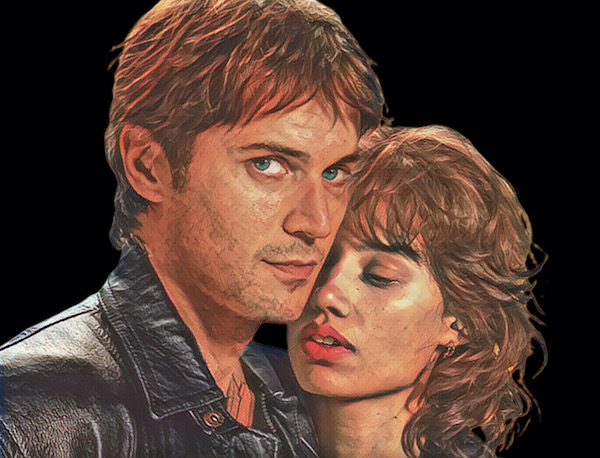
Freedom is the 13th film by actress-director Mélanie Laurent, who we know best for her role as Soshana in Inglourious Basterds, and is a romanticized and extenuating reading of the life of the criminal who was news in France from the late 1970s to the early 1980s, robbing supermarkets and jewelry stores without violence, with plenty of education and daring.
To better illustrate Bruno’s impact on real life, the director cast Lucas Bravo, known worldwide for his role in the series Emily in Paris (which he claims he wanted to leave in the past). In Mélanie’s view, Bruno was a reckless idealist who was more passionate about freedom and anarchy than he was concerned about the consequences of his crimes. And Lucas, even without much demand, manages to convey some of the depth of the personality of a young man who remains an enigma to this day.
Mélanie doesn’t go into too much detail or explain too much to beginners: she takes advantage of her main actor’s beauty, as well as his charisma, and explores them to the fullest. His passion for adventure, she suggests, made Sulak a man who was almost impossible to stop.
The son of Algerian and Croatian immigrants, Bruno Sulak (Lucas) was a paratrooper in the army but left the service to become a thief and commit small-scale scams. He worked with his girlfriend, getaway driver Annie (Léa Luce Busato), and his friend Drago (Steve Tientcheu). Even with millions, they have fun with little things and live one step ahead of the police. Bruno’s growing fame – who is seen as a Robin Hood and a heartthrob – bothers detective George Moréas (Yvan Attal, funny and precise), who starts to pursue him.
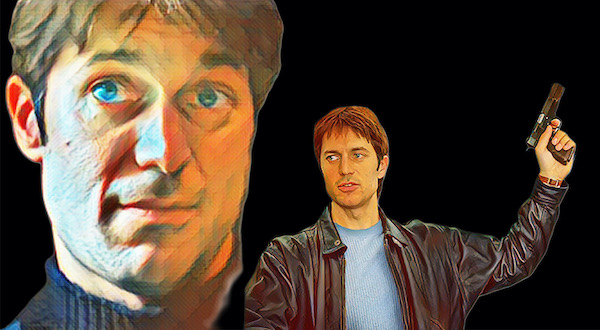
In addition to Drago, Bruno has Patrick (David Murgia) and especially Steve (Radivoje Bukvic) with him, managing to escape spectacularly even when he is finally arrested. And more than once. The shame is that everything seems like a low-budget special from a TV series, losing the grandeur and absurdity that Bruno did.
In Bruno’s biography, the most mysterious part is his death. Officially, he jumped out of the window while running away, fell into a coma, and died at the age of 29. Mélanie follows his family’s version, which is that he was trying to escape, but was betrayed by the people who were helping him, was discovered and attacked, and finally was thrown out of the window to his death.
It’s great to see how comfortable Lucas Bravo is in the less well-behaved role than we’re used to seeing him in the Netflix series. If Freedom isn’t perfect, it’s not his fault. The film is fun and worth watching. No major concerns, of course.
About the ‘real’ Bruno
While Mélanie took some liberties in turning Bruno’s life into a story of freedom and love, here are the facts about the French ‘outlaw’:
As briefly mentioned in Freedom, Bruno joined the army at the age of 20, in 1976, using the name “Bernard Suchon” and was part of the paratroopers in Corsica. Two years later, despite not having permission, he left the barracks for a weekend to go see his family. He claimed that he thought his absence would not be noticed, but unfortunately for him, on the same day, the regiment was mobilized and sent on an overseas raid and for being absent he was considered a deserter. After leaving the army, he started robbing supermarkets, gaining a reputation for always being polite and charming.
The method was the same until the end: without violence, they handcuffed the employees while they were robbed. Before leaving, they would erase or take the surveillance camera footage and flee on foot or by car.
When he was arrested for the first time, it was probably for desertion, since until then, the police had not associated him with the supermarket bandit. However, when they searched his car, the police discovered a large amount of notes and checks in the trunk, as well as weapons used in the robberies. As we saw in the film, he escaped from prison by sawing through the bars of his cell. Not satisfied, he returned only to free another prisoner held in Montpellier, Jean-Louis Segreto. The police, therefore, having been fooled twice, earned Bruno’s hatred.
Just two years later, he was arrested again, in Paris. At that time, he was robbing jewelry stores. He was tried for helping Segreto escape, along with his partner Dragan Rančić and his girlfriend, Thalie. Although sentenced to 3 years, Bruno once again took advantage of an opportunity to escape. And once again, the police were annoyed because he was under the guard of five gendarmes and two armed accomplices neutralized them and fled.
One of his most famous robberies – also in the film – was one of the last times Bruno was free. He robbed a Cartier jewelry store on the Croisette in Cannes, dressed as a tennis player. The person who helped him was Novica Zivkovic, known as “Le Yougo” and Bruno’s best friend.
Known as “Steve”, Zivkovic was the bodyguard of actor Jean-Paul Belmondo and a French heavyweight boxing champion, even making a cameo appearance as a secret police agent in the film The Professional, one of Belmondo’s greatest hits. To make matters worse, Freedom changed the order of events; at the time Steve was already wanted by the police, appeared in several scenes, and wore a stolen gold watch.
The media fell in love with Bruno and his cronies, to the point that Cartier reportedly said that the robbery at one of its stores was reverse marketing, putting the jewelry brand in people’s minds forever. Bruno’s life without consequences led him to be nicknamed the “Arsène Lupin of jewelry stores” or “the champion robber” because he had courage and audacity and never hurt anyone. But his arrogance made him a target of hatred from the police.
Yes, as the film shows, in the middle of one of the robberies he stopped to call the detective who was chasing him. Several stories have fueled the myth of the “gentleman thief”: during a robbery, when he saw that a customer was trying on a ring, instead of taking it with the rest of the loot, he put the ring on the person’s finger with a smile. There is also a story that when he met a homeless woman on the subway steps, he gave her a bouquet of violets and 10,000 francs to help her. Money didn’t seem to be what motivated him, as Freedom suggests: after the robberies, Bruno returned the stolen jewelry with agreements with the insurance companies for half of the reimbursement.
The fatal mistake that led Bruno to his final and fatal arrest was when the robbery went wrong for the first time and he was “forced” to take a hostage, threatening the police with a grenade. At the time, he was planning to come to Rio de Janeiro, Brazil, but he was arrested when he crossed the border from France (in the film, to Italy, in reality, to Spain).
Bruno was stopped because they identified the stolen car, and not him. Once again behind bars, he had planned to escape by helicopter, but Steve was killed in a shootout when the plan was discovered. Interestingly, Mélanie changed this literally cinematic scene because reports were that he was shot dead near the helicopter exactly like Jean-Paul Belmondo‘s character in the film The Professional, in which he made a cameo.
Without an accomplice to help him, Bruno was sentenced to 9 years in prison and was serving his sentence at the Fleury-Mérogis detention center. In the early hours of March 18, 1985, he tried to escape with the help of the vice-director and a supervisor. He managed to get out of his cell and reach an administrative building not far from the exit, but something went wrong and he was seen. Officially, he tried to escape by jumping out of a second-floor window. His family disputes this version.
Bruno was in a coma for 10 days, before dying at just 29 years old. The severe injuries on his body suggest that he was beaten before his death, and so his family disputes the version of an intentional fall and insists that Bruno was betrayed (or discovered) and murdered by police officers, who threw his body from the window.
Years after he was buried in Paris, the family exhumed his body and cremated his remains, but the legend that the French maintained for years was that he was buried in an unmarked mass grave.
As we can see, there was much more to explore in Freedom, but overall, what we see is still fascinating.
Descubra mais sobre
Assine para receber nossas notícias mais recentes por e-mail.
 miscelana.com