
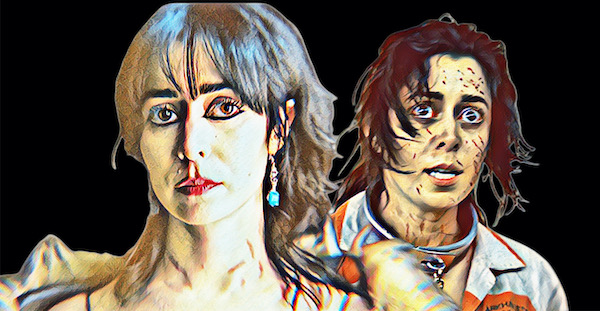
I am preparing to say goodbye to one of the most interesting female characters of 2024, Sofia Falcone Gigante, from the series The Penguin, played by the sensational Cristin Milioti. Still, it makes me think that once again, I am evaluating a woman considered “crazy” or “ruthless”, even if popular and incredible. Are women driven to emotional instability the only interesting ones in any storytelling? Why is that?
I have already discussed several in my CLAUDIA column. Although I understand that the hero’s journey is a path of challenges, sadness, and loss, I rarely see a female character in a position of complete victory. Either the heroines sacrifice their emotional lives for the greater good or, in a position of power, they are (even if veiled) criticized as “crazy.” And here comes the warning: never call a woman “crazy.”

The myth of the “crazy woman” is a stereotype that has existed for millennia and in various cultures around the world, with deep roots in social and cultural constructs that marginalize women whose emotions, behaviors, or lifestyles deviate from what is considered “normal” or “acceptable” for the female gender. This stigma has historically served to delegitimize women’s voice and autonomy, and, in addition to films and series, its presence is visible in literature, science, and even psychoanalysis. And today I’m going to philosophize!
In terms of religious contexts, from the Bible to other ancient mythologies, women who did not fit into expected social roles were often demonized or seen as possessed by evil spirits. Instead of evolving, it only got worse. When we reached the Middle Ages, these women who dared to be different continued to be considered “crazy”, but even worse: “witches” too. The Inquisition persecuted and executed thousands of women accused of witchcraft. Things only got worse when someone tried to show independence or less passive sexual behavior.
When we arrived in the 20th century, the term “hysteria” was a common diagnosis for women who displayed intense emotions or rebellion. Yes, it is a concept with sexist roots because the word “hysteria” comes from the Greek “hysteria” (uterus), and doctors believed that it was a condition exclusive to women, caused by problems in the uterus. That’s right, “being crazy”, or “hysterical”, was a female genetic propensity and this notion transformed femininity into a synonym for mental fragility, justifying violent and abusive treatments, such as confinement in psychiatric hospitals, electroshocks and the prescription of invasive therapies. In Penguin, as we see, the innocent Sofia Falcone was confined in the Arkhram asylum and tortured for years. And whether she was “broken” entirely or partially is open to discussion, the fact is that she was never the same again. I’ll get back to Sofia!
With the rise of psychoanalysis, created by Sigmund Freud, he and other psychoanalysts reinforced the stigma, associating women’s neuroses and psychoses with supposed conflicts with their own sexuality and the Oedipus complex. This proposal is obviously simplistic and disputed by Freud’s defenders. Still, the feminist movement in the 1960s and 1970s raised this question and criticized the use of psychoanalysis to delegitimize the female experience. I study psychoanalysis and I know that they have made a lot of progress and that it is no longer so black and white.
In the pages of books, writers such as Sylvia Plath, Charlotte Perkins Gilman, and Virginia Woolf, among others, brought the theme of the “mad woman” to literature, exposing female mental anguish as a reaction to social pressures.
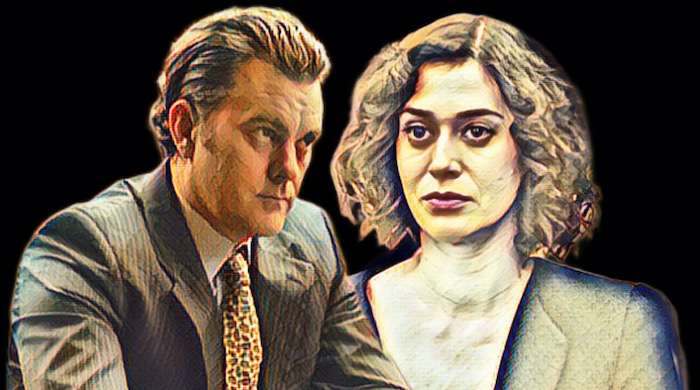
When we get to radio, cinema, or TV, there is a dilemma. Artistically, it is much more interesting to follow or play characters on the edge, and, with this, the myth of the “mad woman” was reinforced with emotionally destabilized characters. One of the great examples, also mentioned by me in CLAUDIA, was the treatment of the character Alex Forrester, both in the film and in the series Fatal Attraction, which explores the idea that emotionally unstable women are dangerous. The myth of the crazy lover reinforces a stigma of threat. In the case of the series, the 36 years between the original film and the sequel “Saved” Alex (Lizzy Caplan): she was still presented as the classic impulsive, intense, and often vengeful woman, mixing emotional manipulation and obsession. Until the series tried to explore aspects of mental health, but kept Alex as the antagonist.

Productions Gone Girl and Fleabag also addressed “female madness”, but in a more complex way, questioning stereotypes and addressing the reasons behind behaviors considered “crazy”. We cannot forget our favorite psychopath, Love Quinn (Victoria Pedretti), from the series You, who had a narrative arc that humanized her, even while maintaining the clichés of “female madness”.
It is sad that we still come across the term “mad woman” being used in situations where women express intense emotions or resistance to the norm, even with the growing awareness of the need to question this myth and see women through a more empathetic and inclusive lens. Writers, filmmakers, and activists have sought to deconstruct this narrative to validate the female emotional experience and make room for women to exist and express themselves outside of stereotypical patterns. But we are still a little far from the finish line.
That is why I have a special affection for Sofia Falcone (Cristin Milioti) and will miss her. She fits the myth of the “mad woman” in several ways. In the Gotham series and in the comics, Sofia is often portrayed as an intense and ruthless figure, defying the stereotypes of traditional femininity. For this reason, her behavior is often interpreted as dangerous, unstable, or even “crazy,” especially due to her ambition and desire for power. She is emotionally willing to use any means, including manipulation and violence, to achieve her goals and protect her family’s interests. In Penguin, we gain perspective on how she “got there.”
The sad thing is knowing that Sofia’s trauma and abuse are inspired by a true story. That’s right, Sofia Falcone quotes the tragic story of Rosemary Kennedy, the sister of American President JFK. Due to a delayed birth that delayed her birth, Rosemary was born with an intellectual disability, and when she reached the age of 23, even with a childish mentality, she expressed sexual desires that frightened her father, Joe Kennedy. He “authorized” a lobotomy on the young woman, who never walked or talked again until the end of her life, in 2005, at the age of 86. She was, as they said at the time, “tamed.” An extremely terrifying and sad story. Sofia, as we have seen, was hospitalized on the recommendation of her father and underwent numerous violent electroshock treatments, but thankfully, she did not undergo a lobotomy.
Given this, would it be correct to say that Sofia is crazy?

Sofia lives in a typically masculine environment (the world of crime and the mafia), and in it, her ambition and determination can be seen as transgressive, especially in a context where men generally dominate. For men, she is “crazy”, for women, she is “empowered”.
Sofia is clearly intelligent, she has learned to be manipulative and strategic, but because she is a woman, all of this is interpreted as a sign of an unbalanced personality. In fact, everything goes against her: whether she is intense or cruel, she is also judged differently even from the disgusting Oswald Cobblepot (Collin Farrell), the Penguin. Just look: while he is only called evil even though he set fire to a mother and a child and smiled when he saw them burning, Sofia is the crazy one for having killed her family with a gas leak. We could go on with a sea of examples, but what is interesting is to see the rivalry between the two creating calculating attitudes, where each move is guided by strategies to preserve and expand their influence.
Turning all women into Medea’s cubs is an age-old habit that is hard to combat. The Greek princess who did everything for love (killed, betrayed, left her family and country) only to be replaced by a younger woman when Jason grew tired of her is a dense and traumatic tale, but one that casts a greater shadow over female behavior than male behavior. That’s why, come Sunday, even though I know the Penguin will do well, I will give my moral support to Sofia Falcone. Or rather, Gigante (she adopted her mother’s maiden name). Because no woman can be more diminished by the archetypes that restrict us.
And as we say goodbye to Sofia Falcone Gigante in The Penguin, we are reminded that her journey represents much more than a simple narrative of power and ambition. She is a mirror of the struggles faced by women throughout history, who are often labeled as “crazy” or “ruthless” in a world that refuses to understand the complexity of their emotions and aspirations. It is essential that when reflecting on characters like Sofia, stigmas that still permeate female representation in the media can be deconstructed. Every time a woman dares to challenge norms and seeks her space in an environment dominated by men, she invites us to rethink what it means to be “crazy”. Therefore, instead of relegating them to the dark corners of madness, it is worth celebrating their stories and their resilience, making room for a more empathetic representation of women in art and in life.
Of course, we can have female antagonists, but that is not to leave them out of the fight! But the story of Sofia that we are following in fantasy is not just another tale of tragedy, but a reminder that female strength must be recognized, respected, and celebrated, without the need for labels that diminish it. Thus, when we read and as we move away from the screen, let us take with us the message that every woman, with her complexity, deserves to be heard and understood in her entirety.
Descubra mais sobre
Assine para receber nossas notícias mais recentes por e-mail.
 miscelana.com