
Maurice Ravel wrote several brilliant and innovative works, but, much to his chagrin, he will always be remembered for a 17-minute piece, with a simple melody that repeats itself and was created for a ballet. Yes, you are already humming Bolero, the symphony that is said to be among the most popular of all time. Bolero is today remembered for Maurice Bejart’s choreography, which was used fantastically by Claude Lelouch in the 1981 film Les Uns et Les Autres and unforgettable in 10, the romantic comedy with Dudley Moore and Bo Dereck two years earlier. However, few know the original story of the song or the composer, which is what the film Bolero aims to change.
One of the main titles of the Varilux Festival, the screening was attended by the main actor, Raphaël Personnaz (with whom I spoke and the conversation will be an article in BRAVO! next week), who before starting commented that the proposal of the director Anne Fontaine is to fill in the gaps with suggested ideas, since the mysterious composer really does not have an explored biography. The result is delicate, beautiful, and interesting.

The plot is not told in a linear way, which is a good metaphor for Ravel’s music. The film begins in 1928 when the dancer Ida Rubinstein (wonderfully played by Jeanne Balibar, who we saw in Franklin) commissioned an exclusive piece for her new ballet. The problem is that Maurice Ravel (Personnaz), an extremely reserved, complex man dedicated to music, is going through a moment of crisis of inspiration. In the creative process, he revisits traumatic and memorable moments of his life, including a unique relationship with his muse, Misia Sert (Dora Tillier), and finally composes the work that became his most popular: Bolero.
I like “Ravel’s Bolero”, as everyone popularly says, but my favorite work of his is still and always will be Pavane Pour Une Infante Défunte, which plays only briefly in Bolero. This is justified and obvious when the proposal was precisely to elaborate on the behind-the-scenes of this piece.
Before talking about the film, which was shot entirely in the composer’s own home (yes, they use the real piano where he wrote his music), let’s talk about the mysterious artist considered one of the greatest masters of impressionist music and who remains somewhat elusive. The period in which the film is set was the height of his career when he came to be internationally considered the greatest living composer in France.
Who was Maurice Ravel and what made him famous?
Born in 1875 and died in 1937 at the age of 62, Maurice Ravel is known for compositions that combine innovative harmonies, complex rhythms, and detailed orchestrations, exploring musical colors and textures that left a huge impact on 20th-century classical music.
His family was of Basque origin on his mother’s side, with his father being an educated and successful engineer, inventor, and manufacturer. Maurice was extremely close to his mother, Mari, who encouraged his passion for music and made a strong impression on his Basque-Spanish heritage, singing folk songs from an early age.
Of the two sons, Maurice was the eldest, he was the only one to pursue musical studies, but his originality was not well regarded by the conservatives who ran the Paris Conservatory. Over time, he incorporated elements of modernism, baroque, neoclassicism, and even jazz into his compositions, although he was not always immediately praised for it.
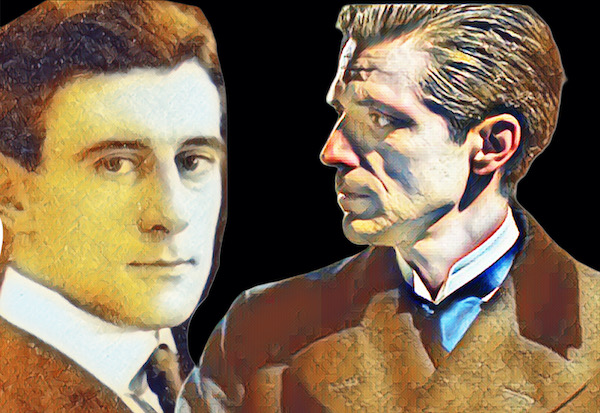
Maurice Ravel was never considered a prodigy. On the contrary, his biography makes it clear that he was always slow and meticulous, which is why he has a much smaller collection when compared to his contemporaries such as Claude Debussy. He has piano pieces, chamber music, two piano concertos, ballet music, two operas, and eight song cycles. His works are generally played either entirely on the piano or orchestrated and are considered extremely difficult to perform.
He is most famous for his Bolero, a mesmerizing and repetitive piece that, despite its simple structure, is monumental due to the variations in timbre and orchestration. This work, like many of his other compositions, reflects Ravel’s unusual ability to create atmospheres and evoke emotions with simplicity and elegance.
Ravel’s importance lies in the way he expanded the possibilities of orchestration and brought a new sensitivity and subtlety to music. His work influenced not only other classical composers but also jazz musicians, film composers, and artists from other genres, cementing him as an essential figure in the history of Western music.
But his personal life is shrouded in an aura of mystery because, as mentioned, he was reserved, almost reclusive, and preferred to keep his distance from the spotlight, which meant that many aspects of his life remained little known.
He never married and, as far as is known, had no lasting romantic relationships. Some speculation suggests that he may have been homosexual, but there is no concrete evidence for this, and he never spoke openly about his orientation. What the film Bolero, respects is the fact that this silence about his private life was partly because he dedicated himself entirely to music, almost as if it were the main companion in his life. In his close circle of friends were the pianist Ricardo Viñes and the composer Igor Stravinsky.
The women in the composer’s life: Misia and Ida
Respecting Maurice’s secret, director Anne Fontaine shows the presence of several women in the composer’s life. Two liberties are important to mention as different from the official biographies. The relationship with his mother, Marie Delouart, is portrayed as loving, but in reality, there are suggestions of a much deeper, even abusive, pathological relationship on her part. Maria’s origins are a mystery and she was a suffocating figure for both Maurice and his brother Edouard, something that is only mentioned in the letter he writes to her. Described as “a violent agnostic, atypical of her time and place”, while she was alive she was, however, the most important person in the musician’s life.
The other twist is the fantasy that Ravel’s relationship with Misia Sert was a platonic love story. There are no concrete facts to confirm this.
Misia was an influential patron of the arts and one of the most prominent figures in Parisian cultural life at the beginning of the 20th century. Born in Russia in 1872, the daughter of a family of Polish origin, Misia was educated in France, where she became friends with artists, musicians, and writers, supporting them financially and emotionally. She married three times, always to influential men in the world of the arts: Thadée Natanson, Alfred Edwards, and the Spanish painter José-Maria Sert, who gave her the surname by which she became best known.
Misia was one of Maurice Ravel’s closest friends and confidants and inspired him in some of his works. The film does not show this, but she also had a strong connection with Debussy and Stravinsky, as well as the choreographer Sergei Diaghilev, founder of the Ballets Russes.
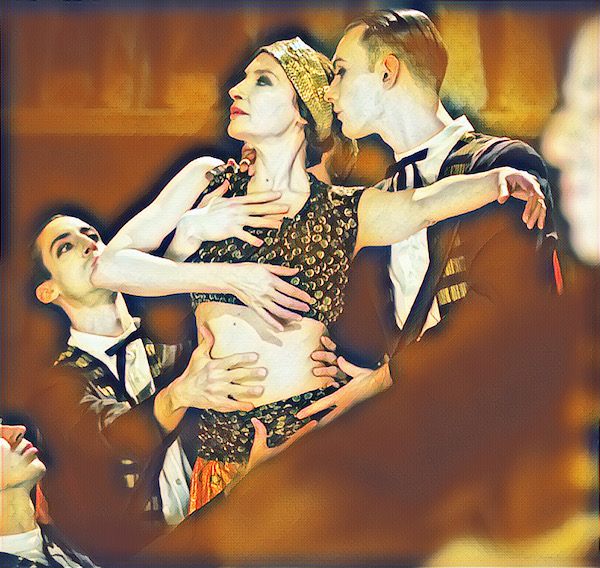
With her beauty, charm, and free spirit, Misia personified the ideal of the modern woman of the time, actively participating in cultural life and breaking with many of the social conventions of the time. It is suggested that there was a deeper connection between her and Ravel.
The other woman who had an impact on his life was the ballerina Ida Rubinstein, famous for her talent, charisma and magnetic personality. Born in 1885 in Saint Petersburg, into a wealthy Jewish family, she began her career in theater, but it was in dance that she stood out. Rubinstein had a fascinating stage presence and a unique dance style that combined theatricality with exotic sensuality, captivating European audiences at the turn of the 20th century.
Initially trained by Mikhail Fokine, choreographer of the Ballets Russes, Rubinstein made her debut with the company in 1909, performing Salome, which generated considerable controversy due to its sensuality. Rubinstein was also one of the main performers in Cléopâtre, a luxurious and exotic production that extolled her beauty and stage presence.
Throughout her career, Rubinstein collaborated with great names in the arts and music. In 1928, she commissioned Maurice Ravel to write the work that would become her famous Bolero. Ravel created the piece to accompany a choreography by Rubinstein, who designed a hypnotic and repetitive dance for her. The premiere, with Rubinstein in the title role, was a huge success and cemented Bolero as one of the most iconic pieces in the classical repertoire.
In addition to her talent and magnetism, Ida played a crucial role in helping to transform modern dance and foster collaborations between music, dance, and theatre. Rubinstein lived a long and reclusive life after the Second World War, dying in 1960. Her influence, however, remains significant, especially in the history of dance and theatrical performance in Europe.
Details left out and unexplored
Because it is impossible to exclude the influence that the experience of World War I had on Ravel’s life, Bolero uses flashbacks to try to explain how this happened. He wanted to serve on the front lines but was rejected due to health problems. Nevertheless, he served as an ambulance driver for the French army. The absence of Édouard’s existence is strange since he is mentioned in the correspondence during this period, but the fact that he survived Maurice is important. I will discuss this later.
Anne Fontaine makes clear the health problems that eventually spread, and I personally wonder if Ravel did not have some autistic spectrum disorder. His health was always fragile, and she suggests that He even tried to end his own life at some point and in his final years, he suffered from a neurological disease that affected his ability to compose. It is believed that he had aphasia, but the film does not clarify this.
What is sad and even tragic is that he died after an unsuccessful attempt at brain surgery, remaining in a coma for 9 days before passing away in 1937. This passage is somewhat quick and confusing because it seems to have happened immediately after the success of Bolero, without it being clear when the problem really progressed.
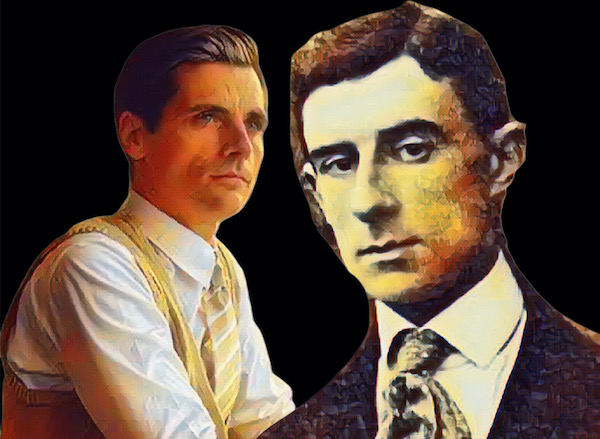
Today’s legal disputes
The film Bolero really wants to praise the musical piece and does not even mention its copyright problems in the 21st century. We are left wondering whether there was any “inspiration” from a popular song of the time, but that is not the problem.
The most famous legal dispute involving Maurice Ravel involves the copyright to all of his works, especially Bolero, but this is because it still generates significant income and the dispute is over who should receive the fortune after the composer’s death.
Maurice Ravel died without leaving any direct heirs and, in his will, he entrusted his work and estate to his brother, Edouard Ravel. When Edouard died in 1960, he left the rights to his wife, but since the couple also had no children, a dispute arose over who would inherit when she also died, which she did in 1965.
In the meantime, the heirs of the set designer Alexandre Benois, who worked on the original Ida Rubinstein performance, claim that the ballet was created jointly and therefore they would have rights to the profits from the music as well.
The dispute has been going on since 1965 when the copyright to Bolero came under the administration of the French government. The fact is that following the legislation governing copyright in the country, which determines that a work falls into the public domain 70 years after the author’s death, since 2007 the government has been collecting the proceeds. Benois’s heirs hoped to revert authorship and thus receive not only the millions raised in previous decades but also extend the public domain period to 2039 since the artist died in 1960.
However, the profits and royalties generated before this deadline are still the subject of legal disputes between distant relatives and other estate administrators, due to the significant commercial value of the work. This was made worse when the legislation changed, leading to different interpretations of when exactly Bolero would enter the public domain.
As a result, Bolero became one of the best-known examples of the long legal battles involving composers’ inheritances, also reflecting the continued value of classical works in the modern music market. A much louder noise than its repetitive 17 minutes and something that in June 2024 seems to have come to an end: the piece is now definitively classified as an independent orchestral piece of which Ravel is the sole author. End of the drama?
Descubra mais sobre
Assine para receber nossas notícias mais recentes por e-mail.
 miscelana.com
1 comentário Adicione o seu