
Demi Moore has always been a symbol of beauty in Hollywood and I have followed her journey from famous to star and millionaire and now to “mature”. Although I recognized her prominence, I had not yet realized that her personal and professional history place her at the level of legend, and the fact that this is equally ignored by many, or was, says a lot about the actress.

Star of some of the biggest box office hits in cinema (Ghost), Demi starred in romantic comedies, adventures, period films and all the controversial films of the 1990s. She was in the news for everything: romances, business, successes and failures. She shaved her head for a role, was the first actress to earn twelve million dollars.
Her courage in choosing roles defied conventions and turned her into a pop culture icon. She faced sexism, and prejudice and is now the face of the reaction to ageism. She has nothing of “half” (a pun for the French meaning of demi), but loads of “more” (another pun), and that proves that paradoxes work, especially if you have the looks and tenacity of Demi Moore.
Born in Roswell, New Mexico, in 1962, Demi’s childhood was marked by instability, including frequent moves and a difficult family environment. She had to deal with health problems from a young age, including an eye condition that required corrective surgeries. Without great family references of stability, this troubled childhood shaped a resilient and determined personality.
At 16, Moore left home and began working as a model and, eventually, an actress. She got her first roles in TV series and small productions, until her most visible debut in the soap opera General Hospital. At this time, Demi began to attract the attention of Hollywood producers and directors, who saw in her a potential for roles that required a strong and captivating presence on screen. Her husky voice and undeniable beauty quickly put her in a prominent position.
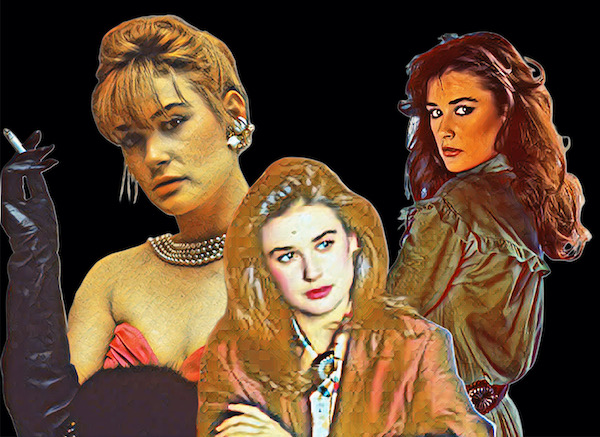
The film Blame It on Rio (1984), alongside Michael Caine, helped boost her career, despite a minor role. She followed this production with St. Elmo’s Fire, in 1985, and really caught the attention of critics and audiences, joining the “Brat Pack” — a group of young stars on the rise in the 80s. This role consolidated her as a promising Hollywood star and paved the way for her rise as one of the most notable stars of the following decade.
The 1980s were marked by films about teenagers and romances, with Demi appearing in some. It wasn’t until 1990, with the mega-success of Ghost, that she joined the ranks of the most recognized and celebrated actresses of the time. This iconic role, alongside Patrick Swayze, yielded more unforgettable scenes and consolidated Demi as an international star. From then on, the actress continued to take on projects that drew attention, whether for their daring themes or the stars she starred alongside.
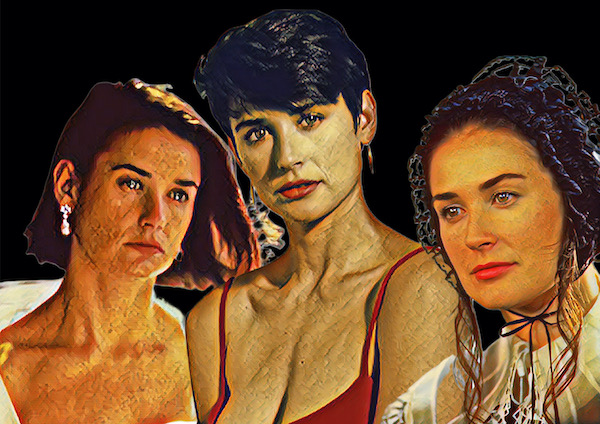
In Indecent Proposal, from 1993, she played the woman married to Woody Harrelson who faces the moral dilemma of accepting a million dollars to spend a night with the millionaire played by Robert Redford. (Spoiler, she accepts). A year earlier, alongside Jack Nicholson, Kevin Bacon, and Tom Cruise, she starred in A Few Good Men, which discussed violence and prejudice in Marine training. She also played the antagonist in the (completely misguided) Disclosure, in 1994, where she showed courage in not clinging to a feminine image, but accepting the challenge of being at the heart of more delicate discussions.
One of the most remarkable moments in Demi Moore‘s career was when, in 1996, she received a record fee of 12 million dollars for Striptease, marking a turning point in the roles of women in major productions and female power in cinema.
Not everything was rosy, just as Striptease failed at the box office, her attempt to navigate period dramas like the film The Scarlet Letter also failed and critics of her success (mostly men) questioned Demi’s talent as an actress.
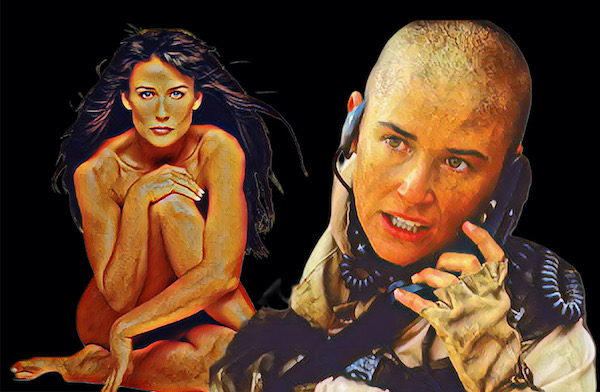
This is because, as a pioneer, she faced challenges and criticism, especially for roles that intensely explored her sexuality. Striptease was not well received (it’s really horrible), but it showed her courage in taking on daring roles. Perhaps her last major breakthrough in the 1990s was G.I. Jane, from 1997, for which she shaved her head to play a soldier, challenging the female stereotypes of the time and showing her physical and emotional dedication to her job.
Part of Demi Moore‘s “problem” with being taken seriously was her constant presence in gossip magazines. and great marketing moves, which generated the sexist “nickname” of “gimme more” (give me more) as if she were greedy and talentless. That’s right, as one of the first actresses to publicly fight for salaries equivalent to those of her male colleagues, she was not exactly popular among Los Angeles executives.
Her romantic relationships sold as much as her films: she was married as soon as she arrived in Hollywood to musician Fred Moore, and was engaged to Emilio Estevez, but it was with Bruce Willis that she formed the most iconic “power couple” of the late 20th century in the capital of cinema, he and she stars of equal magnitude and box office.

With Bruce, Demi had three daughters (and shocked the world by posing nude for the cover of Vanity Fair while nine months pregnant), but the two separated (amicably in the early 2000s). Their healthy relationship also generated distrust from some, but, in general, it also made them references.
In the early 2000s, Demi Moore shocked the public by starting a relationship with actor Ashton Kutcher, 15 years her junior. Their marriage brought a wave of attention from all sides, highlighting Moore as a woman who defied age-gap stereotypes. During the years they were together, the couple was the target of intense media coverage, which fueled discussions about female maturity and the freedom to reinvent oneself emotionally.
But the end of the relationship was particularly hard on her. With little work since turning 40, Demi has also faced personal battles that have come to light in recent years, especially around physical and mental health issues. In 2019, with the release of her autobiography Inside Out, she revealed problems with addiction and detailed how she went through difficult times, including the loss of a baby and the recovery of her self-esteem after her breakup with Kutcher. This book was a turning point, as it showed a vulnerability that the public had not yet known and transformed her image into something more intimate and authentic.

Away from major Hollywood roles, she continued with small roles on TV and in movies, investing more in the role of executive producer in some projects to expand the market. And yes, Demi Moore has always been one of the celebrities who used social media very well, both for light-hearted subjects and to discuss topics such as mental health and self-care.
And just when they thought Demi Moore was “done”, she surprised everyone with two hits, one on TV and the other in the movies. In 2024, her performance as socialite Ann Woodward in Ryan Murphy‘s Capote Versus The Swans was brief but remarkable. And with the horror film Substance, acclaimed at Cannes, Demi Moore is not only one of the most anticipated to receive an Oscar nomination. Some people consider her the favorite for the recognition.
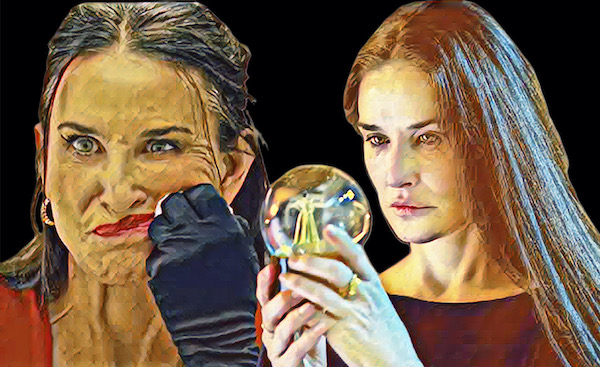
It would be incredible. Not only is it exactly 40 years after her film debut, but in the film, she plays a fitness TV star, fired for being old and who uses a black market drug to make herself look younger, with tragic and frightening consequences.
In other words, underestimating Demi Moore is more than wrong, it’s unfair. Looking at how she has stood out over the past four decades, the actress is an example of courage and authenticity that resonates with different generations. Despite all the challenges, she has never stopped evolving, and her legacy goes beyond the screen, influencing the way we see strength, vulnerability, and transformation in the lives of women in Hollywood. And we always want more of that.
Descubra mais sobre
Assine para receber nossas notícias mais recentes por e-mail.
 miscelana.com
1 comentário Adicione o seu