
As published in CLAUDIA
In a year full of great female characters, it’s time to close 2024 with a sisterhood that promises to occupy our last six weeks: from November 17th to December 22nd, with the universe of Dune: Prophecy. The MAX series has always positioned itself as the one that will tell the origin of the Bene Gesserit, the ultra-mysterious religious order imagined by Frank Herbert, but it goes further and will show the imperialist period that is only mentioned in the two films. Yes, it sounds like a “Game of Thrones in space”, but, even though it is inevitable to always mention the phenomenon series, it is high time we look for new references. Succession in space, perhaps? Nah… better to stick with GOT.
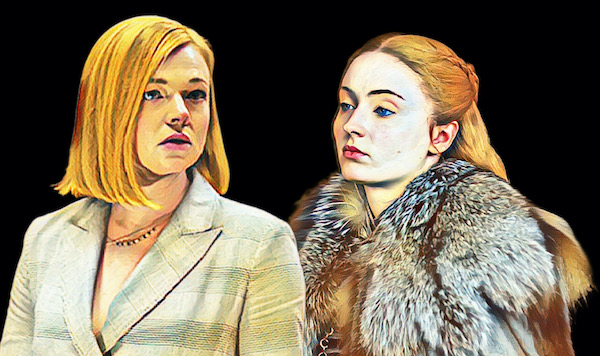

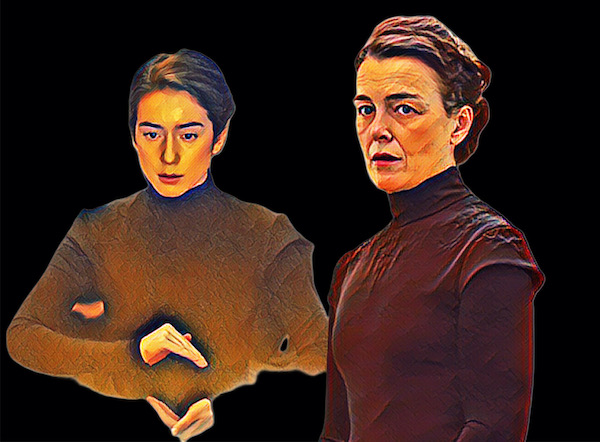
I have huge expectations for the series, with the freedom of not being specialized in the books and being open to everything that will be shown to us. If the purists complained about the liberties of Denis Villeneuve‘s films, it is already clear that they have every chance to complain (and a lot) here. Of the many strong women who will appear on screen, we must pay attention to the two sisters: Tula and Valya Harkonnen, played by Olivia Williams and Emily Watson. Two great actresses, in their fifties, who will shake up the universe. Let’s go!
Who are the Bene Gesserit?
At this point, it is essential to remember this name, okay? Although the order does not yet have this name at the beginning of the series, this female (and feminist) sisterhood is hidden and active throughout the franchise. The Bene Gesserit are trained in physical and mental skills and master everything from self-defense techniques to political manipulation, maintaining control over their bodies and minds to a degree that allows them to directly influence the course of history. They have their own goals, seeking the evolution of the human species and the creation of a superior being, the Kwisatz Haderach, through careful genetic and social manipulation.
Feminism and Body Control
In a male-dominated society marked by patriarchal structures, the Bene Gesserit are independent and work to secure their space and influence. Their autonomy over their own bodies — choosing when and with whom to procreate, and even the sex of their children — aligns with a feminist approach, but it is also viewed with fear and prejudice by those who do not understand or fear this control. Yes, essentially, men. Frank Herbert’s proposal was not to be sympathetic to women, so much so that in many moments they are effectively the antagonists.
The Representation of Tula and Valya and their motivations
In the expanded universe of Dune, Tula and Valya Harkonnen represent two strong figures within the Bene Gesserit and, as I said, they are presented as antagonists. It is not impossible to interpret this as a reflection of a sexist perspective, where powerful women when in opposition, are seen as rivals or even as villains. Thus, in a society that constantly judges and opposes powerful women, they can be seen as a representation of this imposed rivalry.
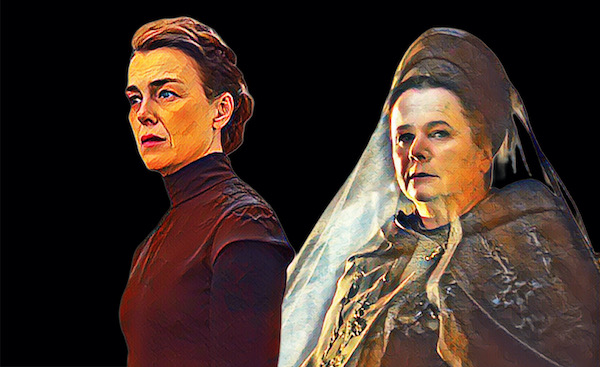
Valya, for example, is a character who acts ostensibly by the interests of the Bene Gesserit, but her ambition and loyalty to the order make her seem cold and calculating, characteristics often negatively attributed to ambitious women. This simplistic portrayal is a consequence of labels that disregard the complexity of her motivations, the main one being revenge for her family.
How Does Society See Them?
Because they are strange and powerful, the Bene Gesserit are often viewed with distrust and prejudice by men and the power structures of the Dune universe. They can do much more, but their function is to be “future tellers” to help men make decisions. Still, their influence behind the scenes and their subtle power bother a society that seeks to control women or relegate them to secondary roles. Hence the genius of the plan created by Valya.
What is Valya Harkonnen’s connection to Lady Jessica and Paul Atreides?
One of the great secrets in the film is Lady Jessica’s connection to the Harkonnens. Just to give you some background, in case you’ve forgotten or don’t know yet, in the Dune universe, Atreides and Harkonnens don’t get along. The origin of this ancient hatred between them even predates Dune: Prophecy, but is finally addressed in greater detail in the series. Therefore, Valya Harkonnen is a distant ancestor of Paul Atreides, and, by extension, an indirect relative of Lady Jessica.

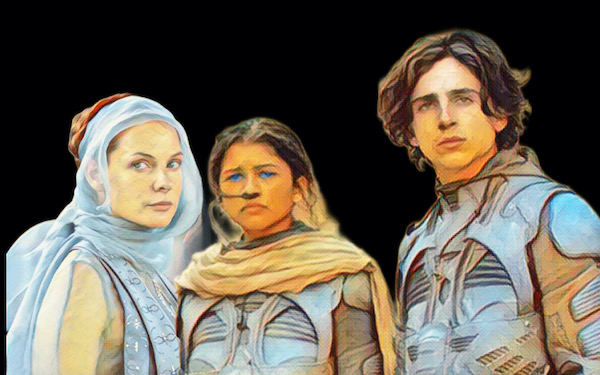
Paul, by the way, exists because of the plan that Valya will outline in the series, which is to shape the order with her political decisions and influences, contributing to the complex network of genetic manipulation and political control to create the messiah, which they call Kwisatz Haderach (Paul). In theory, we know that the original plan was for Paul to actually be a woman, but that Lady Jessica chose to follow her own path by having a male child, going against the instructions of the order. This is something for the film to resolve in the next stage.
Valya’s vision of the future of the Order and her ambitions for the Kwisatz Haderach represent, in a sense, the opposite of the autonomy and power that Paul wields, since he now embodies the risk of a power that transcends the manipulations of the Order, creating a future that Valya and other Bene Gesserit fear losing control of. In Dune: Prophecy, we will see that Valya decided on her plan out of personal vengeance and that she is the opposite of Lady Jessica in every way.
Impact of Kinship
The blood relationship between Valya, Paul, and Jessica symbolizes the irony and depth of the genetic control exercised by the Bene Gesserit. The family rivalries and conflicts that result from this kinship highlight how interconnected the great noble houses of Dune are, showing that in many ways they are prisoners of a destiny set long before their births.
Olivia Williams and Emily Watson are vital in giving depth to Tula and Valya Harkonnen. Known for their intense performances, we can already see from the trailer that they are increasing the tension in this war for power.
Tula will play the controlled and fierce sister, loyal to the Bene Gesserit and, at one point, having to make controversial decisions. I have been following Olivia’s work for years, she joined the cast at the last minute, but she will be extremely important. Valya is the protagonist and will give Emily Watson, who most recently shone in Chernobyl, the chance to connect with other generations. The ambiguity of the character is a challenge that will be fascinating for her. The actress’s ability to express contained emotions and silent suffering makes Valya an enigmatic figure, someone who, even when she seems ruthless, suggests a human depth that goes beyond appearances.
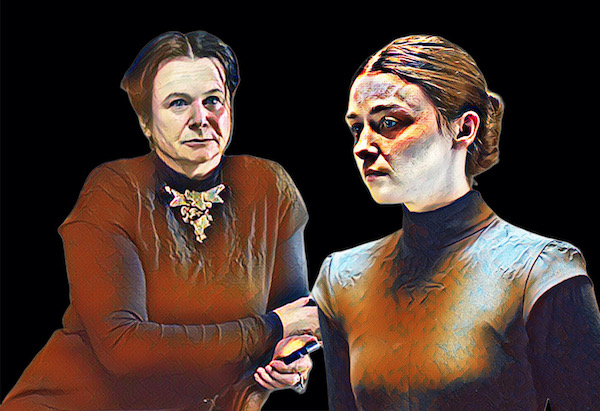
Who can we compare Valya Harkonnen to?
Until she earns her place in our minds, I can already anticipate some characters to whom we will compare Valya, taking into account other complex female figures who exercise power in patriarchal systems and face judgment for it.
Gerri Kellman in Succession
Gerri is a lawyer and executive at the Royco company, controlled by the Roy family, in Succession. Like Valya, she is a strategist, reserved, and skilled in the political game. Gerri uses her power behind the scenes and, despite her competence, is viewed with suspicion and even disrespect by the men around her. The comparison with Valya highlights how ambitious and influential women can be underestimated and how they face negative labels when exercising power.
Rhaenyra Targaryen in House of the Dragon
Rhaenyra fights to assert her right to the throne in a society that prefers male heirs. Like Valya, she is willing to break conventions and make risky alliances to secure her place. Both women directly challenge the patriarchal order and suffer the consequences, which exemplifies the impact of female ambition in male-dominated worlds.

Catherine de Medici in The Serpent Queen
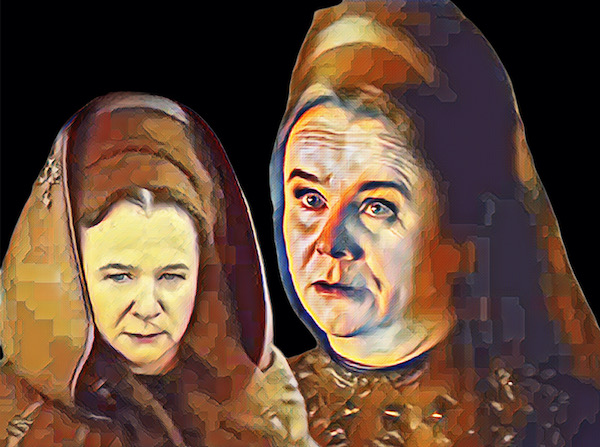
Catherine de Medici from The Serpent Queen is another great comparison, especially since many people confuse Emily Watson with Samantha Morton. And Serpent Queen is my favorite series of 2024, by the way. But we see in the series that Catherine, from a young age, learns to manipulate the complex intrigues of the court to maintain and increase her power. She is cunning and pragmatic, driven by both survival and ambition, just like Valya. Both face constant resistance, being judged by their tactics and their ability to orchestrate alliances.
Alicent Hightower in House of the Dragon
Alicent is a character who becomes a central piece in a power struggle between families. As she fights to protect her position and that of her children, her actions are often perceived as cold and calculating. This comparison highlights how much society judges women who choose to play the political game, like Valya, dehumanizing them for their strategic decisions.
Clare Shaw in The Diplomat
Clare is an intelligence agent in The Diplomat who knows how to play the political game and doesn’t hesitate to make difficult choices. Her strategic stance and the fact that she often operates in the shadows, manipulating situations to achieve her goals, are reminiscent of Valya. Like her, Clare represents a woman who works in systems where her intelligence and influence are feared and questioned.


Sofia Falcone in The Penguin
Sofia, like Valya, is a character who navigates a male-dominated environment, using cunning and manipulation to establish herself. She is a strategist, cold when necessary, and willing to exploit alliances and rivalries to advance her goals. The comparison with Sofia reinforces the idea of women who need to toughen up to survive and thrive in violent, patriarchal contexts. Both are viewed with suspicion and face judgments that question their legitimacy, which makes them polarizing figures.
Cersei Lannister in Game of Thrones
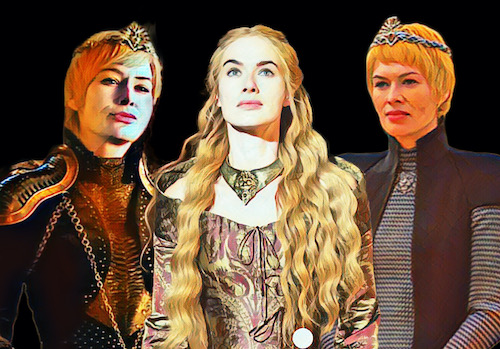
Cersei shares with Valya the experience of operating in a society brutally patriarchal society, where their power is always contested. Both are fiercely protective of their legacies and willing to make ruthless choices to achieve their goals. Cersei also represents the type of woman who is seen as a threat precisely because of her ambition and intelligence, characteristics that also define Valya. The association with Cersei highlights the role of gender expectations, showing how ambitious women are treated as villains, instead of being seen with the same admiration as men in the same role.
Shiv Roy in Succession
Shiv Roy is a perfect character to compare to Valya, as she is complex, ambitious, and constantly challenged for being a woman in a male-dominated environment. Like Valya, Shiv is judged by her family and peers, especially when she adopts a more aggressive or assertive stance. The comparison with Shiv highlights the conflict between the desire for power and the limitations imposed by patriarchy, as well as reinforcing the issue of how society expects women in power to be more “docile” or “ethical” than men in the same position.
Do you agree?
Feminine Presence and Resistance
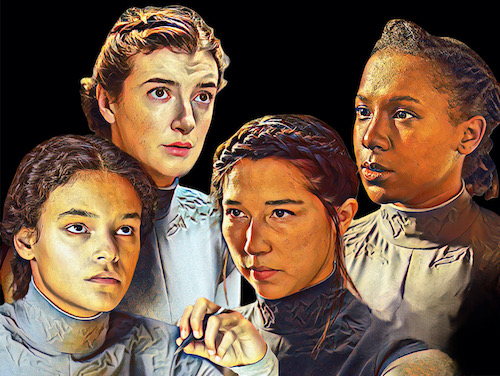
Any series that highlights the weight of the female presence in the social order is interesting. And the Bene Gesserit are so mysterious that even without complexity, they would be interesting. Tula and Valya represent women who, despite the pressures and expectations, maintain their individuality and are driven by a genuine desire to protect the order.
The internal conflicts of the Bene Gesserit order offer a deep exploration of what it means to be a woman in an environment where female power is both valued and feared. So, let’s follow along and… root for them? LOL. I’m excited.
Descubra mais sobre
Assine para receber nossas notícias mais recentes por e-mail.
 miscelana.com