
Until 1994, it was easy to walk through Ipanema or Leblon and bump into maestro Antonio Carlos Jobim, the Brazilian composer who created the soundtrack for a city (Rio de Janeiro) and the country. Tom Jobim was one of the most influential musicians of the 20th century and is still one of the most listened to today. By December 2024, we will have been 30 years without his music and he will be greatly missed. After all, few artists have managed to combine musical sophistication, popular reach, and cultural relevance as he did. More than just a musician, Jobim was a sound architect who put Brazilian music on the global map, transforming it into a universal language.
From the birth of Bossa Nova to international recognition, his contributions go beyond immortal melodies. He embodied an artistic vision that combined poetry, ecology, and innovation, leaving a legacy that has stood the test of time.
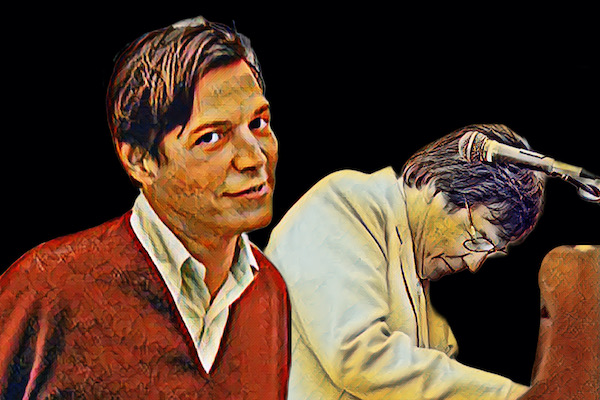
Born in 1927, in Rio de Janeiro, Jobim grew up near Ipanema. He has played the guitar and piano since he was a child. His first professional steps were as an architect (after all, he was “well-born”, and his family did not expect him to be a bohemian or a musician), but, according to him, the music and style of Duke Ellington and other similar artists made him change his mind and dedicate himself to music full-time. He was soon performing in Rio’s “little hellholes”.
He quickly went from playing other people’s compositions to creating his own; by the end of the 1940s, he had his own songs and worked as an arranger for a major Brazilian record company. He quickly gained prestige and recognition. With guitarist Luis Bonfá, he wrote the soundtrack for Orfeu Negro (which retold the myth of Orpheus in the setting of the Brazilian Carnival). In addition to including the classics Felicidade and Manhã de Carnaval, the film was a worldwide success and won an Oscar for Best Foreign Film in 1959.
By this time, already the musical director of Odeon Records, Jobim collaborated with João Gilberto and Vinícius de Moraes, inventing a sound that mixed samba and jazz and which was baptized as bossa nova. This genre would define Brazilian music and elevate him to global stardom.
Smooth and sophisticated: Bossa Nova
In the 1950s, Brazilian music was undergoing a period of transition, but Jobim was at his creative peak. Between traditional samba and international influences, he was a pioneer in combining traditional samba with American jazz, thus creating Bossa Nova. The intimate and refined genre brought together the best of these worlds, with Antonio Carlos Jobim playing a vital role in “designing this revolution.”
It all started with Chega de Saudade, composed by Jobim with lyrics by Vinicius de Moraes and recorded by João Gilberto in 1958. This song is considered the starting point of Bossa Nova and highlights the delicacy of Jobim’s arrangements and sophisticated harmony. It was an immediate success.
Chega de Saudade began a series of masterpieces that consolidated the genre. The relaxed style, marked by soft melodies and poetic lyrics, reflected Brazil in an optimistic and hopeful period.
Bossa nova also portrayed an idealized, calm, sexy Rio de Janeiro, transforming neighborhoods such as Copacabana, Gávea, and especially Ipanema, into sophisticated Pop references. The most important partner of this period, besides Gilberto, was the poet Vinicius de Moraes. Together, they created classics such as Garota de Ipanema (which won a Grammy and is still one of the most recorded songs in history), Insensatez, and Águas de Março, to name just three. Their collaboration was crucial to the consecration of Brazilian music.
The success of Bossa Nova became so strong that Frank Sinatra recorded two albums with Jobim, popularizing Bossa Nova worldwide.

Symphony and environmentalism
In addition to popular songs, Tom Jobim invested his talent in more complex projects, such as Matita Perê (1973), an album that combines Brazilian music, jazz, and classical music, and Urubu (1976), a work that reflects his love for nature and explores more complex themes, with sophisticated orchestral arrangements.
Passionate about nature and the diversity of Brazilian fauna and flora, he incorporated his romantic and ecological vision into his work, anticipating modern discussions about environmental preservation, because he believed that music was a way to celebrate and preserve nature.
His farm in Poço Fundo was a refuge where he found inspiration. The connection with the environment was a constant in his work, anticipating discussions about sustainability and ecology.
Unexpected death in 1994
At the end of 1994, Jobim traveled to New York for treatment of blocked arteries but died of heart failure at Mount Sinai Medical Center in Manhattan. He was 67 years old. Three decades later, his absence is still felt, even though he left an immeasurable legacy. His music transcended borders, uniquely combining sophistication and accessibility.
More than a musician, Antonio Carlos Jobim was a cultural ambassador who showed the world the beauty and richness of Brazilian music. His name remains synonymous with artistic excellence, and his work is a celebration of poetry, nature, and humanity. And he is greatly missed.
Descubra mais sobre
Assine para receber nossas notícias mais recentes por e-mail.
 miscelana.com