
Was there any doubt among Travis Fimmel‘s fan club that he would “steal” the leading role in Dune: Prophecy? Well, since the first episode of the series aired, everyone has been excited about his character: Desmond Hart. It helps that the soldier is an invention of the series, but, paradoxically, precisely because of that the risk was also greater. Having someone charismatic and talented in the role was really essential.
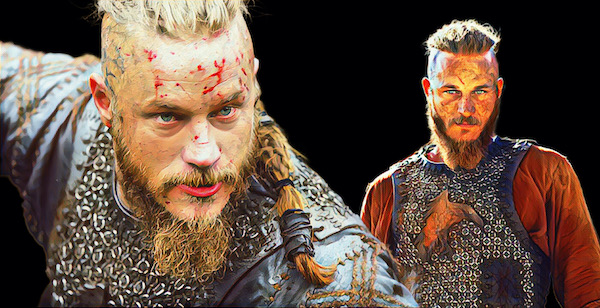
Since his remarkable performance as Ragnar Lothbrok in Vikings, Travis Fimmel has established himself as a master at bringing intensity and complexity to morally ambiguous characters. In Dune: Prophecy, Desmond Hart is another enigmatic figure in his filmography and a man who becomes a crucial point in the expansion of the universe of Arrakis. His performance has generated both praise and controversy, reflecting the depth of the role and the impact it brings to the narrative.

Reactions and Criticism
Fimmel delivers a magnetic performance, bringing a raw physicality and restrained vulnerability that elevates Desmond Hart beyond the “mysterious outsider” archetype. He has been described by critics as a “hypnotically unpredictable” character, capable of alternating between relentless brutality and moments of almost philosophical reflection.
However, some critics point out that while captivating, the actor sometimes relies on familiar mannerisms that recall his previous roles, especially Ragnar. This repetition, according to some, may limit the novelty of his interpretation in a universe as rich and diverse as Dune. This is true, even Marcus from Raised by Wolves had the widening of his eyes and the tilt of his head that have become a signature of Vikings. But be warned: it is NEVER exactly the same.


Who is Desmond Hart?
Hart is introduced as a renegade with a dark past and a surprising connection to the Bene Gesserit. His introduction adds a new dynamic to the plot, exploring the tensions between the pursuit of power, spirituality, and the limits of survival on Arrakis. He is both an antagonist and a tragic figure, with his actions driven by both personal trauma and a greater purpose. This duality is skillfully explored by Fimmel, who makes the audience question whether Hart is a product of circumstance or whether he chose to be the destructive force he becomes in the narrative.
And speaking of Vikings, while Ragnar was a visionary fighting to conquer new lands and ideals, Desmond Hart is a broken man struggling to maintain his humanity amidst the chaos. Despite some similarities in their intensity, Fimmel explores here a more introspective, almost desperate side that has not been as evident in his previous roles.
Most Popular Theories About Desmond Hart
Connection to the Kwisatz Haderach
Many fans believe that Desmond Hart may be a failed or alternate attempt at creating a Kwisatz Haderach by the Bene Gesserit, which would explain his resistance to certain mental powers and his ability to foresee future events.
This theory is supported by scenes in which Hart appears to anticipate future moves, as well as his instinctive aversion to Reverend Mothers, suggesting a deep trauma linked to these experiences.
Allegiance to House Corrino
Hart’s loyalties remain unclear, but there are indications that he may be secretly aligned with House Corrino, as an undercover agent of House Corrino, sent to destabilize the factions on Arrakis. There are subtle clues, such as symbols and references on his clothing, that could link Hart to the interests of the Dowager Empress Wensicia.
This theory places Hart as a political player, closer to the intrigues of the Great Houses than a spiritual or rebellious figure.
The Anti-Hero Factor
Another theory suggests that Desmond Hart may be a sort of dark reflection of Paul Atreides, challenging the myth of the “chosen one” by showing a destiny that leads not to glory but to self-destruction.
Hart may be the antithesis of Paul Atreides, a dark reflection who exposes the dangers of obsession with power and destiny. Rather than being “the chosen one,” Hart represents what happens when the pressures of destiny corrupt a man to the point of no return.
This would explain his troubled relationship with characters who see him as a leadership figure. Rather than accepting this role, Hart often rejects it, showing his refusal to follow any “grand plan.”

Lost Connection to Arrakis
Some suggest that Hart may be a descendant of Fremen who was plucked from Arrakis as a child and shaped by outside forces, possibly House Corrino or the Tleilaxu. This would explain his familiarity with the deserts and his almost innate knowledge of how to survive the brutal conditions of Arrakis, even without belonging to any of the known groups.
Fans point out his reaction to the smell of spice as an indication that he has a deeper biological connection to Arrakis, perhaps even a forgotten ancestral lineage.
Rebellion Against Destiny
One of the most exciting theories suggests that Desmond Hart is actually a “product” of the melange itself. Exposed to extreme levels of the substance, he may have developed abnormal abilities, but also become a symbol of the addiction and corruption caused by the overuse of spice.
This hypothesis connects Hart to the vicious cycle that Arrakis perpetuates: while spice is the key to survival and power, it also destroys those who depend on it.
The Origin of the Sardaukar
The most popular version is the theory that Desmond Hart is the founder of the Sardaukar Guard. Speculation is based on some visual and narrative clues throughout the first episode and the films. These are:
Connection to the planet Salusa Secundus:
Some scenes suggest that Desmond has a past related to the planet that would later become the home of the brutal Sardaukar Guard. Salusa Secundus is known as a place of exile and extreme training, which molds lethal warriors. Desmond demonstrates combat skills and a philosophy that seems to align with the principles that would form the basis of the Sardaukar.
Strategic leadership:
Throughout Dune: Prophecy, Desmond displays inclinations for leadership and the ability to organize forces, even in situations of chaos. These traits could indicate that he was instrumental in the creation of the Guard’s initial structure.
Narrative evolution of his morality:
Desmond’s arc places him in a moral gray area. This ambiguity may be the bridge for him to justify the creation of a military force that imposes strict discipline, albeit in a cruel manner, like the Sardaukar.
Relationship to the Imperium:
Desmond appears to have an indirect connection to the noble houses or the Emperor, who, in the Dune canon, uses the Sardaukar to maintain power. If he is indeed an exile or survivor of Salusa, his influence may have shaped the relationship between the planet and the Imperial throne.

Counterpoints to the theory:
Lack of direct evidence in the film: So far, Dune: Prophecy does not explicitly confirm the founding of the Sardaukar Guard or any clear connection Desmond has to Salusa Secundus.
Character fate: Depending on how the story unfolds in future sequels, Desmond’s impact may be more limited or deviate from this focus entirely.
Possible franchise implication: If this theory is confirmed, it positions Desmond as a key figure in the Dune universe, exploring not only the roots of the Sardaukar Guard but also the ethical and political consequences of such a creation. It could also provide Travis Fimmel with an even richer narrative to explore in future interpretations.
But… what about Rasputin?
With this in mind, it reinforces the theories:
Charismatic influence over powerful figures: Grigori Rasputin is historically known for his ability to manipulate the Russian nobility, particularly the imperial family. If Desmond Hart follows this line, he could be a figure who exerts decisive influence over future imperial leaders. This charisma could be the trigger to convince the Imperium to use Salusa Secundus as a base to train a military force like the Sardaukar.
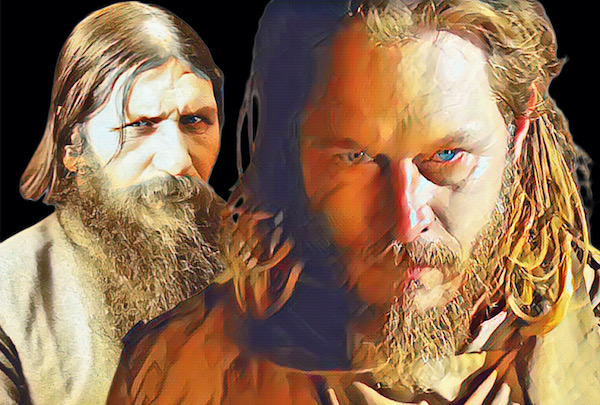
Mysticism and supernatural abilities: In Dune, figures with unusual abilities, such as the Bene Gesserit, have a profound impact on the fate of the universe. If Desmond possesses some psychic or mystical ability or even simply an unusual personal magnetism, it would make him a driving force behind events such as the founding of the Sardaukar Guard, but through indirect manipulation rather than direct action.
Moral duality: Just as Rasputin was seen as a savior by some and a corrupt figure by others, Desmond seems to operate in a morally ambiguous zone. He could be seen as both a visionary and a destructive force, depending on how his role evolves. This ambiguity is consistent with the Sardaukar philosophy, which balances quasi-religious discipline with extreme brutality.
Manipulation and survival: Rasputin was a survivor, even amidst conspiracies and assassination attempts. If the Dune: Prophecy showrunners explore this aspect, Desmond could be someone who weathers the hardships of Salusa Secundus and emerges as a catalyst for profound change in the Imperium, using both political manipulation and his ability to survive in extreme conditions.
Connection to the Sardaukar Guard: If Desmond is a Rasputin-like figure, his influence could be more spiritual or ideological, inspiring the principles behind the Guard.
arda, rather than being its literal founder. He could establish a philosophy or vision that future trainers on Salusa Secundus adopt, leading to the creation of the Sardaukar as we know them.
The “Rasputin touch” also suggests that Desmond would be a polarizing figure, both revered and feared—a trait that fits with the dark legacy of the Sardaukar in the Dune universe.
Thus, if we maintain the Rasputin comparison, it does not exclude but complements the theories, only reinforcing the idea that Desmond is a more ideological and manipulative character than a simple military strategist. His influence on the founding of the Sardaukar Guard, if confirmed, may come less from direct actions and more from his ability to inspire and manipulate leaders and systems.
Of course, these theories not only expand the mystery surrounding the character but also open the door for new plot developments. In any case, Desmond Hart has already positioned himself as one of the most intriguing and controversial characters in Dune: Prophecy and once again puts Travis Fimmel in the spotlight. We love it!
Descubra mais sobre
Assine para receber nossas notícias mais recentes por e-mail.
 miscelana.com
1 comentário Adicione o seu