
We couldn’t close 2024 without remembering one of the greatest films of all time, which turns 85: Wuthering Heights. An adaptation of one of the most intense and complex books in English literature, written by Emily Brontë in 1847, William Wyler‘s film is always considered the “best of the Wuthering Heights films”, despite significant deviations from the source material.
Cathy Earnshaw and Heathcliff’s story of love, obsession, and revenge is one of the most studied and discussed to this day because it revolves around universal themes. Wyler’s adaptation presented all of these in an artistically ambitious and emotionally resonant way. The film was nominated for eight Oscars, including Best Picture, and won Best Cinematography. These accolades solidified its place as a classic and helped it gain acclaim across generations.

Eighty-five years on, the most popular version is still the first
After Hamlet, it seems like every British actor needs to have a shot at Heathcliff, the intense and difficult character who sprang from the imagination of Emily Brontë. Much of the appeal lies in the iconic performance by a young Laurence Olivier, who paved the way for other actors to try their hand at the character as well. I’ll talk more about that later, but consider that eighty-five years on, the 1939 version is still the favorite, which is a credit to William Wyler‘s genius.
His “meticulous” direction has the mastery of someone who knows how to tell a beautiful story on film. Wuthering Heights ended up becoming a timeless title because it maintained a focus on emotional depth and character interactions, capturing the intensity of the story in a way that resonated with generations.
Furthermore, in a year that is considered the best ever in Hollywood, winning the Oscar for Best Cinematography over Gone with the Wind and The Wizard of Oz, to name just two, proves the technical superiority of what we still see in the film. Gregg Toland brought the Yorkshire moors to life with haunting beauty, and the use of light and shadow gave it an atmospheric quality that perfectly matched the gothic tone of the story.
If we have to point out a “flaw” in the work, we need to remember that in the 1930s and 40s, soundtracks were heavy, overly present, and even irritating, but overall Alfred Newman’s composition became iconic, adding emotional weight to the film’s most dramatic scenes.
But Wuthering Heights was a blockbuster with top-notch sets, costumes, and production values, ensuring that the film looked and felt grand. The depiction of the marshes and Wuthering Heights itself as a wild, stormy, and untamed landscape reflected the characters’ inner turmoil and contributed to the film’s emotional power.
The simplification that “became standard”
Another “flaw” in Wyler’s film is yet another purist reaction that loves the book so much that they found it odd to “condense” the drama. There are omissions of dark elements from the novel, and the film’s romanticized interpretation appealed to audiences who wanted an emotional and dramatic love story, but it lost all the ambiguity and weight that only the 1992 version attempted to convey. That’s because Wuthering Heights is not just about Cathy and Heathcliff, but a saga spanning two generations, and the second part is even heavier than the first.

That decision was based on the focus to keep the story to just under two hours. Thus, the 1939 film focused solely on the story of Heathcliff and Catherine, which simplified the narrative and made it more accessible to audiences. By removing the second generation, the film emphasized the passionate and doomed love story that became the central and most memorable aspect of the adaptation. More than largely driven by the constraints of the medium, the sensibilities of the time played a role as well.
As a consequence, Wyler and his screenwriters also removed one of Brontë’s innovations: the non-linear narrative that, while used in film noir, would be difficult to pull off in a drama. As mentioned, the second half of the novel is darker and more complicated, involving themes of revenge and redemption that were less suited to the romantic melodrama genre popular in Hollywood at the time. It also helped with censorship because it erased the moral ambiguity and cruelty present in the novel.
What has become sad is that since then, practically all versions have cut the story and many see Heathcliff as a romantic idealist and not the violent and vengeful monster of the second part.
The importance of the original work
Wuthering Heights is a multigenerational gothic novel set in the Yorkshire moors, focusing on two main families: the Earnshaws and the Lintons. The story revolves around Heathcliff, a dark and brooding antihero adopted by the Earnshaw family, and his obsessive love for Catherine Earnshaw.
The narrative is framed by two narrators: Mr. Lockwood, a stranger who rents Thrushcross Grange (owned by the Earnshaws), and Nelly Dean, the housekeeper who tells him (and us) the story. The novel spans decades, exploring themes of love, revenge, class, and the destructive power of obsession, with key plot points including Heathcliff’s rise from an abused stranger to a wealthy landowner and his eventual revenge on the families who wronged him.

Emily Brontë’s incredible talent for depicting psychologically complex relationships, with such poetically accurate descriptions, makes the book a masterpiece. When in the most famous passage Catherine declares, “I am Heathcliff!” it is a rapture matched only by Heathcliff crying “I cannot live without my soul!” While Cathy’s declaration sums up their intense, almost metaphysical connection, but also suggests the unhealthy and destructive nature of their bond, Heathcliff’s is perhaps the most iconic expression of obsessive and overwhelming love.
But much more than an unhealthy, almost pathological love, Wuthering Heights speaks of racism, of an untamable nature in contrast to the years of Victorian chastity, reflecting the dichotomy between passion and propriety. The author studies and immortalizes the social hierarchy and emotional depth of a British society still in conflict in the 21st century. With Cathy and Heathcliff, Brontë challenges Victorian ideals and the rigidity of class structures and explores the extremes of love and hate, illustrating how passion can be both life-affirming and destructive. The protagonists are morally ambiguous, challenging simplistic notions of heroism or villainy. At least there is a hopeful ending, suggesting that love and understanding (Cathy and Hareton’s relationship) can break the generational cycle of trauma and revenge, offering hope amidst the darkness.
Finding Cathy and Heathcliff
Every fan of Gone with the Wind – and Vivien Leigh – knows that Wuthering Heights is incredibly connected in heart and soul with her career and life. Laurence Olivier and the future Scarlett O’Hara were at the height of their passion, young and still establishing themselves as artists. Olivier was already famous on stage, but cinema was still a field in which his talents seemed to elude him. And Vivien was only relatively well-known in England; in the United States, she was – literally – nobody.
When Olivier agreed to go to Los Angeles to film with William Wyler, he hoped and tried very hard to get Vivien to play Cathy, but despite auditioning, she was rejected. Instead of the lead role, they offered her the supporting role of Isabella Linton, but she refused. Her goal was to make the film alongside her future husband, but as an equal. Without that chance, since she was already in Hollywood, she managed to audition for Gone with the Wind. That’s right, “the rest is history.” She became a legend and won the Oscar for Best Actress.
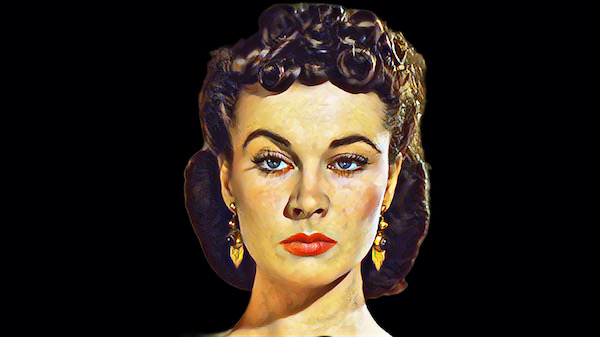
The extent of Vivien Leigh’s fame forever cast a shadow of doubt on what would have been like if she had been Cathy instead of Scarlett. As an avid fan of hers, I can say: it would not have been successful and Wuthering Heights would have been lost in time. On the other hand, even with the duo shining in Lady Hamilton and Fire Over England, there’s still no American film that paired the two greatest stars of the English stage from that time. A shame indeed.
Other actresses considered for the role before Merle Oberon were cast. Miriam Hopkins, a prominent star of the 1930s who was over 30, was passed over for the role, and Bette Davis, Wyler’s former lover and his favorite actress, but who had been overlooked by Samuel Goldwyn. He officially rejected the idea because he felt Bette did not have the ethereal quality needed for Cathy, but probably because he was bitter about the contractual disputes with her.
Ultimately, Merle Oberon was cast because they felt she had the perfect combination of beauty and aristocratic presence for the role. Merle was already well-known and was rising in Hollywood after notable roles in films such as The Private Life of Henry VIII (1933) and The Dark Angel (1935).
The one who didn’t like the choice was none other than Olivier, but he also wasn’t the first Heathcliff in Wyler’s vision. That’s right, today it’s impossible to imagine another actor in the role; however, the director originally wanted Robert Newton, who was considered “ugly”. Other names considered were Ronald Colman, Douglas Fairbanks Jr., James Mason, and Charles Boyer said in his autobiography that he turned down the role when he was called. Olivier was virtually unknown outside England but became a world star with Wuthering Heights. Fate knew better, I suppose.
Every classic has a story behind-the-scenes dramas…
A film is not perfect without a lot of discussion behind the scenes and William Wyler cut a double with his cast. Even accustomed to dealing with conflicting stars, the legends behind the scenes are unforgettable.
Starting with the disagreement of his actors, in this case, Laurence Olivier, in the spotlight. He and Merle Oberon had worked together before, but here they did not get along at all. The fights were gigantic. Even decades later, Olivier did not spare criticism of his film partner on the screen, speaking badly of her in his autobiography and criticizing her (lack of) acting ability. Unfair on his part and, unsurprisingly, the working relationship between the two became difficult.

Olivier’s memories were mostly mixed, admitting that he was not completely satisfied with the production or with his own acting. Intense in all his performances, Laurence Olivier threw himself into the role of Heathcliff, armed with the techniques he had perfected playing Hamlet on stage in 1937. Using psychological theories, he developed a staccato rhythm in his lines based on the Freudian conception he had used with Shakespeare, but the result was seen as pompous and arrogant.
Also, Olivier considered Heathcliff in the film to be a somewhat one-dimensional figure, driven largely by anger and obsession, and this made him less challenging as an actor. He found Wyler’s style to be exhausting, demanding several takes until he achieved exactly what he envisioned. It is said that once he was so frustrated that, after another take, he exclaimed, “For God’s sake, I did it sitting down. I did it with a smile. I did it by scratching my ear. I did it with my back to the camera. How do you want me to do it?” Wyler’s response was, “I want it better.”
Olivier only changed a bit when the Wyler interrupted him and asked if he thought he was on stage, and he replied: “I suppose this anemic little medium can’t handle a great performance”. The unanimous laughter of the entire team would have made the actor realize that he was in the wrong.
Still, after seeing himself on screen, especially comparing the naturalness of Vivien (with whom he was competing for fame), Olivier found himself full of exaggerations and “extravagant gestures”. But if the problem were only with Laurence Olivier!

Merle Oberon was proud of Wuthering Heights but also sincerely recalled in his book the terror of working with the arrogant Olivier and the perfectionist Wyler. Plus, there was the inconvenience of being paired with her ex-boyfriend, David Niven.
Nothing was easy without the cameras rolling. Niven refused to film while crying, and because of the shooting in the storm with wind and rain, Merle was hospitalized for days. But the best is the legend that during a particularly emotional scene, she became frustrated with Olivier’s intensity and shouted at him: “If you think you can do better, why don’t you do my part and yours too?”
At least Geraldine Fitzgerald, who was cast as Isabella Linton, was nominated for an Oscar for Best Supporting Actress.
Theories and the best Heathcliff
The great mystery of Wuthering Heights is Heathcliff. The strong current that argues that the darkness described by Brontë was literal and not metaphorical places the character as one of the most legendary black people in literature, but there is controversy.
Another theory that arose was that he was Mr. Earnshaw’s illegitimate son, but this makes his relationship with Cathy incestuous, in addition to all the toxicity that surrounds the two. Another controversy.
Officially, Heathcliff is described as a gypsy orphan taken in by Mr. Earnshaw in Liverpool, found starving on the streets. Emily Brontë never confirms or denies anything in the text, and there is no direct evidence to prove different theories.

So the last question remains: who was the “best” Heathcliff? It depends, of course.
Laurence Olivier is considered the best romantic Heathcliff; the most complex is Ralph Fiennes (1992). Ultimately, the “best” Heathcliff depends on how viewers interpret the character: as a romantic antihero, a vengeful villain, or a tragic figure caught between love and hate. Each actor brought unique strengths to the role, enriching Brontë’s timeless story in different ways.
In that sense, as the pioneer, Olivier’s Heathcliff is perhaps the most iconic, embodying the dark, brooding romance that defined the Golden Age of Hollywood. His performance emphasizes Heathcliff’s tortured passion and undying love for Catherine, which resonated deeply with audiences of the time.
Although softened in comparison to the book, downplaying the character’s cruelty and moral ambiguity, it is the 1939 version that retains the aura of the romantic anti-hero, and thus Olivier’s interpretation is considered the definitive version of Wuthering Heights. No one disagrees.
Descubra mais sobre
Assine para receber nossas notícias mais recentes por e-mail.
 miscelana.com