
I had been extremely curious to see Firebrand for years, ever since the news that Alicia Vikander would be the only surviving queen of the psychopath Henry VIII (Jude Law), Katherine Parr. I was even more eager when I had the opportunity to talk to the author of the 2013 book, The Queen’s Gambit, which is the basis for the film, Elizabeth Fremantle. But we had to wait more than a year until, finally, the title entered the Amazon Prime Video platform, a Christmas present, perhaps?
There is a lot of controversy surrounding the story of Henry VIII’s sixth and last wife and Karim Ainouz’s decision to transform a short passage of time into a medieval thriller was promising. The result? Uncertain. It can’t be said that it’s a bad film, but it’s quite confusing, with the expected unanimity of a stupendous Jude Law in the role of the fat and disgusting murderous king.
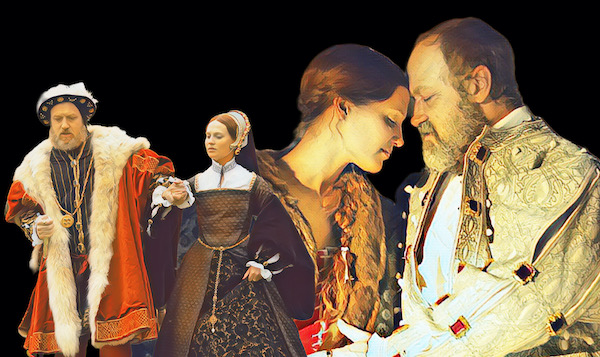
Relive your History of the Tudors
Of all the complex Kings in British history, the Tudor period is certainly the most covered, whether in cinemas, literature, or on TV. Even so, the most portrayed Queen is the tragic Anne Boleyn, followed closely by her daughter Elizabeth I. Henry’s other consorts go unnoticed, but Katherine Parr, without a doubt, deserved to have had greater prominence. She not only survived the King but was a stepmother present in Elizabeth’s life and directly involved in the greatest traumas of her stepdaughter’s life, which Becoming Elizabeth showed masterfully.
Katherine’s complete life is absolutely fascinating: her godmother was none other than Catherine of Aragon, Henry’s first wife, and there is unquestionable karma that the young woman who received her name as a tribute was the last in his life. But Firebrand doesn’t go into any of that, preferring to focus on the final months of Henry and Katherine’s marriage and the great anguish she experienced when he was apparently determined to kill her as he had done with two of her previous wives.
So either you are up to date with your knowledge of previous history or you will spend a long time not understanding exactly what is happening, only experiencing the panic of the subjects of the unstable king, without fully understanding the risks or threats.

In as few lines as possible, Katherine Parr had a remarkable life. Born into an influential noble family, the Parrs, she was well educated, with a great interest in languages and theology. She was married twice before Henry: first to Edward Burgh, a discreet nobleman, and then to John Neville, 3rd Baron Latimer, who left her a widow in 1543. During her second marriage, Katherine lived through political turmoil, especially during the Pilgrims’ Rebellion, in which her husband was pressured to support the rebels.
After Neville’s death, Katherine became a respected figure in the Tudor court, known for her intelligence, diplomacy, and religious devotion, traits that caught the king’s attention. Katherine married Henry VIII in 1543, when she was 31, while the king was already 52 and suffering from health problems, including an ulcerated leg. By this time, his reputation for being temperamental and dangerous to his wives and aides made life at court a daily emotional and political struggle, but Katherine was skilled at navigating all the challenges.
As queen consort, she was a maternal figure to Henry’s children, helping to reconcile him with his daughters Mary and Elizabeth, who had been removed from the line of succession. She also acted as regent while the king was campaigning in France in 1544, demonstrating leadership and administrative competence. This is where Firebrand comes in.
A Murderous and Fickle King, Religion as a Weapon
Although England’s split with the Catholic Church brought the religious war to the continent, with Protestantism officially becoming the new religion, Henry VIII’s emotional instability only made everything more gray.
As a sympathizer of the Protestant Reformation, Katherine Parr’s religious ideas attracted the distrust of conservatives at the court, who knew it would not be difficult to convince the king to eliminate her. There are many artistic and historical liberties that bother purists, such as the friendship with the Protestant martyr Anne Askew, the entire necklace plot, the pregnancy not recorded in history, and, above all, the unexpected conclusion. It only succeeds unanimously when it eliminates any pretense of humanizing or softening Henry Tudor’s villainy.
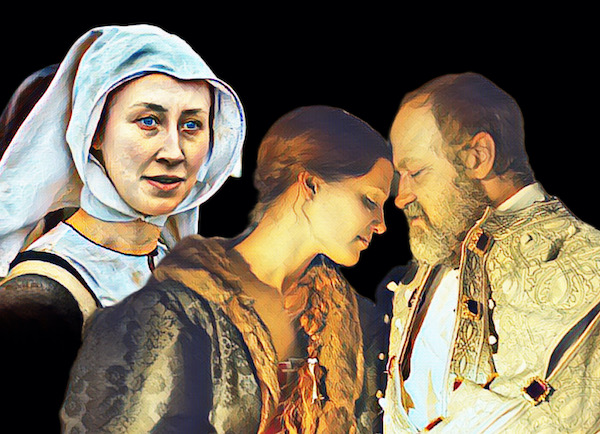
In a period film with a clearly low budget, Firebrand is full of close-ups and suffocating scenes of cramped environments, all of which make us yearn for oxygen even more, just like the characters. The photography is divine and the soundtrack is beautiful, not to mention the costumes that are faithful to the paintings. There is a modernity in the gestures and Katherine’s relationships in her domestic life, but it’s passable.
Alicia Vikander doesn’t give us a performance that’s different from her previous ones, which is partly a problem because we sympathize with the Queen and root for her, but we say goodbye to her without much longing. Jude Law, literally gigantic, makes our stomachs churn when he’s on or off screen, rooting for revenge to match. And yes, as expected Erin Doherty (Princess Anne from The Crown) is spectacular in her brief stint on screen as Anne Askew, and Simon Russell Beale (most recently in House of the Dragon), steals the show as the Queen’s antagonist, Stephen Gardiner.
The problem is that it is very important to understand the risk that Katherine would have taken: Gardiner, representing the Catholics, is against any Protestant, but she has influence over the King. Being the sixth in a list of women who had no voice in the patriarchal Court, the Queen’s opposition to Gardiner was something to be avoided because a paranoid Henry VIII was easy to lead by his ears.
Everyone’s aversion to a stinking king is perfectly portrayed and the scenes that detail his rottenness are disturbing, but they are important. Katherine tries to help Anne and thus places herself in the position of a traitor to the Crown. Even with the King getting closer to Death every day, will she be able to survive him?
Unfortunately, as I mentioned, it is a struggle to follow the order of events in real history, even if the proposal is to rewrite it. The conspiracies seem so secret that they are not even 100% revealed to us. With that, the surprising option that they suggest for the conclusion of the story is very accelerated for the transition of the kingdom’s future. If you know the history (like me), it has a lukewarm result, but considering that most of the public is not that geeky, it was a missed opportunity…
Descubra mais sobre
Assine para receber nossas notícias mais recentes por e-mail.
 miscelana.com