
With just a few weeks to go until the end of 2024, it’s time to look back and analyze how the year will be remembered. Spoiler alert: there’s a surprise. For the first time in history, the 10 biggest box office hits of the year are dominated exclusively by sequels. That’s right, it seems like there was a lack of originality.
This mark reflects an increasingly consolidated trend in the film industry: heavy investment in franchises and the reuse of already-known stories. The world premiere of Moana 2 by Disney contributes to this result because success is guaranteed. The key to the movement lies in what my colleague Beatriz Lourenço listed this week here at CLAUDIA: some sequels performed better than the original, even though no one exactly asked for one. Could the future of original cinema be compromised?
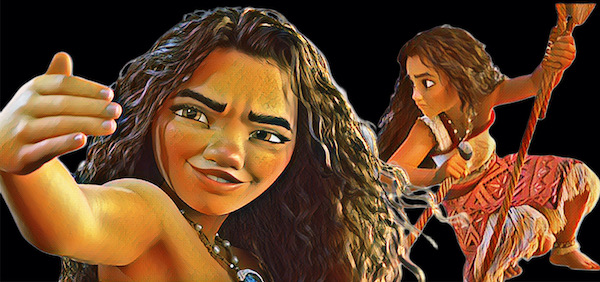
In the case of Moana, the 2016 original won over audiences by offering an original and culturally rich narrative. Inspired by Polynesian traditions, the animated film featured an independent heroine, free of romantic interests, and a story centered on self-discovery and connection with nature. It was innovative and represented a risky bet by Disney in an era where original films were (and continue to be) rare in its catalog, dominated by sequels and remakes.
Moana‘s relevance becomes even more evident when we look at the current scenario. In 2024, with a record number of sequels topping the box office, it is undeniable that studios’ preference for “safe territory” is shaping the type of content offered to audiences. While this may guarantee financial returns, many argue that this reliance on franchises stifles creativity and devalues original narratives. In other words, it wouldn’t be wrong to question whether it would be possible to replicate the cultural impact and financial success of original production in an environment dominated by sequels or, even more so, to worry whether the appeal of new stories is declining, reflecting an audience that also prefers to revisit familiar universes. A mix of both, certainly.
Just look at the sequels that brought the most people to theaters in 2024 until November: Inside Out 2, Deadpool & Wolverine (also a sequel), Despicable Me 4, Dune: Part 2, Godzilla & Kong: The New Empire, Kung Fu Panda 4, Reign of the Planet of the Apes, Bad Boys: Last Blood, Garfield: Away from Home and Ghostbusters: Ice Apocalypse. And we can still remember Avatar: The Way of the Waters, Mission: Impossible – Reckoning: Part One, and Fast & Furious 10, all linked to long-standing franchises and films that draw crowds because they connect to already established and emotionally familiar universes for the audience. The promise of revisiting beloved characters and expanding known stories creates an irresistible appeal for viewers — and, of course, an almost guaranteed financial return for the studios. But will this growing dependence stifle innovation?
Starting in 2024, Moana will join the group of sequels, and, let’s not forget, in 2025 there will also be a live-action version. This highlights a paradox: even successful original films end up being transformed into franchises, feeding the same dynamic that limits the space for new stories.
Returning to the 10 biggest box office hits of the year, we can see clear patterns. Franchises like The Fast and the Furious and Mission: Impossible have relied on a formula of over-the-top action and overarching plots, delivering exactly what audiences expect — more speed, more explosions, more twists and turns. Avatar: The Way of the Waters and Guardians of the Galaxy Vol. 3, on the other hand, follows the logic of visual and emotional spectacle, offering expansive universes and charismatic characters that create lasting bonds with audiences.


The difference between these productions and a film like Moana lies in their origins. All of these franchises began with original stories that dared to take risks, won over audiences, and became solid properties for the studios. The question is: in a market dominated by these sequels, who is creating the new Avatars or the new Fast and the Furious?
The obsession with sequels is not inherently bad. Often, they expand the narrative universe in a significant way and become part of the cultural imagination. But the absolute dominance of the box office by sequels is a warning sign. It reflects a cycle in which originality is constantly turned into a franchise, while completely new ideas struggle to emerge in a saturated market. And when a hit like Moana “breaks the barrier,” the choice to repeat history highlights how the industry quickly turns the new into the predictable.
And folks, the phenomenon is not new, it is just announced. The criticism of “unnecessary” sequels and trilogies in Hollywood is almost as old as commercial cinema itself. The discussion around the excessive exploitation of sequels began to gain momentum in the 1970s, when studios realized the lucrative potential of expanding box office hits. However, it is worth remembering that the practice did not emerge at that time — since the 1920s and 1930s, Hollywood had already been producing sequels to capture the audience of popular films, such as the sequels to The Thin Man or Tarzan.
The real shift towards the modern model came with the resounding success of Steven Spielberg’s Jaws in 1975, considered the first great summer blockbuster. The production of three sequels, although none reached the quality or impact of the original, consolidated the pattern of using box office hits as levers for franchises. The strategy was reinforced by Star Wars (1977), which not only started the obsession with trilogies but also popularized the idea of exploring expansive narrative universes.


However, criticism of trilogies as “formulaic” began to become evident in the 1980s, when sequels began to seem more focused on profit than on narrative. Examples such as Rocky III (1982) and Indiana Jones and the Temple of Doom (1984) divided audiences and critics, who began to question whether sequels actually added value to the stories or merely diluted the impact of the originals.
From the 2000s onwards, the “trilogy order” became almost an obligation, driven by franchises such as The Lord of the Rings, The Matrix, and Pirates of the Caribbean. Many films began to be planned as trilogies even before their initial release, creating a sense of predictability. It’s a model that still dominates today — often criticized for sacrificing creativity for the sake of long-term plans and guaranteed box office.
The central question has always been the same: to what extent are sequels narratively justifiable, and when do they become just a commercial strategy? The problem is that not even the answer is original…
Descubra mais sobre
Assine para receber nossas notícias mais recentes por e-mail.
 miscelana.com