
While the ballet The Nutcracker has many iconic moments, one in particular always takes the audience’s breath away: the Waltz of the Flowers.
It is the final number of the Nutcracker Suite, composed by Tchaikovsky in 1892. Generally, it precedes the Sugar Plum Fairy‘s pas de deux and either includes another soloist or Clara/Marie. And, like the other pieces in the ballet, it has an interesting story. Especially since it concludes the Divertissement of the second act and its grandeur reflects the festive climax of the story.
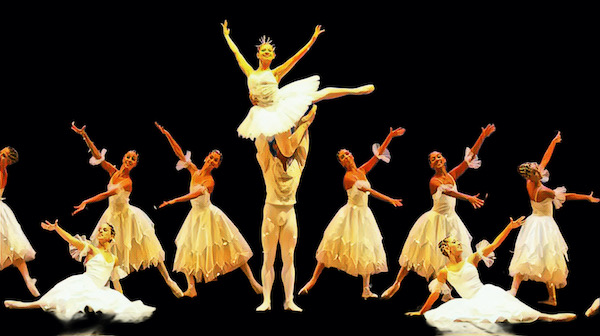
Tchaikovsky had a special sensitivity for evoking natural imagery in his music, which is why it is often associated with flower gardens and the transience of spring. But among the many gems of classical music, the “Waltz of the Flowers” holds a special place because it is widely recognized for its grandeur and sophistication. What makes this waltz such a timeless work? Let’s explore some of its curiosities and defining characteristics.
Compositional challenges
Tchaikovsky faced creative difficulties during the composition of The Nutcracker because he was initially dissatisfied with the project. Ironically, the Waltz of the Flowers was one of the numbers that most encouraged him to move forward.
Although it is not the number that highlights the celesta the most (that role goes to the Dance of the Sugar Plum Fairy), it is also part of the overall orchestral brilliance that Tchaikovsky brought to the work. He loved to use instruments that created a magical mood, and this was his favorite.
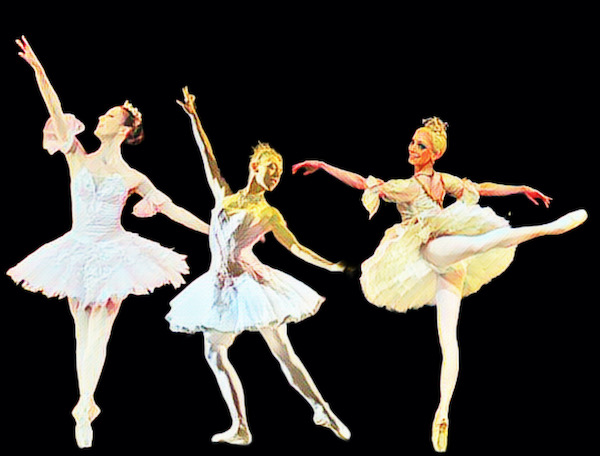
Tchaikovsky was a master of orchestration, and the Waltz of the Flowers is a great example of this. The use of harps in the introduction creates an ethereal, almost magical atmosphere that reflects the grandeur of the piece. The strings and wind instruments complete the texture with an enchanting fluidity.
Although The Nutcracker is now a world classic, the reception to its 1892 premiere was lukewarm. Critics found the ballet’s plot weak and confusing, but the music made all the difference, and Waltz of the Flowers was widely praised from the beginning.
The initial choreography
The first choreography was developed by Marius Petipa and Lev Ivanov, and the waltz served as the backdrop for a grand group pas de deux. It is a collective celebration and one of the pinnacles of ballet.
Considered one of the most exquisite waltzes ever composed, its melodic and harmonic construction is often praised for representing a perfect balance between simplicity and sophistication.
Over time, Waltz of the Flowers transcended ballet, being widely used in commercials, films, and even figure skating performances. It is also a regular fixture at Christmas concerts around the world and appears in films such as Disney’s Fantasia (1940), where it depicts flowers dancing in harmony. This adaptation helped cement the association between the piece and nature.
It also exemplifies Russian Romanticism in classical music. Tchaikovsky often drew inspiration from the cultural and natural richness of his homeland, and this piece reflects a sense of universal beauty that resonates beyond borders.
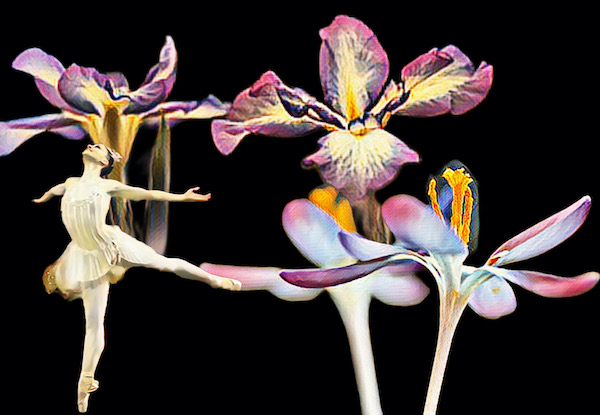
Although it was not composed specifically for Christmas, the association of Waltz of the Flowers with this time of year is inescapable, thanks to the popularization of The Nutcracker as a Christmas tradition, especially in the United States.
Different versions of a single waltz
In the ballet, The Nutcracker, Waltz of the Flowers is one of the most stunning choreographic pieces, and different productions throughout history have highlighted its beauty in unique ways.
The original version by Lev Ivanov (1892)
Although Petipa co-wrote it with Lev Ivanov, historians believe that Ivanov was responsible for the original choreography, and he created a scene for the female corps de ballet that reflects the fluidity and almost ethereal character of the music. His approach emphasized wave-like movements and geometric formations, evoking the image of flowers blooming and dancing in the wind. The delicacy of the choreography perfectly matched the lyricism of the piece.
The grandeur of George Balanchine (1954)
Balanchine, in his version of the New York City Ballet, brought a sense of theatricality and technical precision to the waltz. He emphasized the use of complex patterns and symmetry, with dancers forming circles and lines that move in perfect synchrony. His choreography is known for demanding extreme discipline from the corps de ballet, as well as conveying a sense of grandeur and festivity.
The Sophistication of Rudolf Nureyev (1968)
In his version for the Royal Ballet, Nureyev gave Waltz of the Flowers a more dramatic twist. He included more elaborate solos for some of the dancers and introduced movements that reinforced the narrative character, making the scene not only a visual spectacle but also an emotional representation of the ballet’s climax.
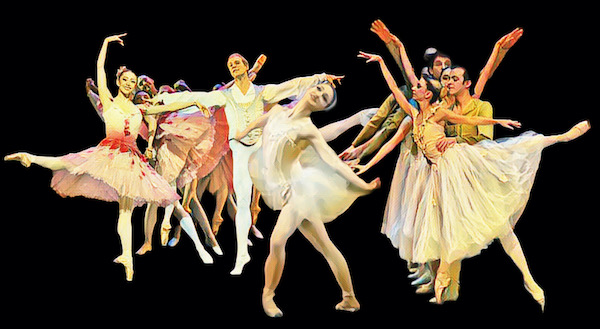
The Contemporary Twist of Matthew Bourne (1992)
Matthew Bourne reimagined The Nutcracker with a contemporary and irreverent perspective. In his approach, the waltz was transformed into a sequence full of humor and theatrical movement. Although it does not follow the classical tradition, his interpretation highlights the versatility of the music and how it can be adapted to different artistic contexts.
The exuberant style of Yuri Grigorovich (1966)
In the Bolshoi Ballet version, Grigorovich expanded the scale of the waltz, emphasizing the virtuosity of the corps de ballet and including spectacular leaps and sequences that require technical precision. His interpretation is often described as grandiose and emotional, faithful to the Russian tradition.
Common elements that make the choreographies iconic
- Geometric formations: The circular formations and synchronized movements reflect the collective character of the waltz.
- Fluidity and lightness: The steps emphasize the sensation of floating as if the ballerinas were flower petals in the wind.
- Visual aesthetic: The costumes, often in pastel tones and inspired by flowers, reinforce the connection with nature evoked by the music.
These different interpretations show how the Waltz of the Flowers remains one of the most adaptable and iconic scenes in classical ballet. Here are some of them.
Descubra mais sobre
Assine para receber nossas notícias mais recentes por e-mail.
 miscelana.com