
One thing that the patient quickly learns when beginning the psychoanalytic process is that there are no shortcuts in therapy. It is a slow, painful process and sometimes without immediate results, although valid. Therefore, everything that Jimmy (Jason Segel) proposes or tries to do in Shrinking is at least criminal. Since it doesn’t even make us laugh, it is offensive.
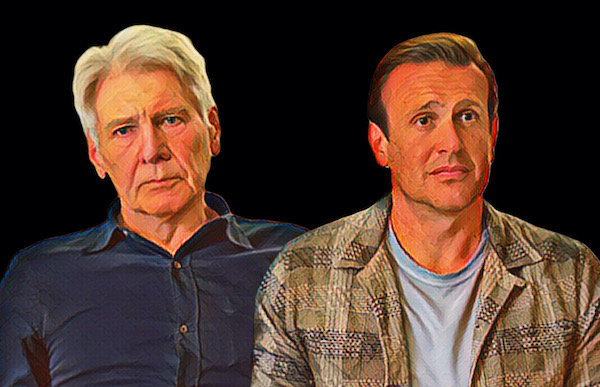
Since the first season, we have followed his personal and professional journey, both in pieces. Jimmy, who has a teenage daughter, was widowed after a drunk driver caused an accident that took the life of his wife. In his grieving process, a depressed and unbalanced Jimmy (Segel), who is an analyst at a clinic, gives in to drugs, alcohol, and sex with prostitutes. all at home, with his daughter as a witness. Unbelievably, he didn’t lose custody or his professional license, he continued working in that state and decided he was fed up with counseling patients and seeing them repeat all the mistakes he made. He decided to “innovate” by not only getting into their heads but also interfering in their lives. With his non-existent professional ethics, I don’t spare his boss, Paul (Ford), who didn’t fire him or report him so he could be arrested. He also goes through personal problems, but those are more contextualized.
The worst of Shrinking‘s problems isn’t even the extreme lack of ethics and respect for the psychoanalysis process, which is serious and committed to the patient’s mental health, but wanting to be Ted Lasso. It’s understandable why the backstage team is almost the same, but the chemistry between Ted Lasso and his phenomenon was in the protagonist’s perfect empathy, something that not even a cast that includes Harrison Ford can achieve. This includes the fact that, although Ted used “creative” methods and initiatives taken from self-help books, he is the first to respect and encourage his team to seek therapy from a professional.


I know I’ve been on a broken record for years with this point, but it prevents Shrinking from being reasonable. Because what’s left is a parade of clichés: the gay couple who think they’re repeating Jack from Will & Grace and the sexually independent 30-year-old woman who lets the right guy pass her by because she’s so neurotic that she only falls for the wrong man. Of course, there’s the neurotic neighbor with the quiet husband who is a good person, not to mention the teenager in existential crisis. All of them have perfect material for therapy, but none of them are remotely original or interesting. And yet, the series accumulates award nominations. I don’t understand. My annoyance is even greater because in Ted Lasso every drama was treated with sensitivity and precision, which is why the series was a cultural phenomenon.
Finally, as the second season comes to a close, there are signs that the writers have understood the traps they have set. Jimmy has returned to the traditional method and strives to no longer create bonds or problems for himself or his patients, but when he runs into the man who caused his wife’s accident (Brett Goldstein, one of the writers and stars of Ted Lasso), he goes back to square one. Forgiving is a complex thing, even more so when you are in crisis, and this drama is paradoxically the best of the series. But the confrontation serves as an extremely dangerous trigger, one that could take Jimmy back to rock bottom.
“You can’t hide from your trauma. If you don’t deal with your past… [explosion],” warns Paul, in the role of friend and therapist. It was the first time that the series – finally – seriously addressed what should be the hidden drama of the series, as it was in Ted Lasso. And so, there is potential for the story to head towards a journey of positive discoveries.

Shrinking has one more season to go and should be Harrison’s last in the cast (which will take away 80% of its appeal). That’s because Paul, a therapist full of personal problems (which stay outside the clinic, where they should stay) is dealing with an incurable health drama: he has advanced-stage Parkinson’s and will lose not only his physical movement but also his mental capacity to care for his patients.
He, like Jimmy, lived in denial but has undergone treatment, which does not change the diagnosis. To make matters worse, in the double play of the episode titled, “The Drugs Don’t Work.” In Paul’s case, the drugs and in Jimmy’s, literal narcotics. Both are faced with hard truths, but Paul can still help Jimmy before he loses his fight against the inevitable. If it were Ted Lasso, we would be in tears, but here we are just relieved. If it takes the right turn, I may have to reconsider my treatment of the series. For now, I’m happy to face just one last episode.
Descubra mais sobre
Assine para receber nossas notícias mais recentes por e-mail.
 miscelana.com