
I swear I was worried about one thing when Sir Christopher Nolan announced that his next project would be to film Homer‘s Odyssey. If all his recent films have been over or close to 3 hours long, what can we do with this literary classic that is at least 400 pages long?

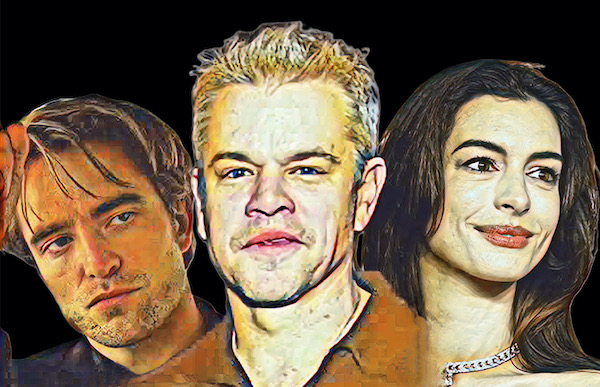
On the other hand, if there is a director who can retell in a “popular” way one of the most remarkable stories of all time, that director is Nolan. The saga of Ulysses or Odysseus (I’ll call it Ulysses for simplicity’s sake) is not new in theaters. We currently have a film with Ralph Fiennes and Juliette Binoche, The Return, which focuses only on the final part of the story, and Odyssey only looks epic in the announcement. The cast includes new actors and others he has worked with before: Matt Damon, Anne Hathaway, Tom Holland, Zendaya, Charlize Theron, Robert Pattison, and Lupita Nyong’o are confirmed (and I doubt Cillian Murphy won’t make a cameo).
The film is scheduled to be released on July 17, 2026, and, of course, Nolan intends to film using innovative IMAX camera technology, with locations in various parts of the world, aiming to capture the grandeur and essence of Ulysses’ journey. The film is described as a “mythic action epic”, promising an intense and engaging approach to the classic narrative.
And do you know the classics?
An epic that is as legendary as its story
The Odyssey is attributed to the Greek poet Homer and is one of the most important works of classical literature of all time, with more than 2,600 years. The poem tells the adventures of Ulysses, king of Ithaca, as he tries to return home after the Trojan War, a 10-year journey full of challenges, including monsters, gods, and supernatural forces. His intelligence and cunning are his main weapons to overcome these obstacles.
While Ulysses goes through all the obstacles, in Ithaca, his wife, Penelope, deals with several suitors who want to take his place as king, believing that he is dead. Penelope maintains hope and uses her own intelligence to deceive them.
The Adventures of Ulysses:
He faces the Cyclops Polyphemus, whom he blinds to escape.
He visits the kingdom of the dead and receives prophecies.
He faces the sirens, who try to seduce him with their songs.
He deals with the wrath of Poseidon, the god of the sea, who makes his journey difficult.
He is trapped on the island of Calypso, a nymph who keeps him captive for years.
He receives help from the goddess Athena, who guides him at crucial moments.
The return and revenge:
When Ulysses finally returns to Ithaca disguised as a beggar, he carefully plans his revenge against the suitors. With the help of his son, Telemachus, and some allies, he kills them and restores order. He is recognized by Penelope, and the couple reunites. The story ends with peace restored to the island.
The timelessness of this ancient work lies in its main themes:
The struggle for survival and the desire to return home.
The importance of intelligence and cunning as opposed to brute force.
Loyalty and love as forces that resist time and adversity.
The interference of the gods in human life.
Unsurprisingly, the story has inspired several adaptations for film and television, from faithful representations of Homer’s epic to modern versions that reinterpret Ulysses’ journey. From the 1954 film Ulysses, starring Kirk Douglas, to the 1997 Odyssey, directed by Andrei Konchalovsky, which was modernized by the Cohen brothers, and the 2000 O Brother, Where Art Thou?, there is still no definitive version.
It is because of this space that expectations are huge for Nolan. The Odyssey transcends its time and remains relevant to this day, having shaped Western literature, philosophy, and culture.

The Impact of Homer’s Work
Many consider that The Odyssey, along with The Iliad, set the standards for epic narrative. It is considered one of the first Western literary works, to influence literary genres, from heroic adventures to psychological dramas.
The story of Ulysses is an archetype of the hero’s journey, influencing works such as Dante‘s Divine Comedy and James Joyce‘s Ulysses. The idea of overcoming challenges to achieve a goal is universal and resonates across cultures and eras. In addition, the work presents philosophical questions, such as the role of fate and human agency, incorporating fundamental values from Greek mythology, such as the relationship between humans and gods and the limits of heroism.
Ulysses becomes an example of perseverance. His struggle to return home, even in the face of insurmountable obstacles, symbolizes the human capacity to resist adversity, and his journey provides a metaphor for the search for self-knowledge and connection with one’s roots. Instead of relying solely on brute force, Ulysses uses his intelligence to overcome challenges. This reinforces the idea that wisdom is one of the most valuable qualities of a human being.
Ideal love is also present in the work. The relationship between Ulysses and Penelope, as well as Telemachus’ dedication to finding his father, exemplifies the importance of fidelity, love, and family ties.
Speculating who will play who
Based on the actors announced, the role bets seem somewhat obvious, but they are still speculation.
Matt Damon – Ulysses
Ulysses is the archetype of the complex hero: cunning, resilient, and human in his flaws. He symbolizes the struggle against adversity, the desire to return home,e and the conflict between duty and passion.
Why Damon?
Damon has experience in emotionally complex leading roles (Saving Private Ryan, The Martian), which fits well with Ulysses’ multifaceted journey.
Anne Hathaway – Penelope
Penelope is a symbol of loyalty, patience, and intelligence. She faces her own battle as she resists suitors and protects the kingdom of Ithaca, representing emotional strength and wit.
Why Hathaway?
Anne Hathaway has a presence and can convey emotional depth, as demonstrated in Les Misérables and Interstellar.
Zendaya – Athena
Athena, the goddess of wisdom and guide to Odysseus, is also his divine protector, representing intelligence, strategy, and unconditional support. Her presence reinforces the connection between gods and humans.
Why Zendaya?
With charisma and versatility, Zendaya could embody the strength and grace of the goddess, bringing a youthful and contemporary energy to the role.
Robert Pattinson – Telemachus
Telemachus symbolizes maturity and the search for identity. He sets out in search of information about his father, facing dangers that transform him into a leader.
Why Pattinson?
Pattinson has shown an incredible range of dramatic roles (The Lighthouse, Tenet), which makes him an interesting choice to portray Telemachus’ emotional evolution.
Lupita Nyong’o – Calypso
Calypso, the nymph who keeps Ulysses trapped on her island, represents desire and temptation, offering the hero immortality in exchange for remaining with her. She is an emotional and moral obstacle on his journey.
Why Lupita?
Lupita can bring emotional layers to complex characters (12 Years a Slave, Us), which is essential to playing Calypso.
Charlize Theron – Circe
Circe, the sorceress who turns Ulysseus’ men into pigs, symbolizes the challenges of seduction and female power. Her interaction with Ulysses is one of the most fascinating, involving manipulation and redemption.
Why Theron?
Charlize has experience playing powerful and enigmatic characters (Mad Max: Fury Road, Snow White and the Huntsman), which makes her a good fit for Circe.

Tom Holland – Eurymachus or another suitor
Tom Holland could play Eurymachus, one of the main suitors who challenges Telemachus and Penelope. Eurymachus is the embodiment of arrogance and abuse of power and represents the final challenge for Ulysses upon his return to Ithaca.
Why Holland?
Holland could bring a youthful and charismatic side to the role, balancing villainy with charm.
Marwan Kenzari – Poseidon
Poseidon, the god who pursues Odysseus for blinding his son, Polyphemus represents life’s unpredictable obstacles, being the divine antagonist who tests the protagonist’s resilience.
Why Kenzari?
With his striking presence (Aladdin, The Old Guard), Kenzari could embody Poseidon’s fury with intensity.
It’s unlikely that Cillian won’t make a cameo appearance…
Since Cillian Murphy is a frequent collaborator of Christopher Nolan and it hasn’t been announced whether he’ll be in the film, I suggest speculating that he might have a smaller role in The Odyssey.

- Tiresias (The Blind Prophet)
Tiresias, the blind prophet of the underworld, is the one who reveals to Ulysses how he can return home and warns him about the challenges he will face. He represents wisdom and clairvoyance. - Hermes (Messenger of the Gods)
Hermes is the god who helps Ulysses by delivering divine messages and helping him escape from difficult situations, such as Calypso’s imprisonment. He is the intermediary between the world of gods and men. - Elpenor
Elpenor is one of Ulysses’ companions who dies tragically in Circe, reappearing as a soul in the underworld to ask for a proper burial. He symbolizes mortality and human frailty. - Eumaeus (The Faithful Shepherd)
Eumaeus is the loyal shepherd who helps Ullysses regain his throne. He represents loyalty and humility, as well as being a symbol of true friendship. - Polyphemus (The Cyclops)
Polyphemus is one of the most iconic antagonists of the journey, being the son of Poseidon who Ullysses tricks by using his cunning to escape.
What’s your guess?
Descubra mais sobre
Assine para receber nossas notícias mais recentes por e-mail.
 miscelana.com