
To appreciate The Bikeriders, one must understand the impact of Jack Kerouac‘s work in the 1950s and figures such as Marlon Brando, James Dean, and, in particular, The Wild One, from 1953. The combination of all this contextualizes the film whose story is inspired by real events but is not a “true” story.
This is because it came from the images and book by photographer Danny Lyon, published in 1965 and which brings together photos and testimonies of a motorcycle gang called the Chicago Outlaws. Danny was only 23 years old and believed that the best way to photograph a subject was “from the inside out”, that is, he spent a year “undercover” and becoming fond of the gang members.
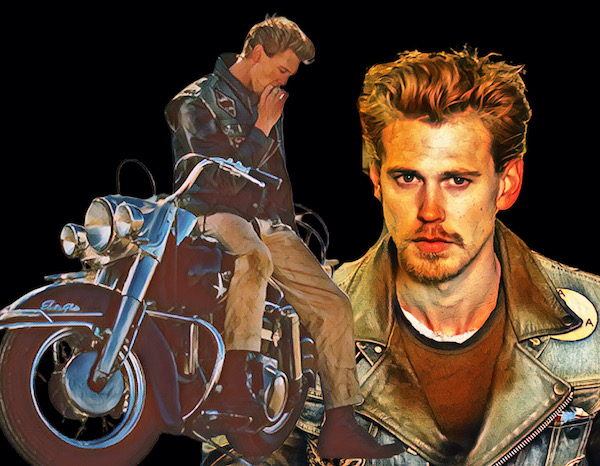
The spirit of freedom: an irresistible concept
In the pages immortalized in On the Road, Jack Kerouac captured and romanticized the concept of the transformative journey without a destination, which captures the spirit of freedom and restlessness. Danny Lyon, he was a great reference, as was the reporter Hunter S. Thompson, who had spent a year with the Hell Angels for his book, Hells Angels: The Strange and Terrible Saga of the Outlaw Motorcycle Gangs. Eyeing this opportunity, Lyon, who had already recorded important moments of the Civil Rights movement and, as he said, “was attracted to outsiders”, saw in the Chicago Outlaws gang material that would certainly provide him with material for a book.
As a prominent and talented photojournalist, the images he captured are part of the pop imagination to this day. But it was risky, as Thompson himself tried to warn him. The result of his work is the book The Bikeriders, published in 1968 and the basis for the film of the same name.
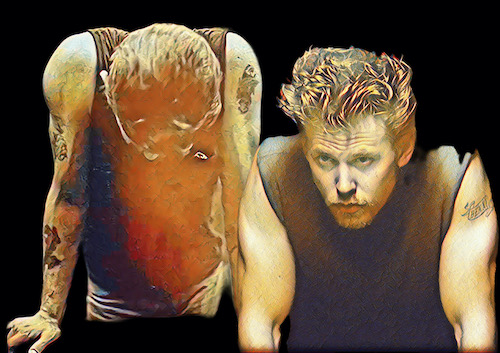
Leaving the Civil Rights movement for a group as polar opposite as bikers began when Lyon, returning from the South, was heading to Chicago, where he had studied. On a motorcycle, the photographer joined the Chicago Outlaws and recorded conversations with each member of the group. Their leader was obsessed with The Wild One and Marlon Brando, which is why he created the club he named the Chicago Outlaws.
Lyon may have taken beautiful images, but he quickly became alarmed when he witnessed fights and some bikers waving Nazi flags. “By then, I had realized that some of these guys weren’t so romantic,” he later said. These accounts are featured in the film starring Tom Hardy, Austin Butler, Jodie Comer, Mike Faist, and Michael Shannon, among others.
The romantic vision of bikers
Danny Lyon immortalized the original members of the Chicago Outlaws in the book that impacted director Jeff Nichols years later, both in the images and in the stories, authentically retelling and immortalizing a rebellious and marginalized America. Nichols, who had always been drawn to the material because of his interest in regional histories, complex characters, and American subcultures, took years to turn The Bikeriders into a film.
One of Nichols’ interesting decisions was to expand Lyons’ documentary approach to create a fictional narrative and focus on a fictional motorcycle club over several decades, exploring the internal dynamics of the group, the relationships between its members, and the impact of biker culture on American society. There is a gray area: there are many images that recreate the photos in detail and there is dialogue, such as that of the testimony of Jodie Comer‘s character, that repeats the exact words of the book. This is because the plot is a work of fiction created by combining the interviews.
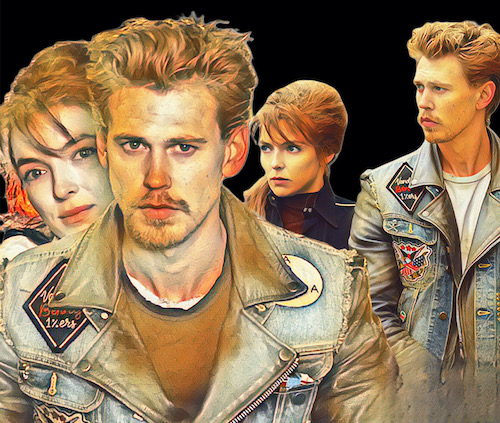
He wanted to capture both the energy and rebellious spirit of the biker subculture and its emotional nuances, describing the film as a character study that examines the emotional and social impact of being part of such an intense and passionate group.
Tribute and emotion on screen
In the end, The Bikeriders is not only a tribute to Danny Lyon‘s book but also a cinematic exploration of the ideas of belonging, individuality, and rebellion. All the male actors, although good, reprise characters they have played in one film or another, but Jodie once again surprises us with a performance that is quite unlike anything we have seen her before.
Austin, finally freeing himself from the shadow of Elvis Presley, is now an updated version of James Dean, with few words and long looks. And Hardy, always with a strange voice and diction, brings depth to the gang leader.
The story seems slow to take off, but it captures well the feeling of emptiness, or rather, “the freedom of the highways and open roads, the “spirit of the bikers” that Lyon immortalized in the book. The drama, as we can see, is that there is also a fictionalized version of the outlaw spirit that is so present in American culture.
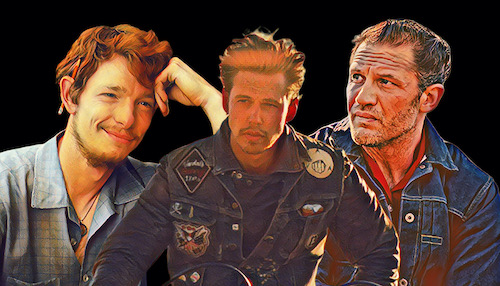
The generation that lived through so many social changes in the post-World War II era (in addition to those who fought in Vietnam) faced problems adjusting to civilian life and the groups were like the social networks of that time: people who identified with each other both by reality and by the aspiration of a lifestyle. The camaraderie, the toxicity of male friendship, the repression, and the common anxieties contributed to the formation of the gang and, later, the deviation into crime and violence.
The Bikeriders Club is told by Kathy (Comer), who falls in love and joins the gang when she meets Benny (Butler). The first part is a combination of the stories from the book, but the second part shows how it was inevitable that the dark and violent world would end up destroying the “dream” of the bikers. According to Nichols, it is important not to glamorize the violence or crimes of the group.
According to research, there are still more than 300 outlaw motorcycle gangs operating in the United States today, with more than 1,700 members, most of whom are involved in criminal activities. So the Chicago Outlaws still exist, but they are very different from what Danny Lyons knew, so much so that they were not consulted for the film. What he makes clear is that the idea is to reflect on the people in the book, not the lives of contemporary bikers. And it works very well that way.

In this way, The Bikeriders transcends its premise of a simple story about bikers and, by exploring the tensions between camaraderie and individuality, dream and reality, Nichols creates a narrative that echoes the anxieties of different generations. In the end, the film not only pays tribute to Lyon’s book but also reflects on the aspirations and contradictions of the rebellious spirit that shaped American culture.
Descubra mais sobre
Assine para receber nossas notícias mais recentes por e-mail.
 miscelana.com