
It’s unbelievable how perceptions change over time. In 2019, Todd Phillips was hailed as a genius, and Joaquin Phoenix won the Best Actor award for his unforgettable Joker performance. An intimate, dense, and even suffocating portrait that was celebrated as a milestone in contemporary cinema. Five years later, bringing something equally daring and brilliant, both were surprisingly massacred by critics and part of the public. Is genius only recognized when it fits into what we are used to applauding?
Therefore, it would be impossible to close 2024 without declaring that not giving Joaquin his second Oscar for yet another dazzling performance in Joker: Folie à Deux, is one of the greatest injustices of the year. It’s that simple.

A delirious “musical” and an original that’s hard to beat?
When everyone drools over Baz Lurhman’s works, including Elvis, but even more so, Moulin Rouge, but they absolutely adore Joker: Folie à Deux, it becomes even clearer that there was ill will and even a lack of understanding of what Todd Philips did with his film. Creating a deep and impactful psychological study of one of the most caricatured and popular villains in the DC universe is not for the faint of heart. Joaquin Phoenix’s dedication to the role has been unparalleled in recent decades (in the plural). The film is visually stunning, musically brilliant, and artistically thought-provoking. Better than the original, in my opinion.
I know that many considered the film lacking in rhythm, even though it was innovative in its use of musical elements, which didn’t please everyone. They considered that the musical sequences broke the dark and introspective tone established in the first film, but it is a perfect sequel.
The 2019 Joker was considered groundbreaking both in the context of superhero films and in cinema in general. By approaching auteur psychological dramas such as the classics Taxi Driver (1976) and The King of Comedy (1982), both by Martin Scorsese, Joker offered a more intimate narrative focused on character development. It also included a strong social critique, addressing themes such as socioeconomic inequality; marginalization of individuals with mental health problems; and violence as a reaction to an oppressive society, creating a connection with contemporary issues and giving the film a resonance that few had achieved before.
Furthermore, by focusing almost exclusively on Arthur Fleck (Phoenix), the Joker, it was a differentiator because it explored his psychological and emotional journey in depth, making him a tragic and human character before becoming a villain. Joker does not offer easy answers nor does it completely redeem or condemn the protagonist, and this ambiguity provoked intense debates about the film’s messages and the audience’s interpretations. With all this, although they wanted a sequel, the bar for the Phillips-Phoenix duo was high and many were suspicious when they started filming, even though they were happy when Lady Gaga was announced as a co-star.

The narrative of psychotics through musicals
The narrative is based on Arthur’s musical delusions, an element that has always been part of his construction as a character. Todd Phillips‘ choice to transform psychological pain into musical sequences not only deepens the protagonist’s emotional complexity but also creates an immersive cinematic experience. Harleen Quinzel (Lady Gaga), upon connecting with Arthur, finds herself dragged into the same fantasy world, resulting in a symbiotic, emotionally destructive, and artistically rich relationship. And tragic, of course.
The idea was not to have a sequel, but the success of the original created an irresistible demand. And here, a few years after the crimes that shocked Gotham, the Joker awaits his trial but is an involuntary celebrity for those obsessed with true crime and celebrities.
What is “folie à deux”?
The title of the film is the teaser and the clearest explanation of the story because it represents both the delusions and fantasies shared between the two and is effectively a rare psychiatric disorder, marked by the transfer of delusions from a subject considered psychotic to other people close to him. This reinforces the visual and intellectual importance of all the musical scenes.
Throughout the trial, we discover more gruesome details of Arthur’s abusive childhood – from domestic violence to repeated sexual abuse – and, to survive, he transferred his trauma to a world of imagination that protected him and repeated the scenes from musical films he watched with his mother. As all this trauma is brought to light in his trial, he becomes more delirious and lives out his fantasy. If Joaquin made us cry and fear the Joker before, now we have empathy and pity for the villain; his work is very moving.
Folie à Deux is both a twisted love story and an anthology. deep analysis of the psyche of the two characters, Arthur and Harleen, culminating in events that challenge the perception of reality and fantasy
Through the current relevance of what the Joker represents, Todd Phillips seized the opportunity to use the city of Gotham as the perfect critique of a consumerist, irresponsible, and indifferent society, which not only does not support those most in need but also wants to use them to profit or justify its own failures.
Reducing Joker: Folie à Deux to a musical is doubly wrong: first, because it elevates it, and second because the music is part of the antagonist’s delirium. It always has been. The essence that was so praised in the original is present from start to finish, just as the film itself criticizes: they expect chaos, and violence and do not want to deal with human pain.
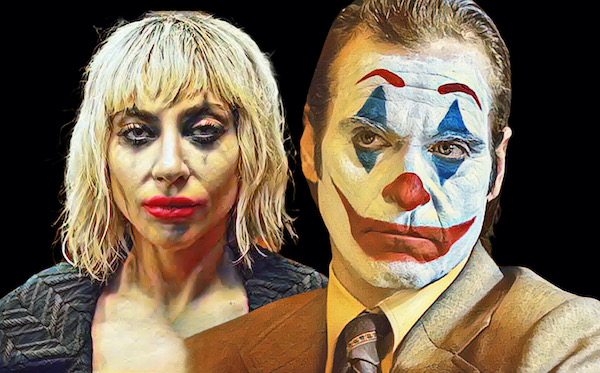
The injustice in the awards season
In Joker: Folie à Deux, Todd Phillips goes beyond the limits of what we expect from a sequel. It not only maintains the essence that made the original film a phenomenon, but goes beyond that, exploring human pain viscerally and artistically. Unfortunately, it seems that we are more willing to celebrate chaos and violence than to embrace the emotional complexity of the characters.
The neglect of awards, especially the lack of recognition for Joaquin Phoenix, is a reflection of a critic who prefers to label rather than try to understand. This film is not only one of the best of 2024 – it is a powerful reminder of how cinema can be both challenging and transformative.
Descubra mais sobre
Assine para receber nossas notícias mais recentes por e-mail.
 miscelana.com