
The American passion for territorial occupation of the western United States is so visceral that it has spawned legends, books, documentaries, series and films, and even a genre in its own right: the Western. Whether heroic or villainous, the cowboy figure has been around for centuries and never goes out of style. The “new” wave of revisiting this historical period has taken off slowly, with repetitions of violent, slow, and even somewhat meaningless stories or situations. Given this, let’s admit: American Primeval stands out.
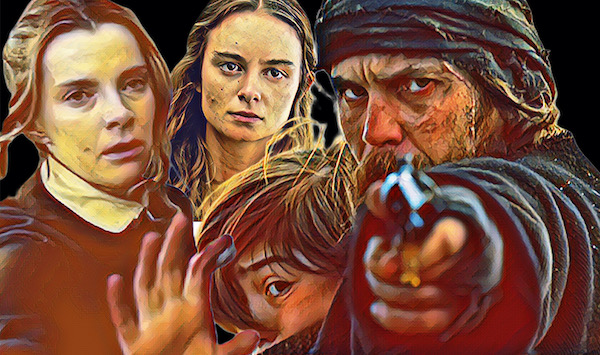
There are only six episodes, easy to binge-watch. Inspired by real events (the Utah War) that are used as a backdrop, the series directed by Peter Berg is once again a partnership between the director/actor and screenwriters Mark L. Smith (The Revenant) and Eric Newman (Griselda and Narcos), as well as actor Taylor Kitsch (Painkiller). Everything works, even if nothing is “new”.
One characteristic of the current vision of Westerns, which includes Kevin Costner’s Horizon saga, has been to highlight the absolute misery of those who risked populating the territory, always exposed to the dangers of nature, to confrontations with the indigenous people fighting for their lands, but, above all, to the rottenness of the human soul. Clint Eastwood’s perfect classic, Unforgiven, from 1992, was considered innovative 33 years ago when it showed a bit of this scenario, but now the layers of violence have been reinforced. The Billy the Kid series also navigates this trend. So it is important to highlight how good American Primeval is.
A bloody and religious period in the West
Just as he did with The Revenant, Smith used real history to create his series. In this case, the Utah Wars, also known as the Utah War or Mormon War, occurred between 1857 and 1858 and mainly involved the Mormon population (from the Church of Jesus Christ of Latter-day Saints) that inhabited the territory of Utah, in the United States, and the federal government of the United States.
This is because the leadership of Brigham Young (Kim Coates, spectacular) caused many members of his Church to migrate to the Utah region, fleeing religious persecution that had forced them to leave other states, such as Illinois and Missouri. They founded a colony that, in 1850, was organized as the Utah Territory, with Young as governor. That is why the presence of Mormons in the area is so significant to this day.
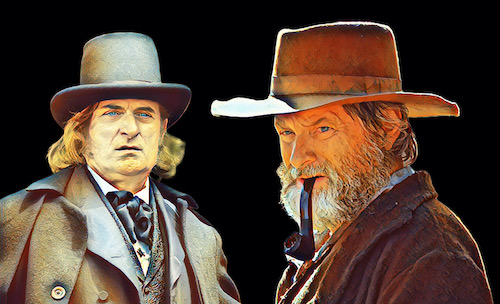
The problem is that, as the series shows, the relationship between the Mormons and the US federal government began to deteriorate because Brigham Young and other Mormon leaders had great political and religious influence over the territory, which generated distrust in the federal government. This included the still strange practice of polygamy, at the time seen even more as a violation of American social and legal norms.
In addition, the Mormons established a theocratic government, where the Church had great power over political decisions, correctly seen as a threat to central authority. To make matters worse, and this is outside the series, the execution of the founder of the Mormon Church, Joseph Smith, in 1844, sparked persecution against the Mormons and left deep resentment.
American Primeval takes place right at the beginning of the War, so it is all about growing tension and violent political plots. Here, the American government already realized that with Young as governor of Utah, the Mormons were effectively becoming a “state within a state,” defying federal authority. So the President sent a military force to Utah, to ensure that the new federal governor was accepted and that control of the territory was assured.
We closely follow Young’s plan to bring chaos to the place, fueling animosity between indigenous people and settlers, while gaining control of the state and maintaining among the Mormons that there is religious persecution against them.
Militiamen, guerrillas, and the massacre of innocents
Right at the beginning, the series sets the scene in one of the bloodiest episodes in Utah history, the Mountain Meadows Massacre, when the Mormon militia adopts a guerrilla strategy and attacks a group of settlers who are traveling to Utah. 120 people died, including men, women and children.
The Utah War represented the first major confrontation between the U.S. government and a religious community that had a very different view of the role of the state. The relationship between Mormons and the federal government thereafter was marked by mutual vigilance and a turning point in the relationship between state and religion in the United States.

The massacre is particularly notable because it took place in a secluded valley called Mountain Meadows, located in southern Utah, near the present-day city of Cedar City. The caravan, made up mainly of Arkansas settlers, was traveling toward California and initially blamed on the Indian tribes. Almost all of them were brutally killed, with most of the victims shot or stabbed to death. The scene is quite graphic (be warned).
The massacre was covered up for many years and it was only in 1859 that the authorities began to investigate the incident, following reports and testimonies from the few survivors (17 children) and other members of the local community. American Primeval leaves this part out.
Drama in Bloody Times
The story revolves around Sara and Devin Rowell (Betty Gilpin and Preston Mota), mother and son, who arrive in Utah and are in a hurry to get to the city where Sara’s husband is, but we clearly see that the pair are fleeing from something more serious. They arrive at the outpost of frontier entrepreneur Jim Bridger (Shea Whigham) (a character who also appears in The Revenant) and need a guide to take them further west.
The first option is Isaac Reed (Taylor Kitsch), a man tortured by his past who lived with the natives and who, although he refuses to accept the job, ends up following Sara and Devin from afar. The two are part of the fateful Mountain Meadows caravan and are saved by Reed, as well as the young Native American fugitive, Two Moons (Shawnee Pourier).
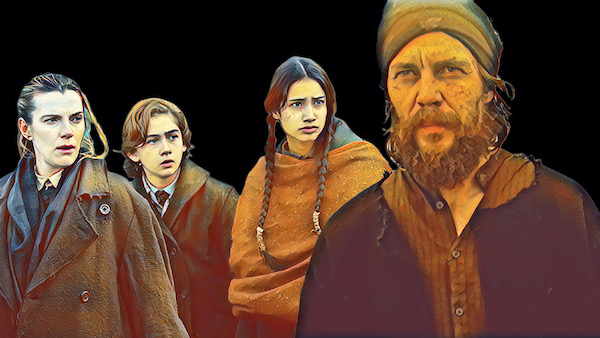
From there, there are three or four parallel stories that will intersect again at the end: the main one, which is the unlikely family that forms with Sara, Devin, Reed, and Two Moons, fleeing from bounty hunters (Sara is a wanted murderer) and encountering unimaginable dangers along the way.
We also follow the story of Abish (Saura Lightfoot-Leon), a Mormon who was married against her will and another survivor of the massacre who is kidnapped by natives, starting to fight for her life and rethinking what she imagined about faith and people. And yes, we have the clash between Young and Bridger, which does follow historical facts. The lives of these people will intersect – directly or indirectly – throughout the episodes, in an arc of surrender and violence that grows on you.
The violence and constant cruelty of the story, at first, is a constant nuisance because surviving such a devastating reality destroys the integrity – if it still exists – in anyone. There is no one without hiding a secret and trying to manipulate situations, be it a child or an adult, and without being able to trust, the drama navigates through bloody and distressing scenes in the six episodes. But the involvement of the main couple is credible and has chemistry, something super rare in Westerns. Even rarer is to have a female lead who is also credible. Both Sara and Abish face danger and violence without losing strength or becoming victims, transforming themselves along the way.

Some people complain that American Primeval tries to be yet another revisionist epic Western without succeeding. I don’t think it tries to be, the current narrative is updated and contextualized. No one is innocent on either side, survival meets moments of empathy and total destruction, and that is one of the series’ merits.
American Primeval may not be an immediate classic, but at the beginning of 2025, it is the best release of the first few weeks, a trip back in time that is worth checking out.
Descubra mais sobre
Assine para receber nossas notícias mais recentes por e-mail.
 miscelana.com