
A few days ago, I spoke with writer Lyndsy Spence about her biography of Vivien Leigh (for Bravo Magazine!). For a few minutes, we dedicated our conversation to praising actress Joan Plowright.
Joan, a great star on the British stage and screen, has always had her biography tied to others, somewhat taking the focus away from how talented and empathetic she was and how she was a legend in her own right. Laurence Olivier‘s third and final wife, she unwittingly spent her life being compared to Vivien (more on that later) and when she passed away on January 16, at the age of 95, my heart went out to her a little more.
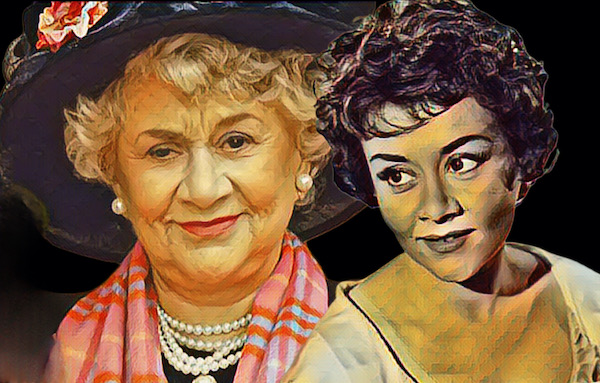
As the British press points out, Joan Plowright was part of a generation that shaped post-war British theater, with modern plays and acclaimed performances. Her name achieved international recognition when she starred alongside Olivier in the play The Entertainer in 1960, playing his daughter. The two also starred in the film and fell in love behind the scenes, when no one suspected Vivien Leigh‘s health problems. In this way, Joan was exposed as the destroyer of a marriage made in the stars, but she bore the blow with class and discretion, something that only contributed to her gaining even greater weight when the whole truth came to light.
As he did with Vivien, from the marriage onwards Olivier began to share the stage with his new wife and Joan starred with him in Shakespeare classics, as well as Chekhov and other productions. Eventually, the marriage led her to refuse to appear at the National Theatre for five years, where her Olivier was director from 1962 to 1973, so as not to be accused of favoritism. Joan remained active until she was 85 when her blindness forced her to retire.


Joan was born on October 28, 1929, in Brigg, Lincolnshire, the second of three children of an amateur actress and opera singer who taught dance and a journalist who was passionate about amateur theater. She always wanted to be an actress and managed to get into the prestigious Old Vic drama school in London at just 17 years old.
Before getting married to Olivier, she was married to actor Roger Gage and worked with stars such as Orson Welles, among others. She was destined to be successful, regardless of the interference in her personal life. Her marriage to the greatest actor of her generation was long-lasting – 28 years – and produced two daughters and a son, with whom she worked on stage years later. The fact is that, as the New York Times points out, Joan Plowright brought dignity to everything she did. She was nominated for an Oscar in 1991 for her role in Enchanted April and won a Tony in 1960 for A Taste of Honey. In 1993, she won two Golden Globes on the same night, for Enchanted April and the miniseries Stalin.
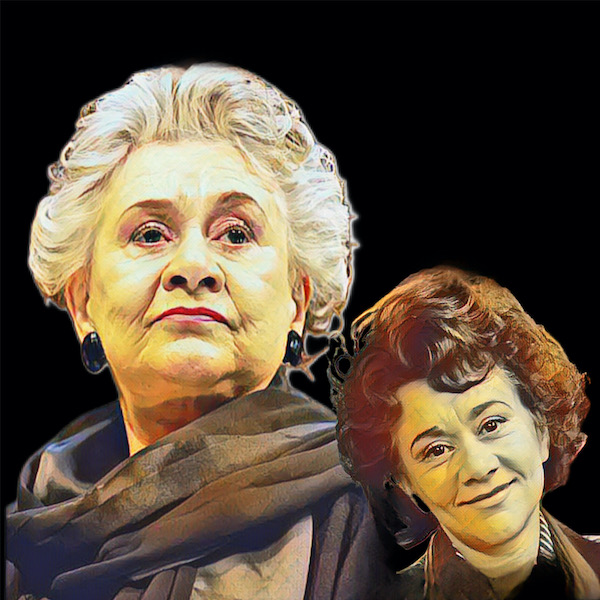
It was after Olivier died in 1989 that Joan Plowright began to work more and made 30 films, not counting television films, ranging from classics to original content, comedy, and drama. In 2001, she published her autobiography And That’s Not All. Perhaps the clearest description of what Dame Joan Plowright was like is the statement by director Paul Feig, who remembered her always having a good sense of humor, making everything seem easier.
Joan Plowright‘s life and work transcended the shadow of the great names that crossed her path and she leaves a legacy that deserves to be celebrated independently. Her ability to transform each role into something unique and memorable, combined with her empathy and respect for her colleagues, places her among the great figures of 20th-century drama. When we reflect on her career, we realize the most important thing and that is that Joan Plowright was, and always will be, a star who shone with her own light.
Descubra mais sobre
Assine para receber nossas notícias mais recentes por e-mail.
 miscelana.com