
As published in CLAUDIA
Anora‘s impact on the current cinematic scene is undeniable. With its exciting narrative and strong leading role, the film succeeded with audiences and critics and opened debates about resilience, social inequality, and the desire for change. However, Anora’s journey is not unique. The story of women who face adversity and fight to transform their lives has already been explored in other classics, each with its own unique approach, but all connected by universal themes of struggle and hope.
When revisiting works such as Pretty Woman, Nights of Cabiria, Sweet Charity, The Lady of the Camellias, and Leaving Las Vegas, we realize a cinematic legacy that sheds light on complex female characters, who inspire with their humanity and determination.

Although the Oscar nominations have not yet been announced, Anora has many favorites, including the possibility of Best Actress for Mikey Madison. The story of a young woman who lives in a poor and unprivileged neighborhood, working as a stripper and sex worker. At first, she seems like a realistic woman, but when she meets a young mega-millionaire who seems to be in love with her, she begins to believe that she will have a chance to change her life. Of course, this is not quite the case; Anora is a real-life Pretty Woman, which is why it is so much more authentic.
And let’s agree that before Anora there was Vivian, and before Vivian there was Camille and others with the same dreams and challenges. Hollywood loves a love story, with or without a happy ending. Let’s remember five classics that have a similar proposal.
Pretty Woman (1990)
Although it is far from the first to show a sex worker dreaming of love, this classic, which turns 35 in 2025 and was directed by Garry Marshall, is a contemporary fairy tale that combines romance and transformation. Vivian Ward, played by the then-almost-unknown Julia Roberts, finds an opportunity to redefine her life with the charming businessman Edward Lewis (Richard Gere).
The negotiation between the two is very similar to the one Ani makes with Vanya (Mark Eydelshteyn) and is a deliberate reference. Like Anora, Vivian deals with social prejudices and emotional challenges, but the main difference is Pretty Woman‘s optimistic tone, which culminates in a happy ending. The film reconfigures female stereotypes, showing how love and respect can be catalysts for significant change.
Oh, yes! Another point that could be similar? Julia Roberts was nominated for an Oscar for the role. Will Mikey Madison have the same luck?
Leaving Las Vegas (1995)
Another film that was a huge critical success 30 years ago, Leaving Las Vegas earned an Oscar for Best Actor for Nicolas Cage and a nomination for Elizabeth Shue. Directed by Mike Figgis, the film is a brutal and devastating narrative that explores the encounter between Ben (Cage), a man in self-destruction, and Sera (Shue), a sex worker in a moment of total surrender to tragedy and her tenuous hope that she has found someone who can save and “save” her.
The second act of Anora reflects a bit of this darker side of the human condition that is the premise of Leaving Las Vegas. Sera, like Anora, tries to find dignity amidst the chaos, and in the end, although samba stories are marked by a painful acceptance of limits, reflecting a harsher view of reality, Ani has – in my opinion – a chance to be happy with Igor (Yura Borisov), while Sera does not have the same “luck”.

The Lady of the Camellias (Camille, 1936)
Shall we go back to the most classic of classics that recalls Anora’s story? Yes, let’s go to the 89-year-old classic with several versions on TV, in opera, and in cinema, but whose film starring Greta Garbo is the most famous. Marguerite Gautier is a courtesan who, like Anora, faces constant judgment. When a young Armand Duval (Robert Taylor) falls in love with her, his family does everything to separate the couple. Eventually, because she genuinely loves the young man, Marguerite sacrifices herself for love, breaking up with Armand. Yes, Moulin Rouge is inspired by this story too.
The Lady of the Camellias also reflects on the tragedy of marginalized women, which is its emotional connection with Anora and the fact that its protagonists seek redemption, even if it comes at a high cost. The sad ending of Alexandre Dumas’ classic is due to the true story that inspired the book, but here what matters is to see how, just like Ani, Marguerite came up against the prejudice and interference of her beloved family.
Nights of Cabiria (1957)
Nights of Cabiria is one of Federico Fellini’s most beloved films, which introduces us to Cabiria, a woman who ple and dreamy, masterfully played by Giulietta Masina. Like Anora, Cabiria desperately searches for meaning in her life amidst successive romantic and social disappointments. She is also a sex worker who deludes herself with the possibility that marriage will change her life completely.
The film is a masterpiece of poetic realism, and its protagonist represents female vulnerability in the face of a hostile world. Despite her difficulties, Cabiria never loses her ability to dream, something that resonates deeply in Anora’s journey.
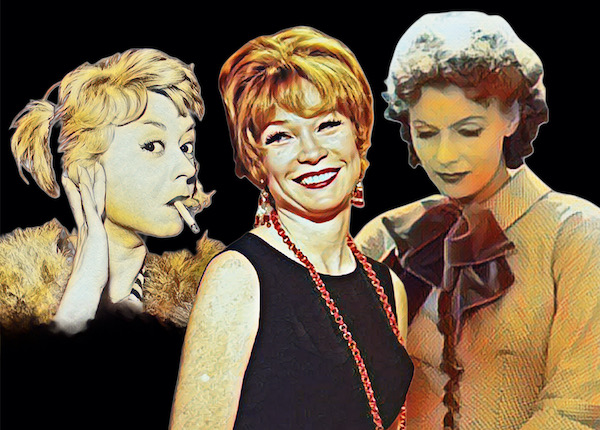
Sweet Charity (1969)
Bob Fosse was another fan of Fellini’s film and so he remade the Italian classic in a musical version, bringing lightness and humor to the narrative. Charity Hope Valentine, played by Shirley MacLaine, shares the same vulnerability as Fellini’s Cabiria, but her journey is told with vibrant musical numbers and a more optimistic tone.
Despite this, Charity faces similar challenges, such as the search for love and validation in an environment that often belittles her. The film’s ambiguous and realistic conclusion echoes Anora’s reflective tone.
In all of these films, we see women searching for something greater: love, dignity, or simply a new chance. The main similarity between these narratives is the struggle against social and emotional adversity.
While Anora inspires with its balance between hope and challenges, other films offer varied endings, ranging from triumph to sacrifice. This contrast reveals the richness of female representation in cinema, showing that each journey is unique but equally powerful.
These films show that the struggle for life change transcends eras and styles, connecting audiences with its profound humanity. Thus, Anora becomes a worthy successor to a cinematic legacy that continues to move and provoke reflection.
Descubra mais sobre
Assine para receber nossas notícias mais recentes por e-mail.
 miscelana.com