
2025 is a special year for Jane Austen fans: in December, it will be 250 years since her birth. So it’s time to remember her classics—in books, films, or series—and at will. This includes the most recent series, which offers a different look at the author by placing her as a supporting character to another Austen, her beloved sister, Cassandra.
Miss Austen, which premiered in the United Kingdom in 2024, but in the United States in 2025, has four episodes and is an adaptation of the novel of the same name, written by Gill Hornby in 2021. Hornby was inspired by one of the most mysterious, remarkable, and little explored moments in the writer’s biography: Cassandra burned almost all of her sister’s personal letters, “to protect her legacy”, as it is said. What could have been written that could not be made public? No one knows. And Hornby invents a very romantic possibility, of course.
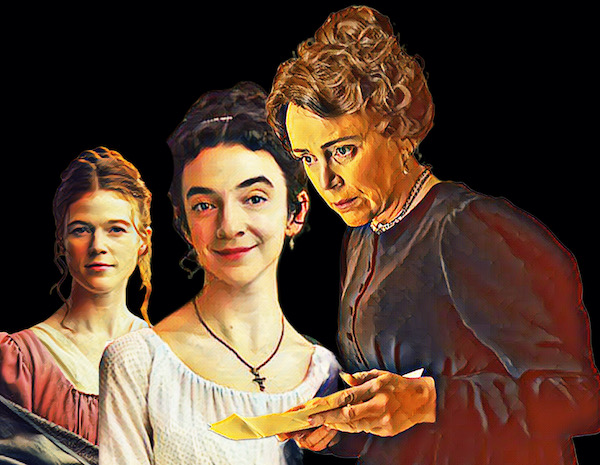
The series, like the book, begins in 1830, 13 years after Jane’s death, and explores why Cassandra Austen (Keeley Hawes) burned most of the writer’s personal letters, about two-thirds of them. In fact, Cassandra only made the decision a few years before her own death in 1843, but the mystery makes speculation irresistible.
Experts who support Cassandra’s decision believe that the very personal and intimate content could affect Jane Austen’s image, idolized by fans around the world. And it was not necessarily an unfounded fear: it is as if today we would discover thoughts that could lead to Jane’s cancellation. And Cassandra saw this happen with another writer, precisely one of the ones who most influenced Jane: Frances Burney.
Frances, also known as Fanny Burney and later Madame d’Arblay, wrote novels and plays and gained great prominence during her lifetime, but when her letters and diaries were published after her death, her literary reputation suffered a major blow.
To this day, of course, instead of looking at fiction, everyone likes to know the truth behind the inspiration, and as a result, Fanny’s diaries and letters were full of details that, according to biographers, offer a more interesting and accurate portrait of life in the 18th century. The problem? The diaries overshadowed the writer’s works and her books stopped being reproduced while biographies about her multiplied. Cassandra wanted the privacy of the shy and reserved Jane to be protected.

Cassandra, who was only three years older than Jane, lived to be 72, 28 years longer than her sister. Some of her letters, which survived without being burned at the stake, yielded some important information, such as the writer confiding in Cassandra her passion for Tom Lefroy, a story that led to the sweet Becoming Jane, starring Anne Hathaway and James McAvoy. That is why many believe that there could be more revelations in the destroyed letters. As she loved to write, it is estimated that there were thousands of letters during her lifetime, but only 160 survived. Hornby believes that the reason was more simplistic: since she was talking to Cassandra, there would be “indiscreet mentions of annoying relatives” and the fire spared her family embarrassment.
I would say that Cassandra, whom Jane idolized and was absolutely devoted to, is an even greater mystery. She became known as an amateur watercolorist and “Jane Austen’s older sister”, but was she also an inspiration?
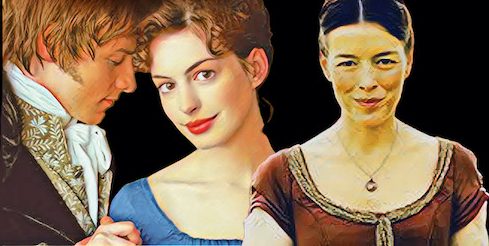
As shown in Miss Austen and Becoming Jane, Cassandra has a tragic story. She fell in love with a former student of her father, the Reverend George Austen, Thomas Fowle, in 1794, and the two became engaged. As he needed money to get married, Fowle agreed to spend a year in the Caribbean with a military expedition but died of yellow fever before returning. Cassandra inherited money that allowed her to survive with a measure of financial independence, but she decided never to marry. Just like Jane.
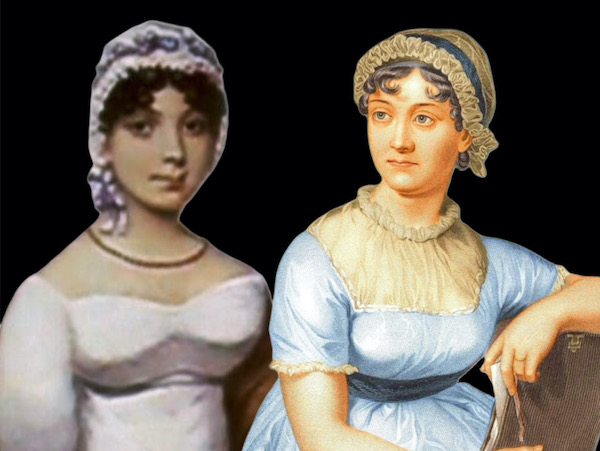
There is a paradox: if we complain about the burned letters, it is thanks to Cassandra that we know Jane Austen’s face. She, who produced a series of illustrations for her sister’s manuscript, is also credited with having created two paintings of Jane. One, in 1804, shows the writer sitting with her back turned near a tree. And, six years later, an incomplete frontal portrait. Those who knew Jane criticized the work as being “terribly different” from Jane’s real appearance, but it is all that remains.
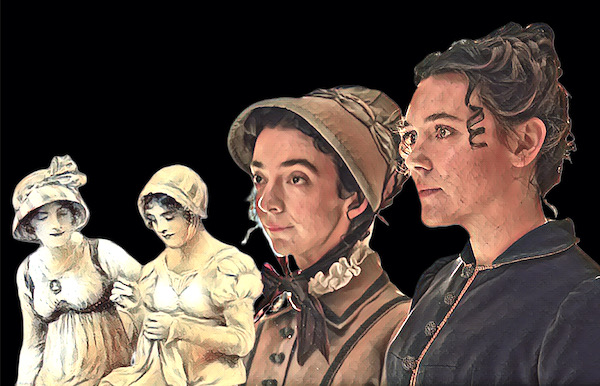
Jane Austen died at the age of 41, in 1817, from a mysterious illness that lasted for a short time. Cassandra suffered a stroke in 1845, dying at the age of 72, that is, 180 years ago.
Jane Austen left an immortal literary legacy, but her most intimate side was preserved – or erased – by Cassandra. Was this an act of protection or censorship? We will never know for sure. What we do know is that, without Cassandra, we might know less about Jane, but, paradoxically, also more. In the end, the devoted sister ensured that the author remained
Descubra mais sobre
Assine para receber nossas notícias mais recentes por e-mail.
 miscelana.com