
Published on Bravo! Magazine
The narrative power of soundtracks is unmatched, especially when well applied. They reflect the director’s vision, his soul and speak to the collective unconscious in a precise way. Let’s also agree that, when the director has good taste, it’s a delight. Quentin Tarantino is one who personally selects all the songs he uses in his films and never fails to create gems for his fans (we could spend days talking about the soundtrack of Pulp Fiction). Another director who never fails is Walter Salles Jr. who managed to present MPB classics in I’m Still Here, educating and enchanting new generations (without failing to move those who already knew the songs).
I’m lucky. Although today’s ageism kind of insists on pushing aside those who are “middle-aged” or are from Generation X when it comes to music we live in periods of extreme cultural richness. Before the new wave pop of the 1980s, we grew up listening to the best of Brazilian Popular Music, when artists challenged repression and censorship with intelligence and precision. The metaphors and implications of the lyrics were full of Easter eggs (before we called it that) and I remember with great warmth my parents explaining what they were really singing.
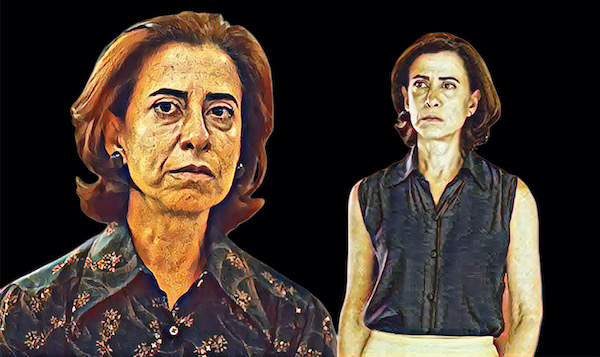
Younger people must roll their eyes when they hear their nostalgic parents or grandparents say that music has “lost” a lot in terms of defending ideas and freedom as was common in the 1970s. And they are going crazy over the songs in the film I’m Still Here, which has been shaking up music platforms, reviving Erasmo Carlos and other artists. It’s never too late! But, before we go back to the songs, it’s worth remembering that, although it may seem strange today, the lyrics of songs had to be submitted for government approval before being recorded. In this way, challenging censorship with the precise choice of words became an art form, so that they could escape the ban. And then people became even more emotional when they heard the message, which was clear but subtle.
The song by Roberto Carlos and Erasmo Carlos, which opens the film – It’s Necessary to Find a Way, my friend – sums up the mood of the story and is iconic. “I came from far away and the journey was so long,” Erasmo sings. “And on my journey, obstacles along the way, but finally I’m here. But I’m ashamed of the things I’ve seen, but I won’t stay silent. In the complacent confrontation, like so many others out there. It’s necessary to find a way, my friend,” he adds.
In addition to being beautiful, it’s perfect for conveying the mood of the time.

The Brazilian duo rarely used their repertoire to speak openly about politics, so much so that they were more associated with songs about love and friendship. As we remember, during the hardest period of the dictatorship, they also got their message across. I recommend listening to the albums Roberto Carlos 1971 and Erasmo Carlos 1971 from start to finish. In the case of Roberto, who opens with Detalhes, in addition to Debaixo dos Caracóis de Seus Cabelos and As Curvas da Estrada de Santos, it is Como Dois e Dois, written by Caetano Veloso, that stands out the most because this little song of longing and separation is not about love. Roberto opens by warning, “When you hear me sing, come, don’t believe it. I’m not in danger.” The danger of what? “When I sing, I’m mute, but I don’t lie,” he warns.
In the film, Eunice turns up the volume of this song when she wants to silence her daughter who is asking about the dictatorship (and in addition to answering, the song also highlights her suffering over Rubens’ disappearance when the verse says that “everything around is deserted. Everything is fine, everything is fine like two and two are five”. In other words, the math never adds up.

Of course, Tropicalia could not be left out. The movement that revolutionized Brazilian culture by mixing elements of traditional popular music with influences from rock, artistic avant-garde, and pop culture, is on the soundtrack with gems by Caetano Veloso, Gal Costa, Tom Zé, and Os Mutantes, among others. At the time it was something like tell me what you hear and I’ll tell you sideways you are, so when the military found their albums and posters in the Paivas’ house, it was proof of the subversion they wanted to find.
The selected foreign songs also have political significance. For example, the controversial Je T’Aime Moi Non-Plus, recorded by Jane Birkin and Serge Gainsbourg, which is about Sex was banned in Brazil because it was immoral. Petit Pays, by Cesária Evora, also has political overtones because it sings about minorities and longing, used in a particularly moving scene in the film.
Another highlight in the collection is Take Me Back to Piauí, by Juca Chaves. The song by the Brazilian composer, musician, and comedian was released in 1970 and is played at Eliana’s farewell lunch, when she is going to live in London, and Rubens changes the record on the turntable and starts dancing.
Juca Chaves was known for his irreverent and critical style, combining elements of political satire and refined humor in his music. An active critic of the dictatorship, he was exiled to Portugal and Italy.

The incidental soundtrack is by the genius Warren Ellis, Nick Cave‘s partner who is responsible for the artist’s sound as well as some of the most impactful soundtracks in cinema of the last decade. The Road and The Assassination of Jesse James by the Coward Robert Ford are two must-have albums for any collector. And I’m Still Here confirms his sensitivity.
But, curiously, the most moving incidental track is not by him, but by the award-winning Jóhann Gunnar Jóhannsson and his moving track The Fight. It was written for the soundtrack of the film Personal Effects, a 2009 film starring Michelle Pfeiffer and Ashton Kutcher. It didn’t have the same impact 16 years ago. It needed the right film. And that’s I’m Still Here.
That’s why I emphasize that the soundtrack of I’m Still Here is not just a complement to the narrative, but an essential character, evoking memories, emotions, and historical context, one that reinforces the importance of music as a tool of resistance and expression. The film reminds us that songs not only tell stories but preserve them, giving voice to what has often been silenced. Just as art has been able to defy difficult times in the past, its power to move and provoke reflection remains timeless.
Descubra mais sobre
Assine para receber nossas notícias mais recentes por e-mail.
 miscelana.com