
The ballet Romeo and Juliet has already established itself as one of the great works of the classical repertoire, combining the dramatic depth of Shakespeare’s play with the musical richness of Sergei Prokofiev. The first version of the ballet was conceived in the 1930s. Still, the choreographies that marked its popularization appeared in the 1960s, when John Cranko and Kenneth MacMillan created productions that redefined narrative in dance.
Sergei Prokofiev composed the score for the ballet in 1935, originally with a happy ending – a bold and controversial decision at the time. This was because he said that “dead men don’t dance”, but political and artistic pressures led Prokofiev to modify the score to align more with Shakespearean tragedy. The dense and emotionally expressive music became one of the most acclaimed ballet scores in history, notable for its use of striking themes such as the “Dance of the Knights” and the lyrical solos associated with the protagonists.

After Leonid Lavrosky’s version, it is still performed and loved in Russia but not so much in the West. The first major version of the ballet to establish itself in the international repertoire was that of John Cranko, created in 1962 for the Stuttgart Ballet, for Marcia Haydée and Richard Cragun. Cranko brought an innovative, dramatic refinement, emphasizing the expressiveness of the dancers and the fluidity of the narrative. His work directly influenced Kenneth MacMillan’s 1965 production for the Royal Ballet in London, which became the definitive version of the work.
The Stuttgart Ballet version has a more visceral and emotional style of interpretation. Marcia Haydée became a definitive reference for Juliet, bringing an intense dramatic charge to the character.

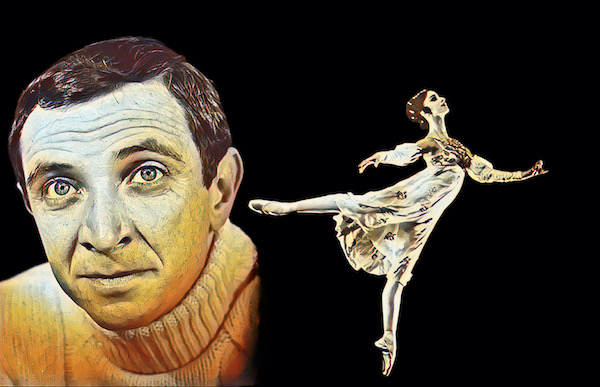
MacMillan’s version had as its great milestone the debut of Margot Fonteyn and Rudolf Nureyev in the main roles. Despite the age difference between the two – Fonteyn was already 46 years old –the intense chemistry and emotional delivery of the duo ensured that the production was a huge success. MacMillan emphasized the physicality of the choreography and the detailed dramatic construction, making the ballet an immersive experience. But there has never been a story as sad and remarkable as the one behind the scenes of the production.
Initially, the choreographer intended to cast Lynn Seymour and Christopher Gable for the main roles. After all, it was around them that he created the entire ballet, after both had great success with the balcony pas de deux. It was the kind of partnership that would make both their careers, but greed got in the way.
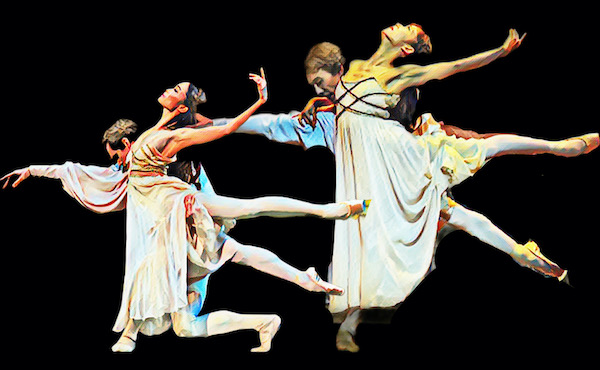
The production of the complete ballet became one of the most eagerly anticipated investments for the Royal Ballet, which was about to embark on a new season in the United States and was attracting crowds to see the partnership of Margot Fonteyn and Rudolf Nureyev, by this time in the third year of what would become a historic partnership.
When you have the biggest stars in dance on your roster, of course you want vehicles to showcase them, and it was impresario Sol Hurok who played a crucial role in bringing Romeo and Juliet to international audiences. As one of the most influential dance promoters of the 20th century, Hurok helped organize tours that propelled Nureyev and Fonteyn to global stardom, ensuring that MacMillan’s version became a landmark in ballet. For him, there was no question: the premiere of the new ballet belonged to Fonteyn and Nureyev.

Sol’s work not only cemented the reputation of the Royal Ballet but also expanded the reach of classical ballet in the United States. It was he who made irreversible changes behind the scenes of the ballet. Sol stood firm against the fact that the company wanted to bet on two unknowns with the most innovative and important works in the collection. For him, it was “no way”. The decision caused tension, but the result was one of the most emblematic moments in the history of ballet.
In 2025, Romeo and Juliet turned 60 and continues to fascinate new generations of dancers and spectators, proving that its story, when told through dance, continues to move like few works in the classical repertoire.
In 1965, the season of Kenneth MacMillan’s Romeo and Juliet was extremely profitable. People not only lined up but slept around the block at Covent Garden in the hope of seeing Margot Fonteyn and Rudolf Nureyev, and the premiere was a triumph. There was choreographic and psychological daring, and costumes by Nicholas Georgiadis, who are now legendary, but the duo received 43 curtain calls to thank. In New York, it was no different.

Although she was only 25 years old, Lynn was already considered one of the most dramatic and vigorous in the company. So much so that internally, no one questioned the choice of Juliet. Only Sol Hurok, the sponsor of the American tour of the Royal, was against it. He said the company could open the tour with the ballet, but only if Fonteyn and Nureyev danced the leading roles. This was expected, but Hurok insisted that ballet’s most famous couple also take part in the London premiere to drum up excitement and sell even more tickets.
Suddenly, with a crushing twist, Seymour and Gable not only had the potentially defining first night of their careers (and therefore the entire ballet) ripped from their hands, but they also found themselves—due to complex and unsympathetic internal politics—relegated to the fourth cast.
The duo struggled to recover from the humiliation. After all, upon discovering she was pregnant shortly before rehearsals, Lynn Seymour had an abortion so she could take on the role. Of course, her marriage to photographer Colin Jones didn’t survive either. She and Christopher Gable left the company soon after.

Some say it wasn’t Sol Hurok’s fault alone, but that Nureyev and Fonteyn also wanted the spotlight, especially since it was the perfect vehicle for their fast-becoming legendary partnership. Although he was opposed and devastated, Kenneth McMillan accepted the stars’ decision.
Those who have seen the four and compared them – there is a film with Margot and Rudi and a few images of Lynn and Christopher – say that although they are incredible, Fonteyn and Nureyev have not managed to surpass Seymour and Gable.
Over these 60 years, Romeo and Juliet has been a highly successful vehicle for the greatest in dance. In addition to Lynn Seymour and Margot Fonteyn as Juliet, Natalia Makarova shone in the role, as did Alessandra Ferri, considered one of the most celebrated Juliets of the late 20th and early 21st centuries, famous for her expressiveness and emotional involvement.

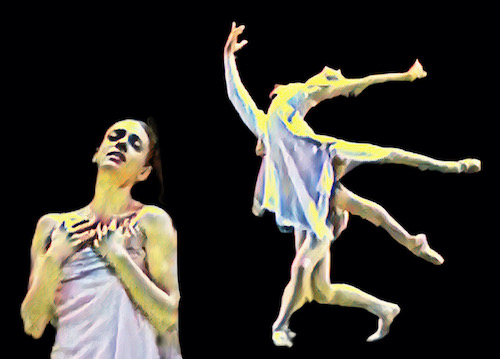
In addition to Nureyev, Mikhail Baryshnikov was an agile and captivating Romeo, reinforcing his aura of a superstar, just as Anthony Dowell was one of the leading Romeos of the Royal Ballet after Nureyev, with a sophisticated interpretation.
Sixty years after its premiere, Kenneth MacMillan’s Romeo and Juliet remains one of the most powerful narratives translated into dance, redefining the role of dramaturgy in classical ballet. Whether through the tragic intensity of Lynn Seymour and Christopher Gable, the unforgettable chemistry of Margot Fonteyn and Rudolf Nureyev, or the lyricism of greats such as Alessandra Ferri and Mikhail Baryshnikov, Romeo and Juliet continues to be an artistic challenge for dancers and a captivating experience for audiences. Its permanence in the global repertoire is proof that dance, when combined with a universal story and unforgettable music, can span generations without losing its emotional power.
Descubra mais sobre
Assine para receber nossas notícias mais recentes por e-mail.
 miscelana.com